

Key Takeaways
- Recycling Is Growing, But It Can't Close the Gap: Recycling can meaningfully supplement future supplies of critical materials, but it is unlikely to keep pace with accelerating demand driven by electrification, artificial intelligence (AI), energy infrastructure and defense.
- Recycling Strengthens Supply-Chain Resilience: Recycling is valued not only for its environmental benefits but also for its ability to strengthen supply-chain resilience and reduce dependence on concentrated sources of supply.
- Timing Is the Biggest Constraint: Most critical materials remain locked in long-lived products such as electric vehicles (EVs), power grids and renewable energy systems. Significant volumes of recyclable material (particularly EV batteries) will not become widely available until the 2030s.
- Progress Will Vary by Material: Mature markets such as copper, the platinum group metals and silver benefit from established recycling systems, while lithium, nickel, cobalt and rare earth elements remain in the early stages of developing economically viable recycling infrastructure.
Recycling Can Help, But It Won't Replace Mining
The world is entering one of the most material-intensive investment cycles in decades. Electrification, AI-driven data centers, defense modernization and the expansion of electricity grids are accelerating demand for critical materials at a pace few industries have experienced before.
Global electricity demand is projected to increase by approximately 157% by 2050,1 while data-center electricity consumption is expected to grow roughly 2.5 times by 2030.2 As governments prioritize energy security and resilient supply chains, securing reliable access to critical materials has become an economic and national security imperative.
Figure 1: Energy Technologies Continue to Drive Strong Demand Growth for Critical Minerals 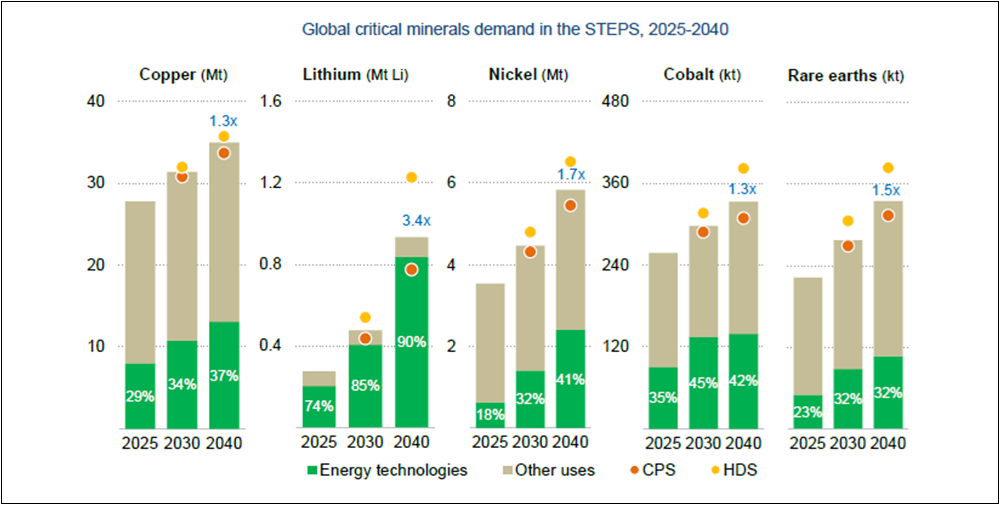
Source: IEA, Notes: CPS = Current Policies Scenario; HDS = High Demand Scenario; kt = kilotonnes; Li = lithium; Mt = million tonnes; STEPS = Stated Policies Scenario. The figures for copper are based on refined copper demand (excluding direct-use scrap). Rare earths refer to magnet rare earth elements only. Growth rates (in blue) are between 2024 and 2040.
Against this backdrop, recycling is receiving renewed attention. Recovering valuable materials from products already in circulation offers clear economic and environmental benefits while reducing dependence on newly mined supplies. But an important question remains:
Can recycling meaningfully reduce the need for new mining, or will it simply soften an inevitable supply shortfall?
Our view is that recycling will become an increasingly valuable source of supply, but it cannot solve the critical materials challenge on its own. The principal constraint is feedstock availability, which is inherently governed by product lifecycles rather than current demand. Recycling depends on products reaching the end of their useful lives, while demand is driven by technologies expanding today. As a result, secondary supply will grow steadily over the coming decades, but primary mining will remain indispensable.
Why Recycling Has Become a Strategic Priority
For much of its history, recycling was driven primarily by economic or environmental considerations. Today, it has taken on a broader strategic role.
The most secure critical minerals may be the ones already in circulation.
Governments increasingly recognize that recovering valuable materials from end-of-life products can strengthen domestic supply chains, reduce import dependence and improve resource security. The European Union has been at the forefront of developing battery recycling regulations and circular supply-chain policies. At the same time, the U.S. Department of Energy recently announced up to $500 million to expand domestic critical mineral processing, battery manufacturing and recycling. These initiatives reflect an important reality: Every tonne of recovered material is one less tonne that must be sourced from increasingly constrained global supply chains.
The International Energy Agency estimates that, under announced climate policies, recycling could reduce future mine development requirements by approximately 40% for copper and cobalt, and 25% for lithium and nickel, by 2050.3 Even with those gains, the world will still require hundreds of billions of dollars in investment in new mining projects to meet projected demand.
The Reality of Scrap Availability
One of the greatest misconceptions about metals recycling is that large volumes of recoverable material are readily available. In reality, the world possesses enormous stocks of critical materials, but much of that inventory is locked inside products that remain in active use for years or even decades.
Electric vehicles, transmission infrastructure, wind turbines, consumer electronics and industrial equipment typically have useful lives ranging from 10 to more than 50 years. Until those products reach the end of life, the materials they contain cannot meaningfully contribute to the recycled supply.
Critical materials are abundant in the economy, but much of that supply remains out of reach for decades.
Electric vehicles illustrate this challenge well. Although EV adoption accelerated rapidly during the early 2020s, relatively few batteries have yet reached the end of their useful life. Today, most battery recycling feedstock comes from manufacturing scrap rather than end-of-life vehicles, and in many markets, recycling capacity already exceeds available feedstock. Meaningful volumes of post-consumer battery material are unlikely to emerge until the next decade, creating a structural lag between demand growth and recycled supply (see Figure 2).
This timing mismatch remains one of the defining characteristics of the critical materials market. Demand responds to new investment and technological adoption, while recycling responds only after products have reached the end of their useful lives.
Another emerging opportunity is “urban mining”: recovering valuable materials from electronic waste, obsolete equipment and other underutilized sources already embedded within the economy. As recycling technologies improve and collection systems expand, urban mining is expected to become an increasingly important source of secondary supply over the coming decade (see Figure 3). Yet even this growing resource should be viewed as a complement to, rather than a replacement for, primary production.
Figure 2: Global Available Battery Recycling Feedstock and Recycling Capacity, 2023-2050
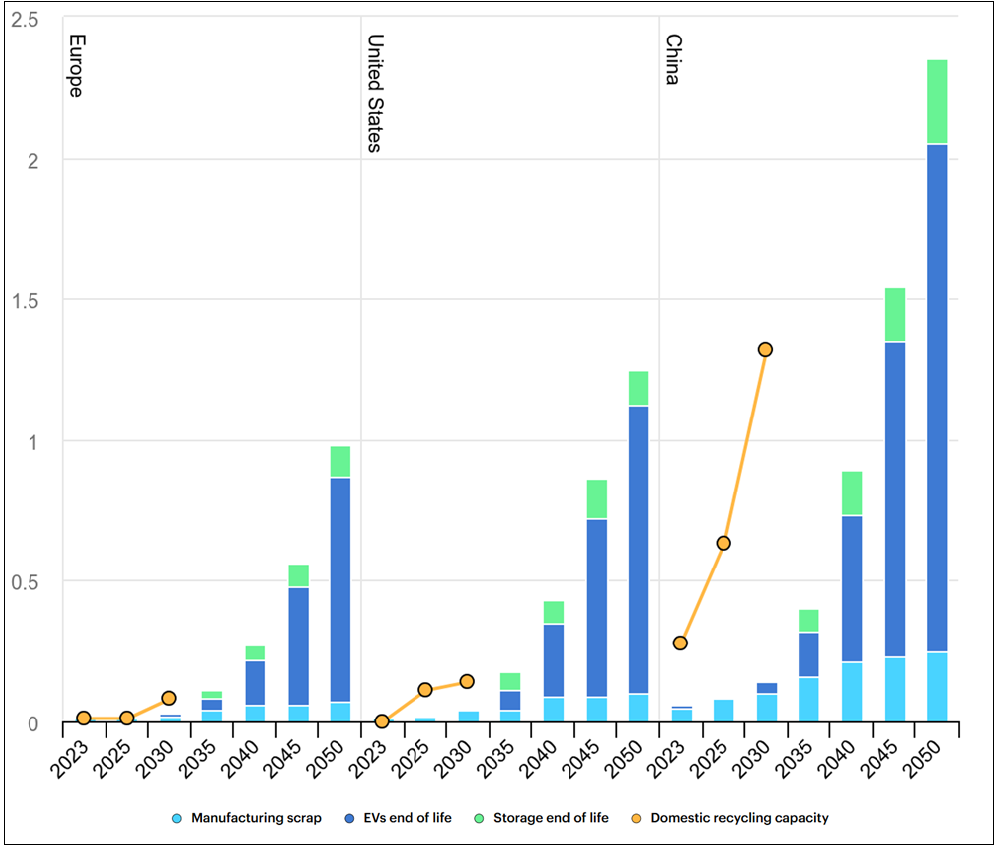
Source: IEA, Recycling of Critical Minerals.
Figure 3: The Growth in the Urban Mining Market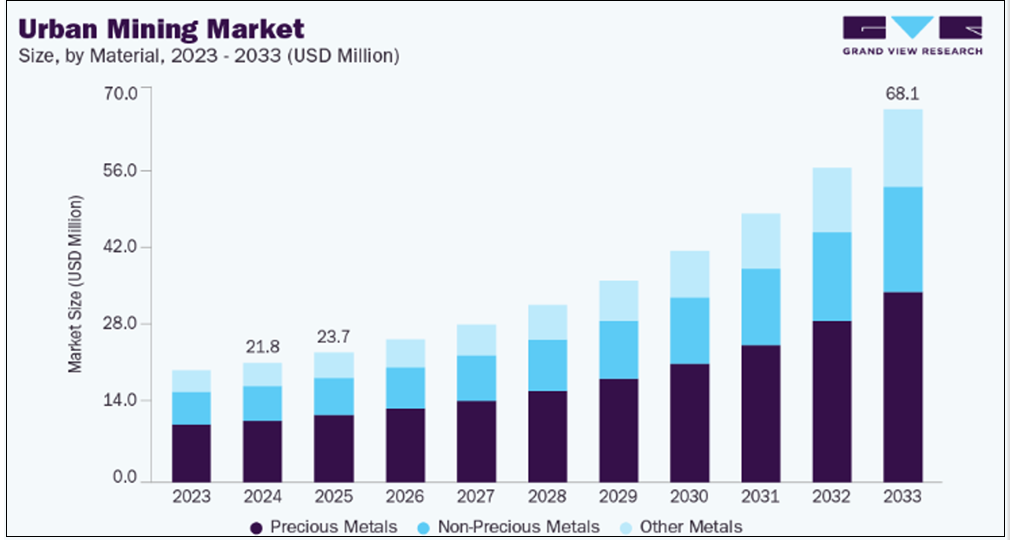
Source: Grand View Research, Urban Mining Market Size, Share & Trends Analysis Report.
Recycling by Metal
How much can recycling contribute to supply? The answer depends on the metal and differs significantly across critical materials, reflecting differences in recycling rates, product lifecycles and processing complexity.
We begin with copper, the most widely recycled industrial metal, and a clear example of why even mature recycling systems cannot keep pace with rising demand. We follow with battery metals, rare earth elements, silver, platinum and palladium.
Copper
A unique aspect of copper is that it is 100% recyclable without losing performance or quality. Recycling copper cuts greenhouse gas emissions significantly and uses up to 85%-90% less energy than mining new copper.4
Copper can be collected from old wiring, plumbing, electronics and vehicles. It is then shredded into smaller pieces, removing insulation and coatings. The copper is then melted in furnaces, which separates impurities, followed by refining and casting into ingots, rods or cathodes.
Currently, recycling accounts for 32-35% of global copper use (see Figure 4), and a large portion of historical copper remains in circulation. However, supply gaps are rapidly emerging. Global copper demand is expected to grow by over 40% by 2040, requiring as many as 80 new mines and $250 billion in investment to keep up.5 While recycling will help soften the blow, it will not be enough to fill the supply gap.

Copper is infinitely recyclable, retaining its performance while requiring up to 90% less energy than producing new copper from ore.
Nickel, Lithium, Cobalt
Lithium, nickel and cobalt, prominent in battery technology, have comparably low recycling rates. Lithium’s recycling share is very low, at less than 3% of supply.6 The reason for this low rate is that most lithium is still locked into newer EV batteries that are not yet available for recycling. EV batteries last approximately 8-15 years, and they won't be available for recycling in the short term.
The process for nickel recycling is also underdeveloped, accounting for only 1.4% of supply.7 This minimal amount is generated through manufacturing scrap and industrial reuse. Cobalt, which is easier to recover from battery cathodes, accounts for 5% of global supply, with estimates for future recycling on the rise.
Currently, lithium demand is expected to grow 8-9x by 2040, while nickel and cobalt are poised for 2-4x growth over the same period.8 By 2030, demand for these battery materials will likely outpace supply. While recycling provides less than 10% of supply today, it is forecast to provide 20-30% of lithium, nickel and cobalt demand by 2040-2050, as more end-of-life batteries become available and recycling infrastructure and collection systems continue to expand.
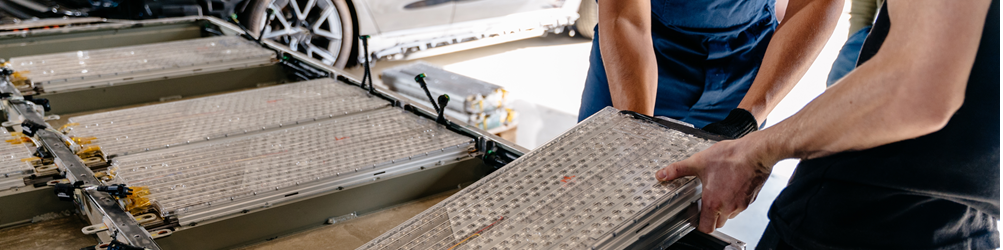
China's dominance of battery manufacturing also makes it the leading source of recyclable nickel, lithium and cobalt from production scrap. As the global EV fleet ages, end-of-life batteries are expected to become the industry's largest source of recycled feedstock.
Rare Earth Elements (REEs)
Rare earth recycling is still in its early stages, and less than 1% of REEs are recycled globally.9 Sources for rare earth recycling include end-of-life products (EV motors, wind turbines, electronics), industrial scrap and defense/aerospace components. However, the components needed for recycling are often difficult to extract efficiently.
The recycling process for rare earths requires shredding or dismantling of devices, followed by separating magnets or alloys from other materials. Once the products are broken down, there are two options: removing the magnets intact or grinding the underlying material into powder. The resulting separation and refining process is complex and intensive, creating a recycling bottleneck.
Until 2030, rare earths recycling will be a marginal contributor, becoming more meaningful in the 2030s as first-wave EVs and turbines retire. By 2040, recycling will be an important circular supply source, but will not be dominant.
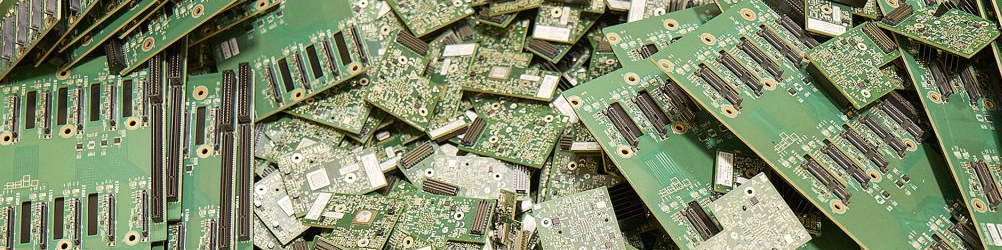
Microsoft is "urban mining" rare earth elements from used hard drives, aiming to scale U.S. production amid China's threat to cut off exports. The pilot has processed 50,000 pounds of obsolete drives collected from Microsoft data centers, extracting rare earth elements, including neodymium, praseodymium and dysprosium, crucial components for magnets used in electric vehicles and wind turbines.
Silver
Silver is one of the most recyclable metals, retaining its properties and performance no matter how many times it is recovered and reused. Recycling silver requires significantly less energy than mining and refining new metal, reducing both costs and environmental impacts. It can be recovered from a wide range of sources, including jewelry, silverware, industrial equipment, photographic materials, solar panels and electronic devices. Once collected, silver-bearing materials are processed, smelted and refined to separate the metal from other components before being cast into bullion, industrial products or new consumer goods.10
Recycled silver is an important source of supply, accounting for roughly 15%-20% of the annual global silver supply in recent years.11 However, silver faces a unique challenge: Many modern applications use very small amounts of the metal, making recovery difficult or uneconomic. At the same time, industrial demand continues to rise, particularly from solar energy, electronics and electrification technologies.
The Silver Institute forecasts that industrial fabrication demand will remain near record levels, with photovoltaic demand alone having more than doubled since 2020.12 While recycling will continue to help meet growing demand, it is unlikely to fully offset future supply pressures, highlighting the ongoing need for primary silver production.

The global silver recycling market was valued at US$11.81 billion in 2025 and is expected to reach US$12.35 billion by 2026. Looking ahead, the industry is projected to expand significantly, reaching US$17.57 billion by 2035, registering a CAGR of 4.51% from 2026 to 2035.13
Platinum and Palladium
Platinum and palladium recycling is highly technical and chemistry-driven, with its primary source being end-of-life automotive catalytic converters. Automotive scrap accounts for 75%-84% of the recycling supply.14 Petrochemicals and electronics scrap also contribute a small share. Platinum and palladium are infinitely recyclable, with high recovery rates and materials recycled as early as the 1970s.
Approximately 24%-25% of platinum15 and 27%-28% of platinum and palladium combined16 comes from recycling. The majority of the recycling process comes from cutting open catalytic converters, removing the ceramic core and crushing the material into a fine powder. The powder is then analyzed, processed, refined and used in new catalytic converters, as chemical catalysts and hydrogen fuel cells.
While platinum and palladium recycling play a critical supporting role, they have repeatedly undershot expectations and do not create enough to keep up with demand. As consumers hold onto cars longer, less scrap is available for recycling.
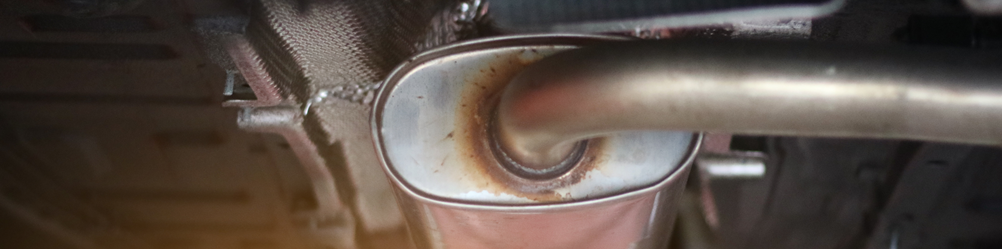
Catalytic converters are the largest source of recycled platinum group metals (PGMs). Used in internal combustion vehicles to reduce emissions, they contain valuable quantities of platinum, palladium and rhodium that can be recovered at rates of 90–95% through established recycling networks.
Figure 4. Summary Table: Global Share of Supply from Recycled Materials
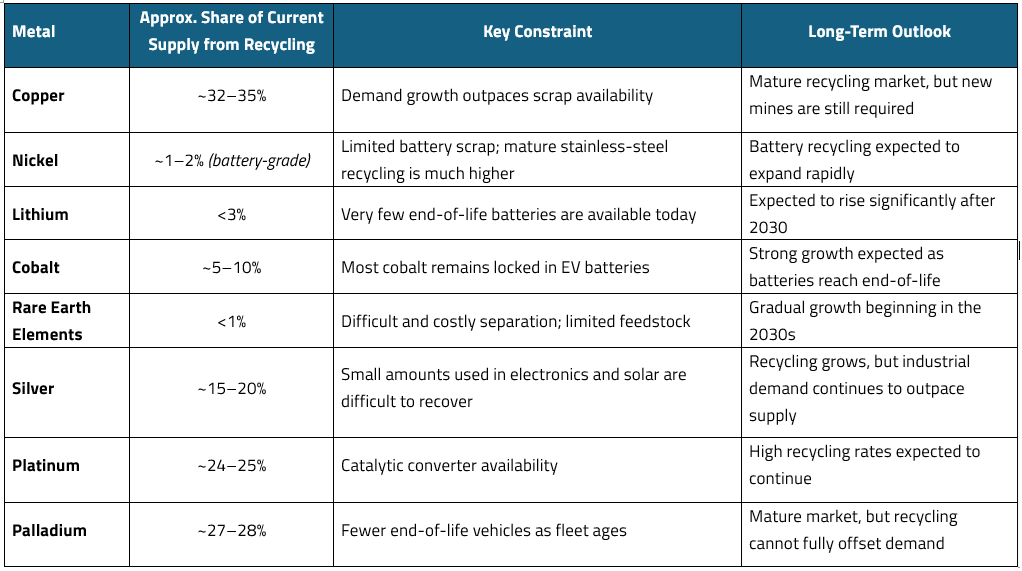
Sources: International Energy Agency (Global Critical Minerals Outlook 2026), International Energy Agency (Recycling of Critical Minerals, 2024), The Silver Institute (2025), CME Group, World Platinum Investment Council, International Copper Association and industry reports.
Can Recycling Scale Fast Enough?
Since recycling depends on when products reach the end of their life, and not when demand heightens, supply constraints remain. EVs, turbines, vehicles and electronics all have long lifecycles of 10-25+ years. Today’s accelerating demand, driven by AI, data centers, electrification and defense, is increasing far faster than these products are retiring.
However, the potential for recovered materials is not insignificant. Secondary supply from end-of-life products, including vehicles, electronics and decarbonization technologies, is set to become an increasingly important source of critical materials. According to IDTechEx, annual recovery of critical materials from secondary sources could exceed 3.3 million tonnes by 2045, representing more than US$110 billion in recovered material value (see Figure 5). Growth is expected to be driven by expanding volumes of end-of-life products, improvements in recovery technologies and increasing demand for battery materials, rare earth elements, platinum group metals and semiconductor materials.
Figure 5: The Potential for Critical Material Recovery in US$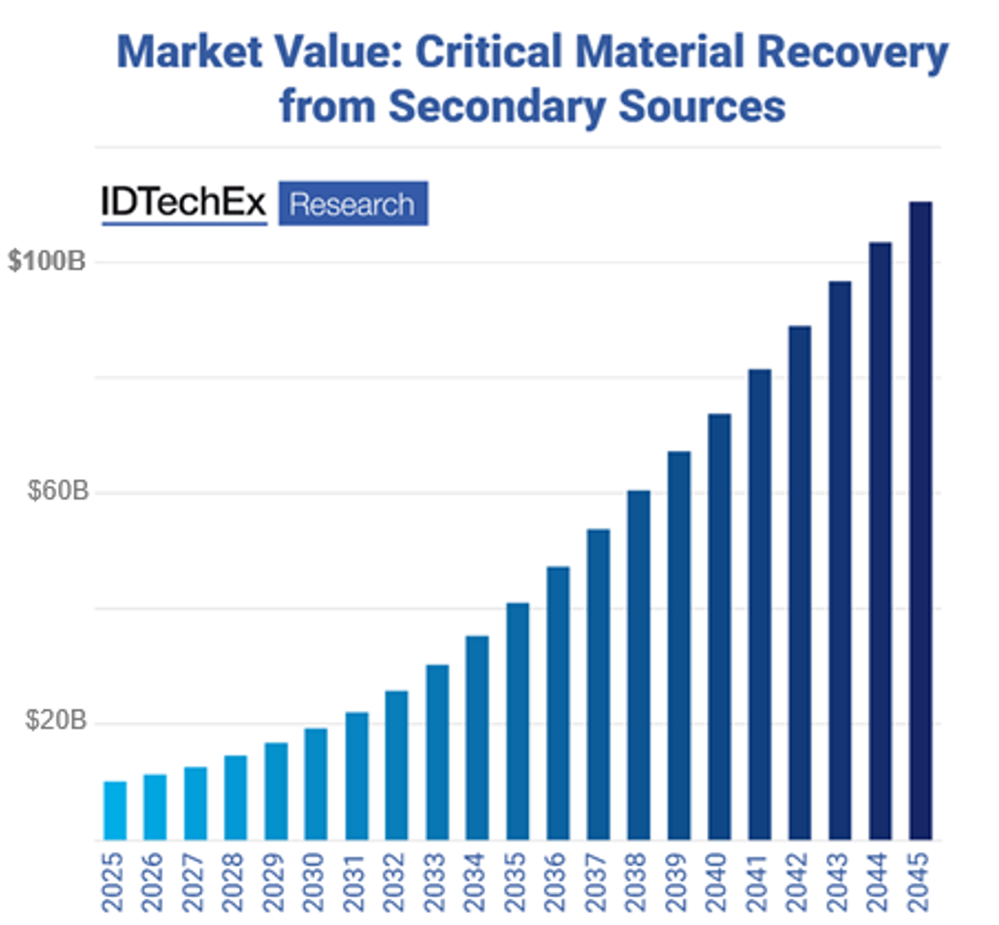
Source: IDTechEx, Critical Material Recovery 2025–2045: Technologies, Markets, Players.
Building a Resilient Critical Materials Supply Chain
Recycling is essential to strengthening critical materials supply chains. By recovering and reusing materials already embedded in the economy, recycling can diversify supply, reduce import dependence and lessen the need for some new raw material production. As governments and industries invest in recycling capacity, success will depend on stronger collection networks, processing technologies and long-term feedstock agreements across the value chain.
However, recycling alone cannot meet projected demand for critical materials. Because recycled supply is limited by product lifecycles and existing material stocks, long-term supply security will require a combination of recycling, new mining, refining capacity and efficiency gains. In our view, the challenge is not choosing between mining and recycling, but scaling both to support an increasingly electrified and technology-driven world.
Footnotes
Important Disclosures
An investor should consider the investment objectives, risks, charges and expenses of each fund carefully before investing. To obtain a fund’s Prospectus, which contains this and other information, contact your financial professional, call 1.888.622.1813 or visit SprottETFs.com. Read the Prospectus carefully before investing.
Exchange Traded Funds (ETFs) are considered to have continuous liquidity because they allow for an individual to trade throughout the day, which may indicate higher transaction costs and result in higher taxes when fund shares are held in a taxable account.
Diversification does not protect against loss. The funds are non-diversified and can invest a greater portion of assets in securities of individual issuers, particularly those in the natural resources and/or precious metals industry, which may experience greater price volatility. Relative to other sectors, natural resources and precious metals investments have higher headline risk and are more sensitive to changes in economic data, political or regulatory events, and underlying commodity price fluctuations. Risks related to extraction, storage and liquidity should also be considered.
Gold and precious metals are referred to with terms of art like "store of value," "safe haven" and "safe asset." These terms should not be construed to guarantee any form of investment safety. While “safe” assets like gold, Treasuries, money market funds and cash generally do not carry a high risk of loss relative to other asset classes, any asset may lose value, which may involve the complete loss of invested principal.
Shares are not individually redeemable. Investors buy and sell shares of the funds on a secondary market. Only “authorized participants” may trade directly with the fund, typically in blocks of 10,000 shares.
The Sprott Rare Earths Ex-China ETF is new and has limited operating history.
Sprott Asset Management USA, Inc. is the Investment Adviser to the Sprott ETFs. ALPS Distributors, Inc. is the Distributor for the Sprott ETFs and is a registered broker-dealer and FINRA Member. ALPS Distributors, Inc. is not affiliated with Sprott Asset Management USA, Inc.