
September 10, 2026 | (16 mins 08 secs)
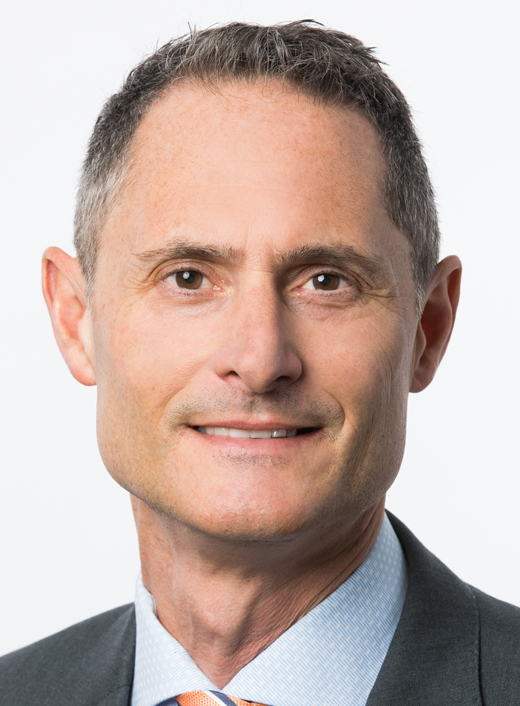
Filmed at the World Nuclear Symposium 2026 (September 9-11) in London, Sprott Asset Management CEO John Ciampaglia and Jimmy Connor discuss why investor interest and capital are returning to the uranium sector. Ciampaglia examines uranium's structural supply deficit, emerging demand from AI and utilities, and the growing momentum behind nuclear energy.
Video Transcript
James Connor: John, thank you very much for joining us today. You and your team are in London meeting with investors from all across the globe. I am always interested in hearing your thoughts on what they're saying, especially given that so much is happening in the world. We still have hostilities in the Middle East. Oil is up 50% to 60% year to date. That's leading to higher inflation expectations. Bond yields are rising across the globe. What are you hearing from investors?
John Ciampaglia: Thanks for having me back. It's good to be back in London. First of all, we've seen this conference change a lot in the last few years. When we first came a few years ago, only a few specialty hedge fund managers interested in uranium and nuclear energy were in attendance. This week, we've had several well-attended events hosted by various banks. I think that's a good signal that investor interest is there. Investors are interested in this topic. They come to London to learn more about the market and follow its developments. It is a market that's very different than other commodities. It's somewhat opaque. There's a thirst for knowledge and interest. As you mentioned, it's been an odd year. Last year was interesting in the markets, with many distractions. I thought this year was going to be a little bit calmer. Unfortunately, that's not the case. We have had distractions with the war in Iran. U.S. interest rates and debt levels are another major distraction for many market participants.
I think that has clearly put some shareholders and investors on the sidelines waiting for more clarity. The volatility has been very extreme. With respect to uranium and nuclear, I think most people are looking past all that short-term noise. They're looking at the fundamentals. They're looking at capital coming into the space, policy announcements, and fundamentals that look better as the structural supply deficit continues to underpin the story. We're seeing tremendous new sources of demand for uranium in the coming years.
James Connor: One of the new sources is from AI, and I want to get your thoughts on this whole AI narrative because this whole ecosystem is really based on two companies, OpenAI and Anthropic. They're going to go public sometime this year, and there are all sorts of speculation about how these IPOs will go. If those IPOs don't go well and that whole AI theme collapses, what does that do for the uranium price, if anything?
John Ciampaglia: In the last couple of years, there's been a direct connection between nuclear energy and the hyperscalers, and for good reason. A few years ago, hyperscalers were very focused on renewable energy as a primary source of clean power for their data centers. There are obviously limitations with that in terms of having an intermittent, variable power. A couple of years ago, they realized that nuclear energy had to be part of their energy mix. Why that's important is they bring much-needed capital to the space, particularly for more nascent technologies, smaller-scale reactors, which they're funding.
They're also signing very long-term, high-value power purchase agreements for electricity. We're seeing it in the U.S., where we just saw an announcement with Google and the Finnish utility. High electricity prices give utilities the confidence to invest back in their business. If you're a utility over the last two decades, you haven't really seen a lot of load growth. You haven't really made big capital investments. Yes, you've changed the mix of energy sources. In terms of making net-new investments to provide additional electricity to hyperscalers, there's also a great deal of reshoring taking place right now, which is obviously electricity-intensive.
High electricity prices are part of the reason why interest in nuclear is coming back. The need for baseload power is paramount for running AI data centers. There's going to be a lot of competition for capital among these new IPOs. There are also IPOs coming in the nuclear space. We've heard about Westinghouse going public, and potentially Holtec as well. I think that's all net positive because one of the main messages we've had with investors over the last 5 years is that it's hard for them to get positioned in the sector, as the market is still in a period of self-recapitalization after a very difficult period from 2011 to 2020. Investor capital is coming back. There are more choices for investors to play this theme. I think that's why we're seeing all this interest right now.
James Connor: Let's look at the Sprott Physical Uranium Trust or SPUT. Take us through the year. Q1 was very busy and active. It's been quiet since.
John Ciampaglia: It's been interesting. We consider the market for Sprott Physical Uranium Trust in the context of Donald Trump's election victory, which has had a significant influence on energy policy and global events. It has affected our ability to raise capital. There was a period in early 2025 when the tariff tantrum was underway, and investors were unsure what to do. It was a very quiet period for us. Then investors looked at the opportunity, looked past the noise and saw very attractive uranium pricing. I can tell you that over the last five quarters, we have raised more capital in the Sprott Physical Uranium Trust than at any point in its 5-year history. That, to me, says a lot about the direction of travel for uranium prices and investors' view on the sector. We've been very active. Last year, we bought just under 9 million pounds of uranium. In the first quarter, I believe we bought about 6 million pounds, which was a very fast deployment for us. We've since bought another about a million pounds. We're at about 7 million so far in 2026.
It feels like we're going to get back to another spurt of capital raising as more positive news flows, and we get out of those seasonal doldrums. Taking a step back over the last 5 years, we started this vehicle in July 2021 with about 18 million pounds of U3O8 on our balance sheet. We're now sitting at, I think, just under 82 million pounds. We have been very busy over the last 5 years buying uranium at very attractive prices. Even at a $90 spot price, we still think the price is very attractive to investors. That's why I think we've raised so much capital in the last year or so.
James Connor: Your annual limit is 9 million pounds. As you mentioned, you already acquired 7 million. Do you think you will hit that 9-million-pound limit at the end of the year?
John Ciampaglia: We would absolutely love to fill our capacity. If we achieve that, we can take additional steps to ensure we can continue to raise equity in the vehicle in an accretive manner. As we've seen, I've been asked a few times what the catalyst will be to get the market going again. In our experience, it's very hard to predict what those catalysts are. The last few years have been catalyst-rich in terms of news flow and whatnot. Just a few days ago, we saw the U.S. government put out an RFP. They need to buy uranium. You're starting to see many new sources of demand. SMR technology is approaching testing criticality, commercial approvals, and, hopefully, deployment. A lot of the demand models have built in very little anticipated demand for uranium thus far. I think that over the next 12 to 24 months, as these projects move forward, people will start to recognize that there's a lot of incremental demand coming. China is the leader here.
They are building around eight new reactors per year. It's mind-boggling. They continue to acquire large amounts of uranium. India just announced two very large transactions to stock up for its very ambitious program. We have Western utilities monitoring all of this. What we're hearing is that many of them are returning to the market with RFPs to replenish their inventory.
James Connor: 2026 has been relatively quiet in both the spot and the term market. The price is up 10% on the year. Oil is up 50% to 60% year-to-date, depending on the day of the week. Do you think investors are more focused on oil now than on uranium? Is that where a lot of investment dollars are going?
John Ciampaglia: We don't see the big dollars going into those categories because it's been very hard to trade those sectors. The on-again, off-again news flow, with one day we have peace deals and the next day we don't, has made it very difficult to trade those markets.
We think it's just basically been risk-off. People have taken bets off the table. It's very arbitrary in terms of news flow; it's a headline about why something is up 5% or down 5% day-to-day. That is typically not a trading environment that most long-only investors want to participate in. I think people are looking for value right now. We have seen some rotation toward sectors that are performing better. We've been seeing some rotation of dollars back into uranium equities over the last couple of weeks, as they corrected in the second quarter. I think that's a good sign that people are feeling a little better about relative valuations. We think the balance of the year is going to be much more constructive, irrespective of the saga we're seeing in the Iranian conflict.
James Connor: Sprott offers many other products for investors that focus on resources, including copper. Copper is making new highs every other day. Are you seeing many flows into those products?
John Ciampaglia: We're starting to see renewed interest in copper for sure. Copper is an interesting metal in that it's hitting all-time highs, just like the term price for uranium is. But it's still much lower on an inflation-adjusted basis than previous cycle highs. I think that's why the interest is there. I think that's why there's upside momentum in both uranium and copper. People are seeing copper deficits forming as we're seeing more mine disruptions due to weather or geological events. There's a growing need for copper as the world electrifies, with baseload power and overall electricity growth on the rise again. Copper is another interesting energy metal, along with uranium. Copper equities have performed well this year against the backdrop of significant volatility in other resource sectors.
James Connor: Gold and silver were coming to life, I believe, in July. Then that all changed with interest rate expectations, bond yields rising, and the U.S. dollar strengthening. What are your flows like in view of the gold and silver products?
John Ciampaglia: We had tremendous interest in both gold and silver earlier in the year with incredibly high prices. We've subsequently had price corrections in both of those metals. Some money has come off the table, for sure, I would say more Western-oriented money. Money in India and China continues to accumulate, whether that's individuals, institutional investors, or central banks. We are starting to see stability in gold prices. We have seen it start to regain some momentum. With that, we're starting to see Western flows return, which I think is very healthy. Investors are looking at the showdown in the U.S. bond market between Bessent and the bond vigilantes, as well as developments in the yen.
It's going to be very interesting to see, but I think, irrespective of how that plays out, it continues to affirm to investors that having a hard asset, a neutral reserve asset like gold, makes sense in your portfolio. I think that's why gold has found a bottom around $4,000. It's trying to rally back here. Gold remains a very interesting long-term part of your portfolio, given some of these issues we're seeing in the bond market with bond yields growing, inflation pressure still there, and debt levels globally remain very high.
James Connor: John, we touched on a lot here in the last few minutes, but is there anything I didn't ask or anything else you'd like to share with our audience who might be interested in gold, silver, copper or uranium?
John Ciampaglia: The big picture here is around critical materials, and critical materials can be defined in different ways. We are viewing critical materials as commodities that are vital to energy and national security. Whether that is uranium, copper, rare earths or different battery metals, these are all really important. Precious metals are the cornerstone of your portfolio, diversifying against other risks. Commodities are coming back to life. They have been in various stages of a bull market over the last 3 to 5 years. We still think we're in the early stages. More generalist investors are rethinking their allocation to metals and mining. At Sprott, we've been involved in metals and mining for decades. We are at the front and center of every cycle. We see investors bringing their interest back to the space after many years. Capital pools are very large worldwide. They have very little exposure to commodities. Investors are looking at signals from markets and governments on energy policy and responding accordingly. I think that's why we see interest coming back. We see risk capital coming back to the space, which is important.
We see governments acknowledging they need to reform everything from permitting to support for the mining sector. Canada is a great example right now. It's resource-rich. We have not fully taken advantage of that over the last decade, and now it's become urgent. I think investors are paying very close attention to what's going on. For us, this has been years in the making. These cycles tend to last for a very long time. The last cycle was very challenging and very long. We think this commodity cycle will be prolonged due to the lack of investment over the previous 10 to 15 years. We're very bullish. We still think we're in the very early to mid-innings of this cycle, and that capital is finally returning to our space. We're very excited.
James Connor: Great insights. Thank you for stopping by.
John Ciampaglia: Thanks, Jimmy. Appreciate it.
Important Disclosure
* Sprott Physical Uranium Trust is the world's largest physical uranium fund based on Morningstar’s universe of listed commodity funds. Data as of 9/30/2026.
Sprott Physical Uranium Trust (the “Trust”) is a closed-end fund established under the laws of the Province of Ontario in Canada. The Trust is generally exposed to the multiple risks that have been identified and described in the prospectus. Please refer to the prospectus for a description of these risks. Relative to other sectors, precious metals and natural resources investments have higher headline risk and are more sensitive to changes in economic data, political or regulatory events, and underlying commodity price fluctuations. Risks related to extraction, storage, and liquidity should also be considered.
All data is in U.S. dollars unless otherwise noted.
Past performance is not an indication of future results. The information provided is general in nature and is provided with the understanding that it may not be relied upon as, nor considered to be tax, legal, accounting or professional advice. Readers should consult with their own accountants and/or lawyers for advice on their specific circumstances before taking any action. Sprott Asset Management LP is the investment manager to the Trust. Important information about the Trust, including the investment objectives and strategies, applicable management fees and expenses, is contained in the prospectus. Please read the prospectus carefully before investing.The indicated rates of return are the historical annual compounded total returns including changes in unit value and reinvestment of all distributions and do not take into account sales, redemption, distribution or operational charges or income taxes payable by any unitholder that would have reduced returns. You will usually pay brokerage fees to your dealer if you purchase or sell units of the Trust on the Toronto Stock Exchange (“TSX”). If the units are purchased or sold on the TSX, investors may pay more than the current net asset value when buying units of the Trust and may receive less than the current net asset value when selling them. Investment funds are not guaranteed, their values change frequently and past performance may not be repeated. The information contained herein does not constitute an offer or solicitation to anyone in the United States or in any other jurisdiction in which such an offer or solicitation is not authorized.