
Sprott Radio Podcast
Breaking Rocks for a Better Future
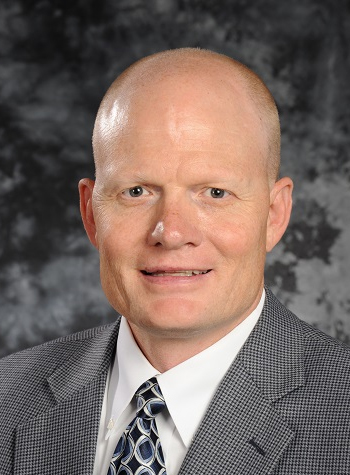
Ed Coyne speaks with Travis McLing of Idaho National Laboratory about rebuilding secure, responsible mineral supply chains—from mining and processing critical materials to powering tomorrow’s technologies. They also explore the need for a renaissance in mining that includes long-term investment, coordination with government, skilled workers and plenty of leading-edge geology.
Podcast Transcript
Ed Coyne: Hello, and welcome to Sprott Radio. I'm your host, Ed Coyne, Senior Managing Partner at Sprott. I'm pleased today to welcome a new guest to Sprott Radio, Travis McLing, Chief Geologist at the Idaho National Laboratory. Travis, thank you for taking the time to join me on Sprott Radio today.
Travis McLing: My pleasure. I enjoy talking about something I'm so passionate about.
Ed Coyne: Wonderful. Speaking of passion, let's dive right in. We were talking before we started recording, and you mentioned that you've been at Idaho National Laboratory for almost four decades. Could you talk a bit about your evolution at the lab over these four decades, the key initiatives you're all working on today, and what's happening in your ecosystem?
Travis McLing: My pleasure. In the early 1990s, I was a young, energetic geology student who had fallen in love with ore deposits, and it seemed to be my path forward in life. Anyone familiar with metals in the U.S. in the late 1980s and 1990s knows things were pretty tough. There weren't a lot of jobs out there. Having a job in the mineral industry was a recipe for changing jobs every few years. It was a difficult proposition.
I was scheduled to go on and do my master's work in the ore deposits subject matter area, and a wise professor of mine who became my master's advisor said, "I know you've got a young family; you've got a wife." He said, "I'm not sure that there are great opportunities for you out in the minerals world." I talked with my wife, and we decided that was probably a good reason to make a change. I went ahead and pursued a degree in geochemistry, focusing on metal mobility in the subsurface.
In essence, I came to the Idaho National Laboratory in the early 1990s to work on uranium immobility, immobilizing metals released into the ecosystem by poor practices, and other issues that were not as big a concern during the Cold War. As I came into the system, I was a frustrated miner who worked at the lab and on mine sites to help immobilize metals to support cleanup around them and to immobilize DOE metals of concern, including uranium.
I had a great early career. I got to do a lot of fun things and worked on what I thought were meaningful projects, too, as I said, to clean up the sins of the past to help our ecosystem be a little more resilient. I think that plays an important role in where I'm at today because the social contract we have with the public about mining has largely been left in the dustbin. That is, the public views mining as a dirty occupation, a dirty industry, and as being very hard on the ecosystem.
I took a step back some years ago, and I looked at what my children had seen. My children are all grown now, and I've got grandchildren. They'd always seen their dad going to work, cleaning up metal contamination, working on mine sites and reducing the impact of those mines. They'd never seen their dad as an active advocate for responsible mining. Coming in today, it's an exciting time. I've waited since the early 1990s for a renaissance in mining and other associated activities.
Also, during that time in the 1990s, as the United States clearly was trying to reap the dividends of the post-Cold War, winning the Cold War, we had beaten the Russian menace, and so we decided it was time to clean up all the messes we had made. We really, as an intentional strategy, offshored the metal industry in the United States. It really became clear to me in 1996 when we closed down the Bureau of Mines. I don't know exactly where it ranks, but I would offer that the Bureau of Mines perhaps had more IP associated with research and development there, making the U.S. a leader in global mining.
When that shut down, other countries saw an opportunity, particularly China. It was about that time they started picking up the baton and moving into the minerals world. This isn't a problem we created yesterday, the day before or 10 or 20 years ago. This is a problem we had 30 to 35 years ago. As a result, we find ourselves in this cross-section now of being in desperate need of the metals that are required for a modern civilization, let alone the AI systems that we find ourselves in, but we don't have the metals.
We only produce one critical material in the United States, and that's beryllium, for which we are the sole proprietors, meaning that we are independent of other providers. That's a bad statement, given there are 60 of these materials out there. I also say that it's taken 35 years for geology to be cool again. Now, I'll always maintain that geology has been a cool science for my whole life.
It's been in the last five to seven years that what geologists do, what earth scientists do, whether we're talking geothermal, we're talking about mining or carbon storage or any of these other activities, is that the skillset that we've acquired looking at rocks has become in high demand. I guess the moral of the story is that if you wait around long enough, things will come back into vogue. I told my wife not long ago that it wouldn't surprise me if we were wearing skinny ties again here in the next few months.
Those kinds of cycles come and go. I've had to lose all my hair and get into my 60s for it to become a science that everybody wants a part of, but we're here, so we take advantage of it. At Idaho National Laboratory, we are a nuclear laboratory. Our primary mission is to sustain the life cycle of existing nuclear power plants, design and test fuels and develop and support the new nuclear fleet, including small modular reactors, microreactors, et cetera. First and foremost, we are a nuclear laboratory, but you can't be one without a supply chain.
We are a multidisciplinary laboratory, so we've always had an environmental science and technology directorate here, and I've worked in that now since the early 1990s. We've always worked in it, but it's been a very small part of what we do. Now at Idaho National Laboratory, we have an initiative that is one of the lab's core elements, focused on critical minerals. We also have a substantial geothermal effort. Going back to looking at the earth and earthbound energy systems is a big deal here at the lab. We're growing.
It's one of our fastest-growing areas. The critical minerals challenge falls right into the sweet spot of what my team and I in the lab need to do to help meet our energy dominance, supply chain, whatever phrase you want to use. We don't do it without metals. I've heard friends say, "If it's not mined, it's farmed." In reality, if it's farmed, it's mined as well. Somewhere in the earth, there's a hole in the ground that's responsible for nearly everything that you use in your daily lives.
I find that a sobering statement considering our recalcitrance towards the mining industry. Now that was a long story. You didn't ask for such a long story, but I had the mic, so I gave it.
Ed Coyne: We're going to give you a lot of opportunities to tell longer stories, hopefully here. I want to go back to something you said, though, that I thought was interesting. We were a dominant force, I guess, 30 years ago or so, and in the spirit of trying to clean this up and be responsible, we said, "Let's put it in someone else's backyard." It's not for lack of access or lack of material. It was really more a lack of initiative that led us to get away from it. Now you fast forward, and it's like, "Oh, man, we actually really need this stuff, and we can't be dependent on other people." Is that a fair way to say that?
Travis McLing: Yes. It took us a long time to mature to that question. I became really concerned back in, I believe, 2012, when the Sea of Japan issue arose between China and Japan, and China imposed an embargo on rare earths going to Japan. Japan suddenly had a wake-up call, and the rest of the world should have one as well: we were in dire straits because one entity, often a political adversary, controlled so much of our mineral and metal needs. Turns out it was even worse than that. It wasn't just rare earths. It was nearly every one of the critical elements.
Ed Coyne: What do you think was the main catalyst for the general world in the last, say, three to five years, to wake up to this reality? Because you really can't turn on a news channel or read a paper where somewhere along in that paper or on that TV show, they're talking exactly about what you're talking about right now. What caused that awakening for people to realize, "Hey, we have an issue here?"
Travis McLing: I sometimes can be accused of not being very aware of social media and the surroundings and things like that. I'm so focused on the rocks and things, but it really goes back a little bit further than that. It goes back to the pandemic in 2020. Suddenly, you couldn't get anything. It didn't matter what it was. You couldn't get it. It was very hard. Coming out of the pandemic, we began to realize that we'd gotten behind in our supply chains. I had a pickup that sat in a shop for 120 days because of a very simple metal part manufactured in China.
Because of supply chain disruptions, you have a $50,000 pickup you can't drive due to $14 parts. I think it goes back even further than that. People began to be aware of the supply chain. This just-in-time delivery model that we worked under was really flawed. Then, of course, we had these back-and-forths going into the 2000s, with battles between the Chinese and the West over chips. "We can't have chips, we can't have technology, so we're going to hold critical minerals back from you." Then it only got worse as the 2020s evolved.
Those things really caught people's attention when it made the news that certain metals we rely on are hard to get. There were consequences. The Chips Act, some of its associated measures, and the embargo on chips going to China. They said, "Well, we can just make that tougher on you. We'll go ahead and keep the metals that you're using to make the chips from you." I don't know if that's a clear explanation of your question, but I started really digging into the problem and thinking that we had a path to a government-type solution around the time the pandemic came into full force.
Ed Coyne: How does the United States, how do we regain control, or at least get a better seat at the table as it relates to getting access to these deposits, to refine them, to mine them? What are we doing, or what can we do to try to gain some of that back?
Travis McLing: One must remember, also, that it's not just mining; it's processing. China dominates the world in mining. They more than dominate the world in mineral processing and refining. 50% of the world's copper goes to China; they refine it and then sell it back to us: Nickel, same kind of story. China has built a very resilient supply chain. I'm not a political science major; I'm just a geologist, but when I look at how they've evolved from when I first became very concerned about metals in the 2010s and early 20-teens, I see that China was a metal producer.
Today, China is not much of a metal producer, as they're an end-product producer. China doesn't make a whole lot of money selling us raw rare-earth oxides. What they make a lot of money selling us are magnets, and ultimately, magnets in end products like cars and other kinds of things. That's where they really make the money. China has said, I think it was back when Chairman Mao, or maybe one of the others, said, "The Middle East has oil, we have metals, and that's what we're going to build our future on."
When you move up that supply chain, and you're wise enough to do that, and I say that China isn't the boogeyman, China is just being very wise in a centralized government. "First, we'll strangle the world by supplying raw products, and then we'll strangle the world because we turn those raw products in our own country into the end products that the rest of the world needs." Therefore, you see evolution underway. Again, you remember this is just the doctrine according to Travis, but my concern is that we are trying to solve the 1996 problem today, and China is solving the 2035 problem today.
Ed Coyne: It's interesting because I was reading an article about China. I think they're building 27 new reactors, and I'm interested in how they build them, the repeatable process and so forth. They said the one thing they have that we don't have is the return on their investment, the need for that return, or, I guess, the timeframe. Does the U.S. have to change how we think about investing in this, both physically and mentally? Is there a fundamental change that has to happen before we can even move forward?
Again, I don't want to get into geopolitics and all that, but from the mining side, you have to be in those circles. You've been doing this for so long. What's being talked about out there as it relates to that?
Travis McLing: I think that's a fair question. You can't get away from the geopolitical side of it, although it is certainly not my area to talk about. We do have to change. Built into our genetic code, there's something about humans and our love of metals. If you go back 15,000 to 18,000 years ago, copper was very important. We were taking metals from the ecosystem and turning them into tools and adornments. We've had a long history of looking at shiny things and making stuff out of them. It's in our DNA.
A miner, whether in the United States, Canada or Australia, if there is a metal to be mined and there's a dollar or a pound to be made, will make it. I promise you. They are so good at that. One thing they are also really good at, and you can walk around in the backcountry of Idaho and see old mine sites everywhere, is that if there's not a dollar to be made, they will not persist at that location. To that point, and again, we come at it from a geologist's perspective: if there isn't a dollar to be made, we can't meet those production goals or reach our end state.
We do have to start thinking about perhaps something that looks more like a Farm Bill for minerals than what looks like an open market for minerals, so we can get a stockpile buildup so a company can hedge the risk for the first five or seven years of their mine development, while China is suppressing the market until they get their foothold in, establish their markets, get a provider. I'm sure many industrial partners would pay a premium, probably not twice, but maybe a few percent more, to buy responsibly sourced metal than they would something from who knows where the metal came from out of China.
Do we have to do that? An ag friend of mine said, "Well, why don't we just use something like the Farm Bill?" The Farm Bill is really insurance that helps keep the marketplace stable and valid. If the market needs to move soybeans, the Farm Bill allows it to move soybeans. If it needs to move corn, it can do that. Now, it's not a perfect analogy, but it does provide insurance against the risk of planting that seed every spring. We must do something similar to that for those metals of interest.
We're going to have to come to terms, I believe, with some sort of floor price. Maybe it's a vault that we're talking about now, maybe it's a stockpile, whatever the case may be, but there's a price that is paid that allows the producer to produce without going bankrupt within the first five or seven years.
Ed Coyne: I guess, essentially, we're seeing that with federal dollars being invested in some of these companies. Is that effectively creating that said floor out there, as they're doing so to encourage more capital to be invested in that space?
Travis McLing: Yes. You're exactly right. Now, there are some risks in that because sometimes the slickest-talking person in the room gets the check. Perhaps we need to do a better job of vetting some of these opportunities. These public-private partnerships, in which the U.S. federal government assumes some of the risk, may be a valid model. Again, I'm getting out in front of my skis a little bit here. For instance, we'll have a ribbon-cutting here at Idaho National Laboratory for a pilot plant for Perpetua, a gold mine with an antimony resource.
We are testing their circuit and recovering gold, while also recovering antimony for the Department of Defense, which warfighters need. Now, there's plenty of money to be made in gold. There's not much money to be made in antimony. Still, because the U.S. Army entered a partnership through funding incentives, we are now at a point where we can have a gold mine producing the antimony the warfighter so desperately needs.
That doesn't happen in the former or the current ecosystem. It's a big deal to have the customer invest in you and help de-risk what you're trying to do. Let's be honest, gold at $4,500 or $4,400 an ounce is way more profitable.
Ed Coyne: You mentioned this in passing about magnets. I think it's a fun thing to talk about because rare earths, with what we saw with Russia and Ukraine, and then more recently with the U.S. and Iran, this whole thing with drones and magnets and rare earths and the supply-demand dynamics of that. I think you hit it right on the head, talking about not just the mining side, but the refining side of this and actually making the end product.
I want to go through your top 5 or 10 critical materials currently available. Maybe we do something simple like rate them in order of importance, or from an investment opportunity, or however you want to do it, but let you really be a geologist for a while here and talk about some of your favorites. I know it's like asking who your favorite son or daughter is. What are some of your favorite critical materials out there that you think we obviously can't go forward without? Maybe talk about why.
Travis McLing: I must keep giving you credit for your questions because they're really insightful.
Ed Coyne: I cheat. I read a bunch of your stuff.
Travis McLing: We have 60 metals and materials on the USGS list right now. There is no way that we can solve all 60 of them in five or eight years. We don't have enough resources to spread the peanut butter that thin, and if you do, to try to bring them all in, nobody wins. We're going to have to choose some of the most important ones. Right off the bat, and it may surprise you, the one that I say, but I think copper is the most important of the metals on the critical minerals list.
I've read several books that say China's mineral play isn't for these boutique critical minerals produced at just a few 100 tons a year. It's copper. Copper drives the system. It still is what transfers the electrons. I put copper really, really high on the list. Then, there are no gallium, there are no germanium, there are no scandium mines. These are all byproduct metals. I list gallium because we need it for the wide-bandgap semiconductors. You can't have an AI infrastructure if we don't have that.
Then, germanium, every one of these drones that are going back and forth, either from Ukraine to Russia and back and forth, or the U.S. and Iran going back and forth, if they operate at night, every one of them has a germanium lens. There are no germanium mines either. Germanium's a byproduct of zinc mining, so you have to pull that one out. That ranks pretty high. Then, as we move into the world of hypersonics, carbon. Now, obviously, carbon plays a big role in our electric vehicles. It's a huge part of the anodes there.
The world is shifting toward drones and hypersonics, and tungsten and graphite are needed to withstand the heat they endure. I think from my seat that's another incredibly important metal. I did my PhD working with rare-earth elements. Not all rare-earth elements are equal. There's only a handful of them that really matter. You can hardly get rid of cerium or lanthanum. NdPr, terbium and some of the other high-temperature ones are what make the magnets resistant to temperature and able to operate in extreme environments.
I know I've gone over my 10 limit here, but it's important to say that not all the lanthanides, the rare earths, not all of them are equally important. Some of them are exceptionally important and are required in our day-to-day operations. There's another one that's really coming up. Silver is rapidly becoming a precious industrial metal. The price of silver seems to be climbing and remaining stable as we use it more in electronics and other high-tech applications.
Then the last one I'll end with is one that wasn't on my list a few years ago, but now is, yttrium. It's an important metal. Not to say that zirconium and zinc aren't important. For my nuclear laboratory, uranium's terribly important. We produce less than 5% of our national uranium. There is no nuclear renaissance without uranium, so I've cheated and added a few more to your list there.
Ed Coyne: I asked the question. I should've known what I was getting into. I think copper, for that to be your number one, I think is fascinating because you're right. Nothing happens without it. Regardless of how you're creating, consuming or moving energy, it really doesn't matter. You still need copper as part of that ecosystem. I think that's something that really investors know and understand. They've seen it. They understand how it functions.
Travis McLing: I find it interesting. If you drive a diesel pickup and you haul cows, copper's the most important metal in your transportation. If you drive a Tesla, that's a lithium battery; copper's still your most important metal. Whether you're building a house, copper's your most important metal. It just doesn't matter where you go, copper-- [crosstalk] If you look at the amount of copper we need to bring to the marketplace to meet the future demands, if any of them wake me up at night and make me wonder if we can get there, it's copper.
Ed Coyne: I've seen a stat. If we were going to achieve a carbon-neutral footprint by 2050, we'd have to mine twice as much copper as has ever been mined since the beginning of copper mining between now and 2050, which we know mathematically, scientifically and physically is impossible. It looks like we're not getting carbon-neutral by 2050, I guess, is the punchline.
Travis McLing: We are not. All the green architecture, whether it's nuclear, windmills, wind generators, or solar, still transmits its electrons and communications via copper. I just waited with bated breath for the USGS to release its updated list last year, and it added both uranium and copper. Nothing could have made me happier. One, it's foreboding; two, they finally recognize how upside down we are. Considering that 50% of the world's copper passes through China, it's even worse.
Ed Coyne: Then I think the other one that is also near and dear to Sprott as a firm's heart is silver. I think silver is fun to talk about because, yes, it's a precious metal, but to your point, it's really been bridged over to the critical material side. It is consumed in the same way as other critical materials are. I guess, with silver and copper, there's a question I wanted to throw in. I guess since we're talking about those two metals, it's really thrifting and recycling in general.
Those are two that seem like they might help dampen supply and demand and balance things out, but how much should we rely on them? Is that pie in the sky that recycling can solve our problems as it relates to at least silver and copper, or do we need to bring more of it out of the ground? What's your take on that?
Travis McLing: I'll offer an answer in more of a philosophical way. Everything that can be recycled should be recycled. We're going to need every gram of it to get back into the system. I'm a big supporter of recycling. Good examples are copper and aluminum, of course, as well as lead and silver. They have a high recycling fraction. You said yourself: if you look at just the copper, we'll need by 2050 to meet our projected demands, you can't recycle your way out of the problem. You're still going to have to produce.
It's just like recycling lithium-ion batteries. Great idea, but the mass balance is way off. We don't have nearly enough of those in the supply chain to recycle our way out of the problem. Again, every little bit helps in this regard, and that will become increasingly important as the prices of these metals continue to rise.
Ed Coyne: Let's go back to you and the Idaho National Laboratory for a minute. How do you guys fit into this ecosystem? Are you guys predominantly working as advisors or consultants for energy companies, mines or both? What does a typical year look like for you and your team?
Travis McLing: I appreciate you asking me about it because I have a great passion for the place I work at, Idaho National Laboratory, and my fellow sister laboratories around the country. Still to this day, our biggest customer is the U.S. Department of Energy. The way this administration has organized the Department of Energy, you'd say you must break a lot of eggs to make an omelet. It was a rough transition early on, but they've specifically organized minerals under Audrey Robertson’s group there at CMEI.
What she's been able to do in getting research dollars out the door through awards to partner with national labs and universities with industry to solve very challenging problems should not be discounted. Burt Thomas, who's the program manager there with Audrey and the METALLIC program, which has been the shining star of the minerals program for CMEI, has allowed us to bring nine national laboratories together to address very specific questions from upstream beneficiation and comminution down to mineral separation.
We saw growth in it in the late Trump administration. We saw further growth under the Biden administration. Still, we've seen significant growth in this area under the current administration, enabling us to begin addressing some of the most complex challenges by developing new flowsheets and novel separation technologies that are less environmentally sensitive or harmful. These kinds of things, if you watch the funding from the federal government, that group that Secretary Wright has under him has really been helpful, and we see more opportunities coming along.
I must wave the flag on that: Metallic has enabled us to substantially upgrade our technical capability to do things we couldn't do before. When one looks at how minerals are stitched together and how to unstitch them, Metallic has brought that in. The Department of War has been a huge and growing partner for us. The Department of War has some serious, pressing issues. They don't have three or five years to solve them. They're sending enough ordnance downrange that they had problems yesterday.
The Department of War has been a major supporter of necessary research in this area and of efforts to establish mineral sourcing. You've seen those deals that have come out with MP Materials and other places where the Department of War has been reaching out quickly to try to find a long-term solution. Then here at the lab, we do quite a bit of private-sector work. We work with quite a few mining companies. Many of those mining companies cause us problems.
Some of those problems are: "We have a mineral that's particularly rich in a given metal, but it's been difficult to crack," as with chalcopyrite. Lots of copper in it, but it's a very hard metal to crack—other things like graphite. Graphite's been a difficult one because purity is a big deal. How do you process it? We've got several companies coming to us, letting us use some of the advanced tools we were able to get through Metallic, and drawing on the clever brains I have on our team here to help solve a variety of those problems, including sourcing metals from brines.
We've got a few of those projects out there where we're looking at lithium and manganese from geothermal brines, or deep-basin brines that are already being produced. How do you take advantage of the companies pumping that water and then putting it back into the ground to pull that metal of interest out for you? We used to be a pretty well DOE-dominated facility. DOE is still by far our largest and most important customer. The Department of War is becoming an increasingly important partner, and that work is growing quite rapidly.
What I call walk-ins at work, that is, people calling us and saying, "Hey, can you help us with this problem?" It may be we've got thorium. We've got a great rare-earth deposit up here in Idaho, and we also have associated thorium. What do we do with the thorium? Working with them to figure out how thorium departed and how to get it so you don't carry an NRC or a radiation license with you as you go downstream has been a big part of it. That's just one example, but those are fun things to work on.
Ed Coyne: Speaking of fun things, is there any one project that either you have worked on, and it's now been shelved, or one you're in the process of that you're allowed to talk about? Any projects out there that might be fun for us to hear about, from a technology standpoint or just a mineral standpoint? What's the cool stuff you're working on right now that you're allowed to talk about?
Travis McLing: Some of the stuff is business-sensitive, but others are not.
Ed Coyne: Correct.
Travis McLing: The work we do with Idaho Strategic Resources is primarily a gold mining company with a very forward look at what used to be called the Idaho Thorium Belt and is now the Idaho Rare Earth Belt, and we're working with them on how to get their materials into the supply chain. Tomorrow, if you watch the press, there will be a press release, and we're doing our big ribbon-cutting on the Perpetua antimony-gold pilot plant. That'll be out in the press tomorrow. We'll have a bunch of dignitaries in there.
That's a really fun project because, one, it's an Idaho company. It's a smaller company. The geology at their deposit is unbelievable. The work that the geologists have done to characterize that and de-risk that site in a very sensitive area. It's where salmon go home to spawn. It's where the Nez Perce tribe has some of its traditional lands. They've been very good stewards of their location, and the geology is just ridiculous. One place you can look and say, "This is where we're going to pull gold."
Another place you look over here, and you've got the antimony, and then you've got big scheelite veins with tungsten veins in it. The geology is just unbelievable. I love that, and I love working with those folks, and I love what we're doing, which is going from this, from the rock to the product. We get to do that. We get to break their process, then fix it, then break it and fix it. We'll run that for five months. Then the army will begin entering production and procuring antimony trisulfide for its munitions.
Ed Coyne: I'm just going to paint this picture for the listeners because it's not on video, unfortunately, but I wish everyone could see your level of excitement in the last two minutes when you pulled the rock up. It's fantastic. It's like every day is like Disney World for you when you're out on the sites, I'm sure, with some of this geology out there. That must be really fun for you.
Travis McLing: It is. I'm often accused of being a little too enthusiastic, but I'm 61 years old, and I'm as excited today about my field of study as I ever have been. I think the work that we're doing is more impactful than it's ever been. We see its direct results not only in our warfighters keeping us secure but also in everyday life.
I'll share a little because, again, I have the microphone, is that there's a social responsibility that we don't talk about very much, is that all of us who walk around with technology, we drive really technologically advanced cars, we have all sorts of communication devices around us, we utilize AI every single day, and few of us think about the consequences of the metals that are in all of those materials. A book that really changed my life was Cobalt Red.
I was aware of some of the exploitation that happens and what China has done in Africa in taking advantage of those opportunities, and when the West walked out. Some little kids are putting their lives at risk and can't go to school, so that we can have the metals that we utilize every day to keep ourselves technologically advanced, even to have the discussion, "Can we go carbon neutral or can we go carbon negative?" We can only have those discussions because there are people who are less advantaged than we are who are being exploited to produce those metals.
Now, that's not the whole of it. Many places in the world produce metals, pay fair wages and treat their employees well. Some of the things happening in parts of the world, particularly by Chinese companies, are abhorrent to me. I think there's a social conscience. When I ask people, they say, "We'll never have a mine here." I said, "Would you rather have some little kid die in DRC so you can have your metals, or would you rather have a sustainable mine in your county?"
I don't know the answer to that. Society has to make that decision. I have to get on my soapbox and give you that, as it's not just about finding shiny metal and making it into cool things. It's about what our social responsibility is as global citizens.
Ed Coyne: I think that's well said, and I think it's something we all need to be thinking about. Thank you for bringing that up because you're right. There's a cost to everything. You can do whatever you want, but you must be willing to pay the cost and accept responsibility for what you consume. Couldn't have said that better myself. I do want to briefly reevaluate nuclear because you mentioned something that people, believe it or not, bring up to me at cocktail parties: small modular reactors. These SMRs, everyone keeps talking about them before they even talk about the regular reactors.
What is so exciting about the smaller reactors versus the reactors that we traditionally know and have gotten comfortable with?
Travis McLing: One is the inherent safety of the new designs. There's so much more inherent safety in how these things are built. Then number two is just the potential deployability. If you put a one-gigawatt PWR reactor out somewhere, you have to have a huge amount of space. You need a huge amount of cooling. You need a huge infrastructure. These things are massive. If you take a 250-megawatt SMR, you can put it at a mine site. You can take that thing and put it in other places where you don't require this immense amount of space and infrastructure.
I think their deployability, their placement closer to the load, and the fact that they aren't nearly as labor-intensive make them exciting for me. What I really like about them is all the work they've done to guarantee and ensure safety in the fuel. There's a whole bunch of different fuel types for all these SMRs, but all the work that we've done here at the lab to test that and stress those fuel assemblies and look at how to reduce the risk associated with the operation, that's been really fun to watch.
We had Secretary Wright out here, maybe about three or four weeks ago, and they had a big event with Under Secretary Haustveit. It was like a rock concert celebrating us bringing three new nuclear reactors online here, which I haven't seen in my career. We restarted an old one, but now we're bringing these reactors to fruition. Lots of places I go and I talk to industrial partners, I talk to mines, and they're all saying, "When can we have an SMR so that we don't have to pay such a high penalty?"
A lot of these mines are in places where getting power to them is virtually impossible because there's either no power infrastructure or they're at the end of the line, and the supply is too transient, so they use gen packs and other things. That's why I think they're cool. I think that, ultimately, it's the way they can have an impact. You can have an SMR in any given city in the country or a 1,000 or 2,000-megawatt plant. You've got to clear everybody out because it takes so many acres to build that. Not that they're inherently unsafe. It's just that they're massive.
Ed Coyne: It's certainly exciting times for that. It's interesting. It's one of the few things I feel like both sides of the aisle agree on and understand the need for. We don't have many of those. It's something worth celebrating; that is one thing that we can all get behind and understand.
Travis McLing: I think one of the great epiphanies in my life was the realization that most of the folks who are concerned about climate were that wind and solar were never going to get us there. They're going to play a role, but you've got to have some base load, and that nuclear represents the only real carbon-free way. There was a natural marriage between the nuclear advocates and the climate advocates. It was a beautiful thing that would lead to a bright future. I think we will be able to do some significant climate mitigation, but only because we've got those nuclear reactors running.
Ed Coyne: I know there may have been a few things, maybe that you were hoping to talk about that I didn't give you the opportunity to. Are there any topics you want to leave us with before we sign off on this podcast?
Travis McLing: Just one, and that's the workforce side of things. We already talked about the social license, and we've got to do a better job of talking to people about the risk-consequence-reward part. The workforce side is that we are not producing—I use a coarse metaphor—but there are more people in restrooms in China doing the work I do than in the whole United States. We are not producing enough mining engineers, deposit geologists, truck drivers or AI people to run autonomous operations at mines.
We are a couple of 100,000 people who are underwater in meeting our needs today, let alone those we have tomorrow. Investment in workforce, workforce training, not just for people like me that walk around with "doctor" in front of their names, but we're talking about people who can fill out environmental compliance forms, people who can monitor wells, people who can drive ore trucks, people who can work inside the separation facilities, the mills, the refineries. We could use millions of workers. In an era where we're afraid, we're all going to lose our jobs because AI is going to take over, I have yet to see AI break rock.
Ed Coyne: It's funny you say that because it was the same thing with the internet. They're always going to take away jobs. It's created more jobs and more millionaires than it's taken away. I think the same will be true with AI. I read that over 1,000 nuclear engineers are needed or are being hired for the revitalization of Three Mile Island. That's just one site.
Travis McLing: Yes.
Ed Coyne: I'm not sure there are 1,000 nuclear engineering students right now in the United States. I don't really know, but it just seems like no one talks about it. I've yet to meet someone who says their kids are going to school to become nuclear engineers. I've found a few of them, and I've had them on my podcast. You're right. That's a great point, the workforce aspect, how far behind we are.
Travis McLing: I always say, "Mamas, don't be afraid to let your kids grow up to be miners.” One is that in many parts of the West where these mines will be operating, it may be the only place where a young person can have a job, buy a home, raise a family, save for retirement and earn a good income. Also, it's something that's always in demand. It's like welders. It's like plumbers. Miners and people who work in the mining industry are going to have jobs for a very long time. Their jobs will be very important. They're going to be able to say, "Listen, I'm making a difference, as opposed to somebody who decides they want to be a gamer."
Ed Coyne: Fair enough. They can't be gamers without the materials we're extracting from the ground. There you go.
Travis McLing: Touché. Yes, I agree.
Ed Coyne: Travis, this was awesome. I loved having you on. I loved your enthusiasm for your life's work. Thank you so much for agreeing to join us today on Sprott Radio.
Travis McLing: It's my privilege. Thank you for some of the best questions I've had. I really appreciate you.
Ed Coyne: Great. I will send that to my board of directors and reply to them very quickly. I appreciate that.
Travis McLing: You've got to get a more handsome geologist next time, but the best you could do on short notice.
Ed Coyne: Listen, again, thank you for doing this. Thank you all for listening. Once again, my name's Ed Coyne, and you're listening to Sprott Radio.
Travis McLing: Thank you all.


Important Disclosures
This podcast is provided for information purposes only from sources believed to be reliable. However, Sprott does not warrant its completeness or accuracy. Any opinions and estimates constitute our judgment as of the date of this material and are subject to change without notice. Past performance is not indicative of future results. This communication is not intended as an offer or solicitation for the purchase or sale of any financial instrument.
Relative to other sectors, precious metals and natural resources investments have higher headline risk and are more sensitive to changes in economic data, political or regulatory events, and underlying commodity price fluctuations. Risks related to extraction, storage and liquidity should also be considered.
Gold and precious metals are referred to with terms of art like store of value, safe haven and safe asset. These terms should not be construed to guarantee any form of investment safety. While “safe” assets like gold, Treasuries, money market funds and cash generally do not carry a high risk of loss relative to other asset classes, any asset may lose value, which may involve the complete loss of invested principal. Furthermore, no asset class provides investment and/or wealth “protection”.
Any opinions and recommendations herein do not take into account individual client circumstances, objectives, or needs and are not intended as recommendations of particular securities, financial instruments, or strategies. You must make your own independent decisions regarding any securities, financial instruments or strategies mentioned or related to the information herein.
While Sprott believes the use of any forward-looking language (e.g., expect, anticipate, continue, estimate, may, will, project, should, believe, plans, intends, and similar expressions) to be reasonable in the context above, the language should not be construed to guarantee future results, performance, or investment outcomes.
This communication may not be redistributed or retransmitted, in whole or in part, or in any form or manner, without the express written consent of Sprott. Any unauthorized use or disclosure is prohibited. Receipt and review of this information constitute your agreement not to redistribute or retransmit the contents and information contained in this communication without first obtaining express permission from an authorized officer of Sprott.
©Copyright 2026 Sprott All rights reserved