
Sprott Radio Podcast
The Core Case for Uranium
Model the foreseeable demand from the world’s nuclear fleet, including restarts, life extensions and new units coming online. Then model the foreseeable nuclear fuel supply from all sources, including new mines under construction. Observe the supply-demand imbalance. That, according to Justin Huhn from Uranium Insider, is the core case for uranium. Huhn joins Sprott Radio for an in‑depth discussion on the global uranium market and the evolving outlook for nuclear energy.
Podcast Transcript
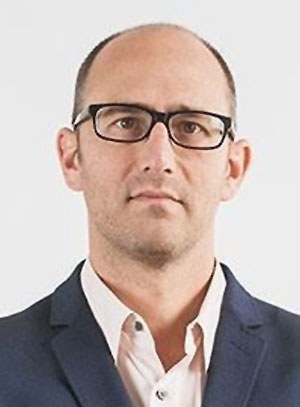
Ed Coyne: Hello, and welcome to Sprott Radio. I'm your host, Ed Coyne. Today, I'm pleased to bring back one of our returning guests, Justin Huhn. Justin is the founder and publisher at Uranium Insider. Justin, good to see you again, and thank you for joining us on Sprott Radio.
Justin Huhn: It's a pleasure to be back. Thank you so much.
Ed Coyne: Justin, a lot has happened since we last spoke in December of 2023. We have a bit to catch up on. Before we get into what's going on in the state of uranium and nuclear in general, how have you personally been? What have you been up to?
Justin Huhn: It's hard to answer that question to sum up the last 26, 27 months. Overall, in general, I can't really complain. Life is good. Still here in Southern California. Still been full-on, full-time with Uranium Insider, which has been a wonderful experience overall. A lot of ups, a lot of downs, a lot of emotions. It's been, directionally, a very positive experience for the team we've built around it and for me. It's crazy to say it, but we've been following this market since 2017.
At this point, taking a snapshot of the future as if I had just arrived in this sector within this investing thesis, it's incredible to say that I think there's a significant runway here. So much has happened in nuclear energy since I started watching the market, and even in the last two-plus years since we last spoke. All is generally well, no major complaints and very constructive for the future.
Ed Coyne: Let's talk about that. I know you're always working on a lot of things. Usually, I save this until the end, but for those who like what we have to say today, what's the best way to track you down?
Justin Huhn: Our website is uraniuminsider.com. I'm relatively active on X @UraniumInsider. I can be reached through both of those channels relatively easily. Those are the primary ways to get in touch.
Ed Coyne: Great. Let's get into it then. What are you working on these days? What are you excited about or following as it relates to nuclear in general, as well as what's happening in the uranium market?
Justin Huhn: What we're focusing on right now is the macro picture that is affecting everything with the war in Iran. That's been a very difficult moving target, as I'm sure you're well aware. Certain sectors have skyrocketed on this development. Many sectors, including the broader market, have been under some pressure. That's affecting everything, including the uranium space, even though the actual disruptions in the Strait of Hormuz aren't affecting the uranium sector much, at least not acutely in the near term.
We're paying as close attention as we can to what's happening in Iran, but more than that, we're watching the physical market, especially the long-term uranium contracting market. That's where the major story lies in this market's trajectory. We can get into the weeds on that. More than anything, we are watching the broader and physical markets very closely. Since we last spoke last year, we launched what's called our Dynamic Model Portfolio, which is more of a trading portfolio.
This is one of those sectors where you can be directionally right for a very long period of time. There's a long-term cyclical bull market in uranium, which we're in right now. As I said, I think we have a long runway ahead of us. Despite that fact, we have very volatile equity movements and an extremely tradable market. For us, having confidence in the mid- and long-term is essentially always the case, because we're tracking this and we've modeled supply and demand, so we have a high-confidence bet over that long-term period.
In the short term, market fluctuations often give you many opportunities to trade. This model portfolio we set up last February is up about 100% since then. We're watching for trading signals for that portfolio, which is technicals, sentiment and what's happening in the physical market. Those are the three primary inputs we're always gauging at any given time to indicate whether we are taking some off the table or adding to our long positions.
Ed Coyne: How much is it affected by just the general strength or weakness of the economy versus geopolitics? Are geopolitics largely noise in the short term, and is the economy driving things in the long term? Or is there something bigger going on with the whole supply-demand of energy addition or the energy transition, however you want to view that? What's really driving that today, or what are you really focused on?
Justin Huhn: Honestly, the largest effect from what's happening in Iran, as far as this sector goes, has to do just with the equities coming under pressure due to the broad market coming under pressure. At the given moment, we don't have an acute driver for the sector. There's plenty of positive nuclear news coming through almost daily that will likely affect things in a bullish manner over a very long time frame, going out 5, 10 and more years.
Sweden just announced plans to add 10 gigawatts of nuclear capacity by 2040. That's wonderful, and we're very happy to see that. It doesn't affect equities today, next week or even next month. In the near term, unless you see the spot price really running and a lot of activity in the physical market, the sector tends to get washed around with the broader market or, in some cases, with other sectors like precious metals or the oil market.
Right now, we're just getting washed around in that "car wash" from these very volatile moves in the broad market, driven by tweets or news. Whether it's true or false, it doesn't really matter. The market is reacting to things, and it's a tough market. As far as geopolitics in this event, I would say there's potential near-term disruption to sulfur inputs from a few projects. Sulfur is converted to sulfuric acid and used as a common reagent, whether through ISR mining in Kazakhstan or through processing dry-mined material at the Husab Mine in Namibia.
Namibia is probably the biggest potential disruptor. Husab relies on sulfuric acid. They have to import the sulfur through the Strait of Hormuz, and most of it comes from that region. For that to be disrupted for a month now, I would argue that if it goes on for another few weeks or longer, they have a problem. It's more than likely going to be a near-term disruption, not a long-term issue, I would suppose, but who knows at this point?
Husab in Namibia, producing 13 to 15 million pounds per year, uses sulfuric acid as a reagent and imports sulfur from the Strait of Hormuz. That's a big one. Rössing in Namibia also has some reliance on sulfur. Then we have Kayelekera in Malawi, which is operated by Lotus. That's just getting up to nameplate production, building their sulfuric acid production facility, but still needing to import the sulfur. They might have a disruption as well. That's the big one as far as near-term disruption in this sector due to this particular conflict. Saying that, it's not really that big.
Kazakhstan uses an enormous amount of sulfuric acid in its ISR mines, and it is the world's largest producer, but it largely sources sulfur and sulfuric acid domestically. The little that they do buy usually comes from Russia. However, they highlighted in their full-year 2025 results, released a couple of weeks ago, that the cost of sulfuric acid rose almost 50% last year alone, before this disruption. I'm sure it's getting more expensive on that front.
Just to wrap this up into a mid- and long-term picture, what we are seeing is that some countries are very disrupted by this situation. The U.S. and Canada aren’t one of them. Many countries in Europe and Southeast Asia have been very reliant on imports from this area. Many countries in Europe and in Asia are refocusing on energy sovereignty and security. Taiwan, which shut down its only operating nuclear power plant last year, is planning to restart that reactor.
Japan and the new Takaichi administration are discussing rapidly accelerating the pace of restarts. They've now restarted 15 reactors of their 54 that were shut down following Fukushima. As I mentioned, energy platforms in Sweden and other European countries are also being reassessed. There's been a fever pitch in Germany, and their new chancellor is saying it was a mistake to shut down those nuclear reactors. They shut down all their reactors, starting a few years after Fukushima and just shut the last ones down two years ago.
This is really putting a focus on it. In some ways, it resembles the 1970s oil crisis. I think if this crisis lasts much longer, it will definitely raise the issue of energy security. Really, nothing fits that bill better than nuclear because of its incredible energy density. You can store years of potential electricity production on-site at the reactor, decades in a warehouse if you really wanted to.
Ed Coyne: I have a ton of notes based on that answer. One of them is the bifurcation between what's happening in the physical market, so the uranium market itself. I would think that if the supply of things like gas gets tighter, then the actual inventory gets tighter and the actual price, maybe spot and/or term, goes higher, but then it sounds like there's difficulty in the production side of things. Let's unpack both of those. Let's talk about the physical side first. Are we in a bullish phase, even with the geopolitical volatility? Does the physical market still look healthy to you?
Justin Huhn: It looks great as far as we can tell from a bullish perspective. Nothing has really changed meaningfully in how we're modeling the sector in response to this particular disruption. Right now, in the physical market, things are a bit quieter than in January. I'm sure you're aware of this. Sprott took in an enormous amount of capital. They've already purchased almost 6 million pounds of uranium this year, and they have a 9 million-pound allotment for the year. January saw a huge run right out of the gate across both equities and the physical market.
What often happens is you have these intra-cycle cyclical moves where, for a few months, you'll have a run-up in equities, risk is on, and the spot market is now wrapped up in the stock market. When you have risk on, utilities often step back from the spot market. They won't want to participate in that price move up, Once you have that price peak out, and you can feel the sentiment pull back, you can see the capital flows pull back.
The utilities will then step back from both markets and allow the price correction to go as far and as deep as it will without their participation. That's where we're at right now. There's not much utility activity. We are seeing some utilities purchase when we get down into the low $80s right here, because the long-term price is $91.50, a blend of UxC and TradeTech. The term market is decently active, but it has also slowed a bit. What we understand now is that we saw a lot of contracts signed and added to the tally for 2025 in Q4, over 70 million pounds.
Year to date, the official reporting is just about 15 million pounds, but it hasn't yet tallied the significant uranium contracts the Indians have with Kazakhstan and Canada. That'll be added in the coming months. The physical markets have slowed down a little bit. Utilities are allowing spot to settle out, where it's going to settle in this particularly risk-off environment we've been in. In the term market, there's still a little bit of headbutting.
You had willing players step up and sign contracts in Q4, but many utilities are doing everything they can to avoid signing large-volume, long-term contracts at the terms producers want. Cameco has made this very clear to the market over the past 18 months or so: what they want is mostly, if not entirely, market-reference contracts, which means the utility pays the market price at the time of delivery. For utilities, that's just not something that they're all that comfortable with.
They've spent the last 15 years either buying in the spot market, buying small carry trades at base-escalated prices or engaging in long-term contracts that were mostly, if not entirely, base-escalated or fixed-price. They can budget around that. Now you're a utility: you call up Cameco and say you want a million pounds per year starting in 2029-2035. Cameco says, "Great, we're happy to sign that contract with you. What we want is $85 floors, and we want ceilings at $160," and the utility says, "Gulp, I don't really want to pay that."
We have some continued headbutting. Fortunately for this commodities trade, this particular commodity is so unique. Utilities don't really have an option. They can't replace uranium with anything else; there's only a handful of people who can sell it to them, and ultimately they have to pay what they want. The big theme we believe will hang over this sector for the coming years is that the Camecos of the world are not trying to be punitive towards their utility customers. What they're looking at is a steeply declining resource base going into a nuclear "renaissance."
Cameco, as a 49% owner of Westinghouse, is seeing strong interest in the AP1000, including the 10 reportedly to be built in the U.S. As far as we can tell, that was a binding agreement for that $80 billion investment. We're expecting news soon, but for them, they're looking at Cigar Lake being gone in 2035, McArthur being gone in 2041, Inkai at some point being gone, probably around 2050, which is their joint venture in Kazakhstan, and Orano, their partner for Cigar Lake and McArthur River, has an even bigger pipeline problem.
These two large companies that want to contract with utilities have to not only cover enormous sunk costs from the bear market. Cameco was spending $10 million a month on care and maintenance at McArthur River. They fired thousands of employees. It was a massively difficult period for all producers from 2011 until maybe 2020, 2021, and it started to turn. For them, not only are they trying to make up for the hard times right now by building a book that will protect them in the future, but they're also looking at a pipeline.
If they're going to stay in the uranium market, they have to invest in very large projects that will be under development for multiple billions of dollars over the coming years to replace those declining assets into the next decade. That's what the utilities need to understand here. Yes, it sucks to sign a contract where you don't know what you'll pay, and there's an 80% spread between the floor and the ceiling, but you still have to operate your reactor. The producers need to capture that upside to build their business over the coming decades.
Ed Coyne: It sounds like on the short end, within nine years or so, one of the biggest sites is going to run out of runway. Then on the long end, we're talking only 25 years. If you and I were to find a new deposit today, we're probably talking about 10 years before you could actually pull anything out of the ground. Am I doing those numbers right? That seems like we're running out of runway very quickly.
Justin Huhn: Yes. Cameco has some Tier 2 assets it can bring online, but that doesn't really solve the problems at Cigar Lake and McArthur River. They can bring Rabbit Lake back online with the new tailings facility. They've got some ISR stuff in the U.S. They've got some larger underground deposits that they don't seem to be all that interested in developing, at least as of now. They have an exploration project with Orano at Dawn Lake that looks very promising, but it takes a long time to develop these assets.
For example, NextGen's Arrow deposit, for which they have now received the license to develop, is expected to start construction in the coming months. They expect a 54-month timeline from initial construction to actual production. It's been four and a half years since most industry observers and mining analysts believe that's an optimistic timeline. Even then, if everything goes right for the company, they're looking at a ramp-up in 2031 and first meaningful production probably in 2032. That's if everything goes perfectly smoothly. If you look at 2032 compared to when the asset was discovered, we're talking about almost 20 years.
This is the largest undeveloped uranium deposit with very high grades at a very low cost. You can argue that the first few years after the discovery were still in a bear market. Prices are very low. That didn't stop the company from continuing to prove out the asset and move towards feasibility studies, engineering and all of these things. Still, almost 20 years from discovery to production, and that's if everything goes smoothly on that construction timeframe. For Cameco and Orano, needing to replace Cigar with anything remotely close to that level of grade and deposit size, they need to start moving relatively soon.
Even with these contracts they want to sign, they don't really pay off until they start delivering. Their contract book is improving over time, as the contracts they signed in 2022 and 2023 will be delivered in the coming years. Those are more market references. We're obviously at high prices in the market here. They're doing what they can to set that up, but you're absolutely right, it can take decades in some cases. McArthur River was built relatively quickly, considering the complexity of that mine. Still, it took a very long time from discovery and all of the engineering and that before they put a shovel on the ground.
They need to move relatively soon to replace those big assets if they remain in the uranium market. From what we can tell, they intend to because the company is already starting to communicate that the Westinghouse deal for them to build AP1000s, and they want to loop in fuel cycle deals as well. Basically, they want to feed new reactors that Westinghouse will build with uranium from Cameco. They want to emulate a Rosatom of the West, where they're producing uranium, they're converting a Port Hope. Will they be enriching with global laser enrichment, which they have a 40% stake in, in the future? Not really sure, but it looks likely that they could.
Then they have fabrication through Westinghouse, and then the nuclear plants. They have a vertically integrated company here. If they intend to bring any future uranium from Cigar, McArthur, or these mystery deposits they will eventually develop, that is another thing squeezing utilities. These are big projects still. If any of that uranium is allocated to these new builds, it will tighten the market further for utilities.
Ed Coyne: For an investor looking at this space today on the outside, like, "Wow, there's a lot of moving parts. Do I even want to mess with this?" Is there anything else out there that I might not know enough to ask about? That's something that you're acutely aware of or focused on as well.
Justin Huhn: First of all, I think that you have to understand what's happening in the physical market. I think that a focus on the day-to-day ticks up and down of 10 cents or 25 cents in the spot market. It's what traders and investors watch because it's the most widely reported price in this industry. You can see intraday moves, and so that's the only thing you can wrap your hands around if you don't have deeper information on what's happening in the long-term market, which we do. Looking at the long-term market, five years ago, there was a period of about eight months when it didn't move at all at $80 a pound. A trading range from $78 to $81.50 went on for about a year and a half. Basically, the market consolidates for a year or a year and a half, and then it goes up for a year. We've seen that rinse-and-repeat since the bottom. Right now, we are in month five of a move up.
We've gone from $80 a pound to $91.50, and we expect that to continue, given the pricing pressures and the details I've already shared. The long-term market is really where the story is at, and what oftentimes frustrates investors in this space and can shake out people when the sector consolidates is seeing all of the bullish headlines for the growth of nuclear and being frustrated with the fact that it doesn't always translate to moves today. We've seen this a thousand times since we've been watching this market in 2017.
You must have a grasp on the bigger picture, and when the demand comes, it comes in waves, and all of the utilities will buy together, and the price will move up 20%, 30%, 40%, 50% and then it'll consolidate for a period of time that most investors don't have the patience for. Then it'll just rinse and repeat, and we'll keep seeing this. We're going to keep seeing higher highs and higher lows until, at some point, supply breaches demand. I don't know when or how that happens, and we're looking at our models. We just don't see how the market balances.
Will it eventually be at a high enough price for long enough? Yes, I believe that it will. It will eventually act as a classic commodity, and high prices will be the cure for high prices. I don't know when that's going to happen. Taking a very high confidence bet based on our modeling on a five or seven-year period, it looks like we're going to have a supply deficit for that period of time, and most of the risks that we can even dream up are right-tail risks—a real snowballing of development for SMRs once the first-of-a-kind and second-of-a-kind are built. We don't know how much that's going to be. We have our own modeling on this. We don't show SMR demand until around 2032 in our models.
Ed Coyne: That's what I was going to ask. How real is that right now?
Justin Huhn: That's very conservative because we've already seen SMR demand. GE Hitachi and OPG are building four BWRX-300s in Darlington and Ontario, and they were already in the market buying uranium for those projects within the first year after the first unit's shovel hit the ground. That first unit is not expected to be grid-connected until 2030 or 2031, yet they were buying in 2024. As soon as the project breaks ground, you're going to see the entity responsible for operating that facility enter the market and ensure there will be fuel for that reactor when it connects to the grid.
For us to model out the first SMR demand in 2032, it's very conservative. Colleagues in the sector are doing the same. We're taking a conservative stance because we just don't know how much this is going to snowball. But talking with people in the industry, once we have first-of-a-kind and second-of-a-kind of these leading units, such as GE Vernova’s BWRX-300, X-Energy’s Xe-100, TerraPower’s Natrium, and a few others, are likely to be the winners of this SMR race. When we have a first-of-a-kind or second-of-a-kind built, we know construction timeframes can be budgeted around it, and there's almost bottomless interest in these small modular reactors.
Ed Coyne: That's right.
Justin Huhn: How much that can grow is really right-tailed. We don't know. We model very conservatively, but the upside potential is absolutely there. Sovereign stockpiling, inventory restocking on behalf of utilities. These things are not going to be nothing, but it's too speculative to actually put in the models, so it looks very rosy from a supply-and-demand perspective if you're long the actual element.
Ed Coyne: It seems to me the supply and demand are just pointing directionally to a higher price, longer term. Is that overstated, or is that really the case? It's not about where we are today. It's not about geopolitics, it's not about the strength or weakness of the economy. It's about the fact that we need a lot more of this stuff. We don't have enough, and we're creating more things. We're going to create even more demand. Help me make sense of that because that seems to be the cocktail conversation out there these days.
Justin Huhn: I've had similar conversations, dinner party type conversations.
Ed Coyne: I don't know how you and I are even popular with people talking about uranium and nuclear, but we are right now, which is good.
Justin Huhn: I know. It's crazy. I've had some very surprising conversations where somebody will ask me what I do for a living, and then after the initial shock of what the heck do you do? They'll say, "I'm actually very supportive of nuclear power." I live in Southern California, in a town and an area that's about as left-leaning as you can get. People are closet nuclear supporters, who all of a sudden are just so happy to open up and talk about it. I think the general public has adopted the SMR story a bit more than even the industry has. The traditional pronuclear guys already know how to do this. We went from small to big, from the '60s to the '80s, why are we going in reverse? Let's just build more big nuclear because that's the solution to all of our problems. The general public likes the SMR story because these new, fancy designs may use waste as a future fuel source.
They have accident-tolerant fuel, ceramic-coated accident-tolerant fuel, walk-away-safe reactors, less water for cooling and more. Because in the general public, the problems with nuclear power still are, what about an accident? What about the waste? Those are the things people always highlight as things they don't know much about in the industry. SMRs are at least on paper and theoretically solve those two problems, or some of the designs do. I think that's why there's been a broader adoption of SMRs, at least the idea of SMRs, among the less informed.
As far as the supply and demand situation, you're absolutely right. Based on our models of what is operating right now, what we can expect to be operating on that five to seven-year period with high confidence, and what's under construction and will be connected to the grid over that period of time, that's the core case for what we're looking at on the demand side. The life extensions are the huge story. I think the folly of premature closures that we've seen in post-Fukushima Japan, Germany and Spain led them to issue a phase-out policy, which they still have.
Taiwan, Belgium, and even the U.S. prematurely shut down reactors because they were not economically viable or because they were concerned about safety following Fukushima. That era is clearly over. I don't think we'll see premature closures for any reactor currently operating and capable of continuing to operate with minor refurbishments. One example of this is the French, in the latter part of the last decade, they had a goal to reduce their nuclear power from about 75% of the grid to below 50%. They wanted to shut down reactors prematurely. They wanted to rely less on nuclear for whatever reason.
It was the wave of the "green new deal type situation" where carbon's going to kill us in 10 years, but we're also anti-nuclear. You can't have both of those things, and I'm glad that's long in the rear-view mirror. These premature reactor closures are done. Taiwan is restarting, the U.S. is restarting, the Palisades reactor at Three Mile Island, and the Duane Arnold reactor. They're looking to restart construction of an AP1000 that was halted at VC Summer. All of these things are moving in that direction.
In February, France essentially gave blanket approval to its entire fleet of these two reactor types. They have a 900- and a 1300-megawatt reactor, which make up 52 of their 57 reactors, and these are the two designs. They went crazy in fleet mode. They built 44 reactors in 10 years, in the mid-'70s and the mid-'80s. They gave these two designs blanket approval to operate for 40 to 50 years. They're already talking about 60. Each reactor will need its own assessment and any work done on it to allow for safe continued operation.
This one extension from France's fleet from 40 to 50 years will consume almost 250 million pounds of uranium. The reference I was giving is that this big, undeveloped supply project, NextGen's Rook I, the Arrow deposit, is expected to produce about 230 million pounds over the mine's life. This one sovereign decision by France to extend the bulk of its fleet for 10 years will essentially consume all the uranium expected from this one project, which the industry, especially utilities, purports to be the savior.
They look at Arrow being developed. It's going to solve all our problems, because it's going to be 30 million pounds a year starting in 2030. Well, it's not, but they believe that. Just looking at the numbers of this one big life extension in France is huge.
Ed Coyne: It seems like France is a great example of who's doing it right. Anywhere else, either in the U.S., Europe or Asia, where you see, pay attention to these countries. They're doing it right, or even pay attention to these states. If you look in the U.S., which states are really embracing nuclear virtue, and which ones maybe still aren't? Anybody outside of France that you really look at, "Yes, they get it. They're doing this right?" Then maybe outside of Germany, who's ignoring this, and maybe to their peril.
Justin Huhn: That's a great question. Who's doing it right, without a doubt, is China. They have essentially entered into fleet mode. I believe it's the number one design. There are more actual units of the Hualong One reactor. They've built dozens of these things. They have 33 reactors under construction right now. They will be the largest market by the end of the decade. The U.S. is still the largest. France is still the second. They're about to pass France. They'll pass the U.S. by the end of the decade in terms of total operational nuclear gigawatts.
They are shooting to have 150 to 200 gigawatts of nuclear by 2035. They currently have about 55-56 gigawatts. They're approving 8 to 10 reactors per year. They're building them over five years and doing it on budget. They have basically entered fleet mode for reactors, as the French did in the '70s and '80s. The Japanese used a different strategy than the French, but they still built many reactors in a very short period of time. They built multiple different designs, while the French chose two and went nuts on them.
The Chinese are knocking it out of the park right now. They show no sign of slowing. They are expanding every form of electricity generation, hand over fist, right now. They're hugely expanding wind and solar, but coal, gas, oil and nuclear are all growing in electricity generation. The Chinese are killing it. At least the Germans are acknowledging the error. Even the chancellor said, "Well, that was a big mistake. Unfortunately, there's nothing we can do about it." Well, yes, there is.
Six or seven of their reactors can technically be restarted with not a small amount of work, because in some cases, they've destroyed the cooling towers and things like that, but they can restart those reactors if they really want to. Not all of them, but six, seven or eight of them. Studies by nuclear advocacy organizations show they can be restarted. Spain has seven reactors still operating in the country. They still have an officially announced nuclear phase-out policy. This is one of those countries where you've seen ideology dictate policy.
Unfortunately, they have made the operating environment for the nuclear reactors so difficult over the last five or six years. They continue to ratchet up taxes and fees on nuclear plant operators, then say, "Look how expensive nuclear is," even though they have been the ones to make it so. Now we're seeing nuclear plant operators request life extensions for some of their reactors. Spain is already at almost 50% of its energy from intermittent renewables. We believe physics dictates they continue operating the nuclear reactors, but we're not modeling that. Maybe this situation right now with Europe's skyrocketing oil and gas prices because of the war in Iran will help shift that policy.
Ed Coyne: Interesting. Before we sign off, were there any other topics you wanted to highlight today that I didn't bring up, or any lasting points you want to leave our listeners with that I didn't address?
Justin Huhn: I would say keep your eye on the U.S. First of all, we're still the world's largest nuclear market. We are a major leader in nuclear construction, going back to the '60s, '70s and '80s. It's still almost 20% of the electricity grid here. We've seen restarts. We've seen life extensions. We're now seeing multiple life-extension requests to the Nuclear Regulatory Commission (NRC) from large nuclear power plants in the U.S. seeking to operate beyond 80 years. We believe the entire operating fleet will go to 80 years. Some of these things will last 100 years.
What's happening right now, what we've seen since Trump took office last year, is a lot of policies, executive orders and wishful thinking, but we haven't seen a whole lot of movement, especially on building new large reactors. That is going to come. We feel highly confident in that. There have been executive orders that have reformed the NRC, which have absolutely had an effect. Honestly, we've seen NRC chairs who were unabashedly anti-nuclear, 1,000% focused on safety and 0% focused on aiding the construction of new nuclear plants in the U.S.
They've been a hindrance to the industry for decades. Now, we see the NRC taking victory laps on Twitter about how fast they're approving projects. They're posting, "We approved this in only six months, two years ahead of schedule." It's been a huge shift at the NRC, and that's a big sign. I think that AI is helping this situation. Then we've also seen recently that the Japanese invest $10s of billions, setting up a $300-plus-billion fund in the U.S. to bolster the U.S. infrastructure. The first part of that deal was $40 billion to build multiple BWRX-300 reactors.
These are 300-megawatt small modular reactors in both Tennessee and Alabama. That, of course, is throwing a bone to the Japanese, because GE Hitachi will be involved in those constructions, or at least in the manufacturing of certain elements of that design. This $80 billion agreement between the U.S. government and Westinghouse is binding. News on that is coming. We are going to build new large nuclear reactors in the U.S. again.
While this doesn't necessarily move the supply-and-demand modeling needle in the near term, it's a huge signal to the West from a country that is still the largest market and was there at the very beginning of civilian nuclear picking up the reins again and getting this done. Suppose we can accomplish this and build more of these units, especially the AP1000, because that is such a stain on the why nuclear is slow and expensive argument. It took way longer, and it was $30 billion to build those two units in Georgia.
Importantly, Unit 2 was almost half the cost and almost twice as fast as Unit 1. Taking that as a given, and theoretically, if we can build the third, fourth and fifth, we can get this closer to that "fleet mode."
Ed Coyne: We're actually learning, you're saying? Are we actually retaining information and getting better?
Justin Huhn: Yes, I would hope so from an entrepreneurial standpoint. You want to fail, you learn from that. If you don't learn from those mistakes, what's the point? Hopefully, we see this get off the ground. We do expect announcements soon on that front. I think that if we can pull it off, it'll be a major signal to pretty much any other Western country that's considering nuclear, or has nuclear slated and had been planned. I think that's going to be a big thumbs-up and a green light for certain Western countries that are waiting for the U.S. to get back in the game.
Ed Coyne: It's certainly exciting times, and shame on me for waiting two years to have you back on. I have to believe we've got to talk to you on a little more regular basis as things continue to evolve. Justin, as always, it was great to have you back on. Thank you for that. I know your time is constantly accounted for. Thank you for taking the time to speak with us about the state of affairs of uranium and nuclear.
Justin Huhn: It's been a pleasure. Thank you for having me, Ed, and I'm happy to come back anytime.
Ed Coyne: Great, wonderful. Once again, my name is Ed Coyne, and thank you all for listening to Sprott Radio.


Important Disclosures
This podcast is provided for information purposes only from sources believed to be reliable. However, Sprott does not warrant its completeness or accuracy. Any opinions and estimates constitute our judgment as of the date of this material and are subject to change without notice. Past performance is not indicative of future results. This communication is not intended as an offer or solicitation for the purchase or sale of any financial instrument.
Relative to other sectors, precious metals and natural resources investments have higher headline risk and are more sensitive to changes in economic data, political or regulatory events, and underlying commodity price fluctuations. Risks related to extraction, storage and liquidity should also be considered.
Gold and precious metals are referred to with terms of art like store of value, safe haven and safe asset. These terms should not be construed to guarantee any form of investment safety. While “safe” assets like gold, Treasuries, money market funds and cash generally do not carry a high risk of loss relative to other asset classes, any asset may lose value, which may involve the complete loss of invested principal. Furthermore, no asset class provides investment and/or wealth “protection”.
Any opinions and recommendations herein do not take into account individual client circumstances, objectives, or needs and are not intended as recommendations of particular securities, financial instruments, or strategies. You must make your own independent decisions regarding any securities, financial instruments or strategies mentioned or related to the information herein.
While Sprott believes the use of any forward-looking language (e.g., expect, anticipate, continue, estimate, may, will, project, should, believe, plans, intends, and similar expressions) to be reasonable in the context above, the language should not be construed to guarantee future results, performance, or investment outcomes.
This communication may not be redistributed or retransmitted, in whole or in part, or in any form or manner, without the express written consent of Sprott. Any unauthorized use or disclosure is prohibited. Receipt and review of this information constitute your agreement not to redistribute or retransmit the contents and information contained in this communication without first obtaining express permission from an authorized officer of Sprott.
©Copyright 2026 Sprott All rights reserved