
Sprott Radio Podcast
Fueling the Commodities Cycle
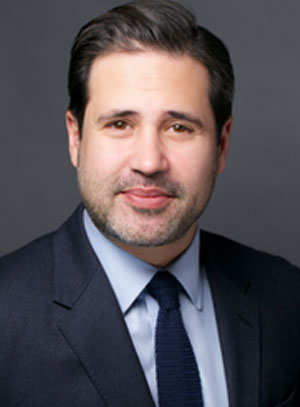
With the recent run up in gold and silver prices, some investors may feel this cycle is over. Not so suggests Adam Rozencwajg. A key element of every commodity cycle is capital expenditure, and to date, CapEx in the sector has yet to arrive at scale. Early innings of a bull market then? Adam joins host Ed Coyne to analyze the current commodity cycle in depth.
Podcast Transcript
Ed Coyne: Hello, and welcome to Sprott Radio. I'm your host, Ed Coyne, Senior Managing Partner at Sprott. I'm pleased to welcome back Adam Rozencwajg, Co-Founder and Managing Partner at Goehring & Rozencwajg. Adam, thank you for joining us once again on Sprott Radio.
Adam Rozencwajg: Yes, it is great to be back with you all.
Ed Coyne: Adam, a lot has happened since we spoke last June. Let's start with the parabolic move we saw in gold and silver. What happened there? What drove that?
Adam Rozencwajg: This rally in gold started in 2023. It happened on the back of a number of things, including a huge amount of money printed, deficit spending over the last decade and inflation during COVID. What really set it off was Russia's invasion of Ukraine and the U.S. effectively freezing Russian treasury assets and blocking any transactions on the Society for Worldwide Interbank Financial Telecommunication (SWIFT).
I think many other countries looked at that, and we can discuss the ethics and morality. Should they have done it or not? The issue is they did it. Other countries looked around, and they said, "Well, we own a lot of treasuries, too. The U.S., with the click of a button in Washington, can effectively take away a huge amount of the assets backing our reserves and our currency, and we should probably begin to diversify that."
There were the BRICS countries looking for an alternative currency bloc. What set off this rally was the decision by these countries to own an asset that's not anyone else's liability, and they did. The central banks started in '23 and ripped through '24. Over that time, most Western investors weren't participating at all. The first move of $1,000 or more saw no interest from the West.
Despite stellar performance, there were really no inflows into the gold equity managers. No one was really participating. That changed the gold side of things. Sometime last year, we started to see shares outstanding for the different gold ETFs increase, but not for the equity funds. On the physical and paper sides, we started to see some participation. Then that started to take on some speculative energy in the fourth quarter of last year and then into January of this year.
That's where we saw that parabolic move. Western investors are now interested in gold. Central banks are still buying. I don't think that's really going to change, and all the drivers that caused them to buy following 2022 are still in place. The real question now is, has that move gone too far, and is there going to be a period of consolidation? I think that's what a lot of investors are asking themselves.
Ed Coyne: You talk about central banks in general moving away from the U.S. dollar. Is it gold versus the dollar, is it gold and the dollar, or is it the death of the dollar? Is the dollar going away?
Adam Rozencwajg: It's an interesting question. Nobody knows the central bankers' true intentions, but let's lay out the stage a bit. You certainly have the BRICS countries, Brazil, Russia, India, China, and then there are several others that have either formally or semi-formally adopted into the BRICS network.
They have an explicit mandate they haven't yet fully articulated, but they want an alternative to the U.S. dollar for international trade. Right now, if you sell coal from Australia to China, neither of which uses the dollar as its currency, you're going to pay for and settle that transaction in U.S. dollars. You'll be subject to SWIFT. It requires the offshore dollar market, or a large amount of dollars held outside the U.S., to facilitate international bilateral trade.
The BRICS countries would like to see that end and an alternative put in place. There are a few good reasons for that. Whoever can control that international settlement currency has a lot of latitude, right? It's the reserve currency that allows you to run deficits at home. It allows you to avoid being beholden to a foreign national government through the SWIFT system. There are many reasons why, for their own sovereignty, they would like to see that.
Those are the "death of the dollar" people. I'm not convinced we'll see the death of the dollar. What I'm convinced we're going to see is a major shift in the monetary regime. Frankly, you could argue that we're already seeing it. We've had a few of those in the last 150 years. In 1929, we abandoned the classical gold standard. It was temporarily suspended during World War I, as it often is during wars.
People suspend the convertibility of monetary gold because they need to print deficits to fund the war effort, and then they'll figure they'll clean it up after the war through war reparations. It was formally abandoned by '29. They realized they couldn't go back on gold. What emerged ultimately after World War II is the Bretton Woods standard. That was jettisoned in 1971.
Then, in 1999, we had what has been dubbed the "no-name monetary change," which essentially incentivized Asian countries through the International Monetary Fund (IMF) to keep their currencies pegged at fair values to the dollar. The IMF stiffed them after the Asian currency crisis. The World Bank said, "We're not going to bail you out like we said we would. It's up to you to manage your own affairs."
They said, "To hell with all you guys. We're going to set our currencies about 20% cheaper than they ought to be to boost our own exports." We don't talk about or study that, but it had the effect of bringing $10 trillion of U.S. treasuries to the East. It was a massive change in how we conduct our monetary system, and each of those represented big shifts to how we conducted things before.
On every measure that I look at, on every indicator and cycle, I think that we're due for that again now. Every time that happened, the dollar's dominance went up, not down. You could certainly have made a case in '71, when the U.S. dollar effectively blew up the international monetary system it had pledged to back. It was the linchpin in Bretton Woods because everything was pegged to the dollar. The dollar was pegged to gold.
In effect, everyone was pegged to gold, but through the U.S. dollar. They said, "We're not going to do that anymore." You could have made a cogent op-ed article in The Wall Street Journal or the National Post saying, "Well, that's it for the dollar." Instead, the dollar is more relevant than ever and has only gone from strength to strength. I'm not convinced about the death of the dollar, but I do think something different is happening going forward. I think that's what gold's telling you right now.
Ed Coyne: Is it different? Is it more of the same? What's your view if you look at the run-up to 2011 in gold in general, and then where we are today? What are the similarities, and then what are some of the differences?
Adam Rozencwajg: Every cycle is going to be a little bit different, and I'm more interested and intrigued by how similar a lot of the cycles really are. There are differences, including more geopolitical hostilities going into 2026 than there were in 1999. If you read Neil Howe in The Fourth Turning, it does seem as though we're in a Fourth Turning today, a period of U.S. history, but probably, realistically, global history as well, where large institutions are dismantled, taken down, and rebuilt from the ground up.
There is probably a feeling that this time might be a little more impactful, a little different and bigger. Realistically, there is quite a bit of similarity. Commodity markets move in cycles, driven by investor enthusiasm or pessimism. One of the things the cycles drive is a CapEx cycle that either encourages or discourages investors from funding new projects. As we all know, sadly or maybe excitedly, one of the key features of commodity operations is that they suffer depletion.
When you don't invest enough, the treadmill starts to speed up. You start to fall behind and get a supply crunch. That's the basis for many of the cycles we look at. I think one of the things you have to consider is the extent to which gold plays an investment and a monetary role, and how it compares with monetary and investment aggregates. If you were to think about a currency, and you say, "Is the currency expensive or cheap?" you'd say, "Well, relative to what?"
You have the Big Mac Index, where you can go around the world and say, "Oh, it's 6 Swiss francs (CHF) for a Big Mac, and it's $8." You can gauge whether the currency is overvalued or undervalued. We could do the same thing with gold. If you look at gold today relative to goods and services, it's awfully expensive. The median house in the U.S. now costs about 80 ounces of gold. It's never cost fewer gold ounces. Gold's never been more expensive relative to housing.
A barrel of oil costs 3/10 of 1 gram of gold. That's 19 grains of rice worth of gold. Now, how many grains of rice worth of gold should a barrel of oil cost? I don't know, but 19 seems to be very little. That barrel has enough energy to take a family of 4 3,000 miles, or 5,000 kilometers. That does not seem like much gold to go very far. When I look at it, relative to those things, it seems expensive.
In 1999, gold was really cheap. It got so cheap back then, which I don't think we'll ever see again, certainly not in the absolute dollars. The reason that gold got so cheap last cycle was that you had massive central banks selling gold. Remember that the world's reserve currency went off gold in '71. By 1980, it wasn't entirely clear whether that would work.
Inflation ran rampant. We ultimately had to raise the short-term rate to the high teens just to break the back of inflation. If you ask in 1980, I think the jury was still out on whether the fiat system would work or ultimately revert to a gold standard. By the mid-1990s, you had 15 years of a bull market. You started to reflate the financialization of the economy. You had some recessions along the way, as well as pullbacks and crashes in '87, et cetera.
Basically, it was a good time to be an equity investor. Inflation came way down, and it became clear that fiat was here to stay, so all the central banks around the world were literally tripping over each other to dump huge volumes of gold. They reached an agreement that set the number of tons they could sell each year through quotas and similar measures to avoid market turmoil. That's what pushed the price down to $275.
That's what pushed the price down relative to dollars being printed, which was down to about 3% backing of the dollar. Relative to the S&P 500, it was at an all-time low. We're never going to get it that low again. In that case, it started a pretty severe bull run from $275 up to ultimately $1,900. The thing that's really driving this cycle is that gold pulled back; it got expensive relative to some metrics, not others. It pulled back, and it was in the doldrums for a while.
Now, I think what's driving things is the huge amount of debt that's been printed, the unbelievable level of deficit spending and the geopolitical instability. What that has done is create a system, and you see people talking about it. Scott Bessent and Stephen Miran talk about these unsustainable imbalances.
The current monetary system is under significant strain. That's what gold is telling you and why it is going higher. In that environment, I suspect gold goes higher from here. How do I get there? I said that gold's expensive relative to goods and services, but it's awfully cheap relative to things like the level of the Dow.
All the gold in the world today is worth about $30 trillion. The S&P 500 has a total market cap of around $60 trillion. If you look at other global market tops, they typically top out somewhere between 1.5 and 3 times the S&P 500. You're at half today, so it calls for a double at minimum, right? If you look at the gold backing of the dollar today, you're backed about 20%-25% of Treasury's holdings of gold relative to the dollars that it's printed.
Gold bull markets tend to end with gold at a 100% coverage of the currency, which is crazy. You don't have to run a gold standard currency at that level of coverage. In a gold bull market, that's often what happens. We're not there yet. I suspect the path forward involves inflation, which would raise the basket of goods and services. It will probably take a couple of turns off the market multiple, which is quite expensive and driven by tech.
We will see a significant sector rotation away from high value, tangible assets toward real assets, particularly commodities and commodity producers. In that environment, I suspect gold will go higher.
Ed Coyne: You talk often about the financialization of assets in general, specifically to real assets. Is that making gold, silver, and other metals like uranium and copper more accessible to your typical investor in a way that maybe they didn't have access to, say, 10 or 15 years ago? Was that driving any of this as well?
Adam Rozencwajg: A silly, naive answer is yes, because you have more options and opportunities than you would have had last time. In practice, is it? I don't really think you feel much speculative fervor in the commodity markets, except maybe for gold in January. That was the first animal spirits because, remember, materials and energy right now make up about 3% of the S&P 500. In bull markets, they end up anywhere between 25% and 30% of the S&P 500.
In 2011, I think they were about 18% or 19% of the S&P 500. I have the energy numbers roughly in mind, but when you add the two together, I think energy only got about 15%, probably another 3% or 4% in materials, so pushing 20%. Today, it's 3%. This has been an extreme bear market. Now, you're coming up off the bottom of it. The numbers can look impressive. When you zoom out a little bit, it's still remarkable.
We're not spending anywhere near what we need to spend on CapEx across the industry to offset depletion and meet new demand growth. Uranium has also seen some speculative energy in the last couple of years. Uranium prices today range from $85 to $100, depending on whether you look at spot or term prices and which day you're considering.
It takes $100 uranium to build a new uranium mine. Only now have you taken the uranium price from $18 to $100. Some people have made good returns in uranium, including us. You are only approaching the incentive price needed to consider commissioning a new large mine. This is not like iron ore in 2010, where you'd had billions, tens of billions, maybe hundreds of billions of dollars of investment in Western Australia bringing on massive new hundred-year big projects.
This is not like shale, where you were investing $700 billion to $800 billion a year in the upstream energy patch, which is now down to $500 billion, bringing on huge productive assets. You haven't seen any of these things happen yet. Gold in January, that parabolic move, was the first time that I've seen in this commodity cycle, which probably started in 2020. It started in '16, but then COVID hit new lows for everything.
That was the first time we really saw anything that seemed to have speculative energy behind it. I want to be transparent. We've taken our gold miners down by about two-thirds. It probably topped out at about 27% on the portfolio's intraday high. We've taken that down to about 10%. We did one tranche back in October, when we felt the gold-to-oil ratio was so stretched that energy looked good.
When silver stages the big catch-up rally and closes the gap to gold, that's been a good technical indicator that you want to lighten your load on both the precious metals, so we did that. My long-term view is still optimistic. If you look at it through a path-dependency lens, I think energy does much better and re-rates higher, while gold could potentially trade sideways to down for a bit.
Ed Coyne: Speaking of silver, that's a good segue into the other precious metal. It seems to be stepping out of the shadow of gold and the precious-metals narrative into the critical-materials narrative and the energy storyline. Do you buy into that, or how are you looking at silver today?
Adam Rozencwajg: Silver is very funny because I've been doing this for 20 years. When I started, everyone said that silver was fundamentally changing because we weren't going to use film anymore, and we didn't, and it went away. Now, everyone's talking about silver roaring back because of things like photovoltaic solar and the like. I don't think the industrial side ever really drove that story in the last 20 years. I think it traded up and down with gold.
This might be naive, but I suspect that silver has some interesting electrochemical and chemical properties. It's much cheaper than gold and more abundant in Earth's crust. I suspect that we'll always find a use for that. For a while, the highest and best use was for photo film. Now, the highest and best use arguably is for photovoltaic. I'm not a big fan of solar photovoltaics, but I get that people are, so it's included.
If that proves to be a bust or people engineer it out, it'll probably find its way into something else. I think there's always going to be a level of industrial demand for silver. What that is will certainly change over time, but it's such a unique metal. Certainly, it's unique in its properties and abundance. Gold could do a lot of what silver does. Platinum could do a lot of what silver does, but it's just too expensive. I think gold will always have a role there.
Ed Coyne: When you talk about CapEx and what that means for supply and demand, we all know that in the most aspirational timeline, you're talking 8 to 10 years for a new mine to start pulling something out of the ground. Realistically, probably 12 to 15, depending on where in the world you're doing this. As silver is getting consumed, whereas gold gets stored, what do you make of five-plus years now with a supply-demand deficit, where we're consuming more than we're actually pulling out of the ground? Any excitement around that or driving the price further because of that, just in its own right, or how do you view that?
Adam Rozencwajg: No, I think the long-term story for both metals is the same. As you said, gold is stored, not consumed, so we're dealing with a huge above-ground inventory. That's why I think with gold, you have to look at the price elasticity of your buyer and your seller more than you have to look at, necessarily, the straight mine supply, which is important, but not as crucial as it is in some other commodities, because of that huge above-ground stock that you can buy.
You're right with silver. Some of that's trapped in all the electronics and other things. It's not actually consumed either. It'll be recycled and returned to the market at some point, but it is not available for sale. In both cases, mine supply has been down, and it's become trickier. That’s something in the positive category.
My concern with silver is that, in this framework, you say, "Okay, silver in a typical run will lag gold, and then it stages this big catch-up rally." It'll lag for three to five years, stage a massive catch-up where it earns all that back in a matter of months, and then typically enter a period of consolidation once it's done the catch-up rally. What people remember is the catch-up rally, and it's created an adage that many gold investors repeat: "You can't have a strong gold bull market without silver leading."
In that parabolic move, that's true. You would have missed a lot of the move from 2022 to today, for instance, in gold, if you had only bought it in the fourth quarter, when silver started the recovery rally. Then the next question is, "Okay. Well then, when do you buy silver?" You don't want to buy it early on because it's almost predestined to lag. If it's catching up and doing well, you're probably at a point where the rally might take a breather.
When do you want to own silver? You could go and structure some crazy, sophisticated options trade, where you're playing for that recovery and then protecting the downside after it, and constantly rolling it. That's not what we do. We try to take a longer-term view. If you want to take a longer-term view, I think you could make a case that you're better off sticking with gold. It might be less fun, but you can do it. I guess the way to think about that, from the beginning to the end of the rally, they'll probably return comparable returns, gold and silver.
Gold will do it up and to the right, and silver will lag, and then stage this massive thing. Obviously, if you can catch that massive thing and forget the period where it underperforms, good on you. Otherwise, you're going to get the same return with more volatility, and you're probably better off in gold. That's going to be a super controversial view. I'm not fully convinced of it myself. It's something that we are thinking about in real time. In this past cycle, we have played it mostly through gold producers, and I don't regret that decision at all.
Ed Coyne: Let's widen our lens and talk about energy in general. Even at Sprott, we spend increasing time in the critical material part of the equation, and not just precious metals. I don't know if you listened to Trump's State of the Union , but he made a unique comment about tech companies in general, specifically as it relates to AI and data centers, how they're going to be responsible for creating, storing and consuming their own energy. What do you think that means for the critical material market in general? Is this the beginning of something much bigger that we don't even have a way to graph yet, or is it just more noise in the marketplace?
Adam Rozencwajg: Let's take a step back. I think that AI is fairly transformative. I'm not a tech investor, and I'm most days pleased that I'm not because I'd have to make some hard decisions and stuff. I guess I'd have more money than I have now if I'd been a tech investor in the last 10 years.
Ed Coyne: Maybe less hair, though.
Adam Rozencwajg: It's entirely possible. I was talking with Fred Hickey, who writes The High-Tech Strategist. He's been around a long time. He said, if you looked at a company like Cisco in 1999, they would have told you they were transforming the world and that every house would have 10 Cisco routers, and that they would basically maintain pricing and margins and stuff, and that this was going to be a big deal.
25 years on, he was right. None of that was incorrect, and the stock was still down. It finally eclipsed the ‘99 highs in December of 2025. You can be right on the transformative nature of things and still have it be a huge bubble and a huge wipeout. I'm really into CapEx cycles. I really like Edward Chancellor and his writing. Given how much CapEx is being spent in the AI space, I don't really see how it doesn't end badly.
We work very closely with AI, and we've built our own AIs for the past 7 years to help us study geological trends, mostly in shale oil. We've experimented with some stuff on the mining side as well. I have a deep knowledge of what these guys are doing, and it's impressive. If you use the latest models, you can see that things are advancing at a fast clip. I don't think that stops it from being a bubble. I think the amount of CapEx that's gone into it has been crazy.
That's important because it will ultimately determine how many resources will be needed. Some of the numbers I see thrown around for both energy and critical minerals are probably too high, but they'll still have a big impact. It's going to be a big tailwind that we’re seeing already. U.S. electricity demand, for the first time in 30 years, is beginning to tick up per capita. That's because of data centers, and it will continue on in that capacity.
We're going to have a power grid issue for sure. I think it's important that we begin to address that, because I think that's been an underappreciated tailwind for U.S. AI over the last 10 years: cheap natural gas. Our gas is 70% cheaper than the rest of the world's gas. Obviously, we have the PhDs and the entrepreneurial attitude in the U.S., but I think few people appreciate how much the cheap gas has helped in that.
I worry that that's not going to continue because shale output on the gas side isn't growing as much as it used to, and demand is rising sharply now. We're exporting a lot of Liquefied Natural Gas (LNG). Nobody worries about the gas. I've talked to everybody. They're worried about the power. They're worried about sourcing the turbines to generate the power, which now have a 5-year lead time. They're not worried, though, about the gas molecules that will go into the turbine.
We saw the same thing in copper a couple of years ago. Everyone felt that, between renewables and EVs, we would have significant copper demand, but they didn't want to get involved in the mining business. You saw a huge amount of money go into refiners. As a result, we now have more refining capacity than we need for the amount of concentrate we have. Treatment and refining charges often go negative because you have all this in the midstream on the copper side.
We might have a similar situation in energy in the U.S., where you have all these data centers, LNG terminals and turbines ready to go. Everyone forgot about the gas because it's the yucky, dirty part. For some reason, that's where the carbon gets booked to. If you have to book carbon emissions somewhere in the value chain, they don't go to the person burning it. It goes to the person pumping it out of the ground for some reason.
Ed Coyne: You mentioned the bull market super cycle, and you mix the two together here. Do you think we are really in a super cycle that started in 2020? I wrote down the dates. They all seem to last about 10 years. Do we have two to three years of potential opportunity still if you're coming into this market today to garner returns, or is it almost impossible to call?
Adam Rozencwajg: No, it's not impossible to call. I have a strong conviction in the longer-term view here. I obviously don't know what the future holds, but I think we're at the early stages of this bull market. First of all, I don't think it's a super cycle because a super cycle suggests something different from a cycle. I think it's a run-of-the-mill cycle.
I think cycles start again because no one invests for a while. They start at the bottom. Markets are in deficit. Prices scream higher. Companies earn these supernormal profits for a period of time. 30%, 40%, 50% returns on invested capital are not uncommon. The price is moving higher because it's trying to find the level where you squeeze out demand, which is very high. Then that eventually attracts enough investor money, which brings on enough new projects.
Because of the delay from the first investment to when the first project comes online, you're, by default, going to attract more money than you need. Even after the proper amount of money has been invested, you're still waiting for projects to come online, so prices keep going up. After that moment, more money will come in chasing those returns. It's that second half of the run's CapEx investment that will lay the seeds for oversupply down the road.
All that supply comes on. The right amount comes on. What's looking behind you? The tsunami of new projects after that. You overshoot the mark almost by default. You have to. Then prices collapse, and projects underwritten at higher prices no longer work. Investors lose money. Money comes out, and people say, "I'm never going to touch that stuff again." Eventually, depletion takes hold and sets up a new cycle. This cycle is no different.
Ed Coyne: Where are we then on a 1 to 10, saying 1 is the beginning of the cycle, 10 being the bitter end, where it's oversubscribed, and so forth?
Adam Rozencwajg: I think we're at 1, maybe 2. The reason I say that is that no money has come into this space. No new projects are being sanctioned. It's taken a lot longer. Maybe it's ESG. Maybe it's the huge momentum of tech that has slowed the mechanism for changing leadership in the market. All I can tell you is the market bottomed in 2020. I would've said, like you said, 10 years. I don't think it's magic. It's 10 years because that's how long it takes to bring on new projects.
Ed Coyne: Projects haven't really started, though, have they?
Adam Rozencwajg: The starting pistol hasn't even gone off yet. Prices are up, but there's nobody knocking at the door to invest in this space, and gold's the best.
Ed Coyne: These miners are up 300% or 400%.
Adam Rozencwajg: It's not attracted any interest. None.
Ed Coyne: Interesting. I was talking to an advisor about this yesterday. They're still looking at gold and gold miners the way they look at a traditional company, and they're missing what's driving the return. It's so hard to get people over that hump, like, "Oh, like all commodities, they eventually sell off." Eventually, it might be 20 years from now. How do we make money today?
I think that's something we're trying to convey to our investors. That's fascinating that you think we're just getting started. When you put it in that context, it does feel that way. There hasn't been much money, new discoveries or new mines coming online. The demand's not going away. Maybe it's even increasing, but the supply hasn't even started to catch up.
Adam Rozencwajg: It has not started. You've got to watch the supply across every commodity that you look at. Maybe the one exception there is lithium. Lithium attracted significant investment because it was a “clean” commodity. You could make a good, new-energy, new-era, clean story about it. People never really shied away in the same way.
That's why I think lithium is potentially impaired here for a while, even though it's fallen a lot, but it's had a big glut behind it. I'd rather go to spaces that have had a dearth of capital and stay away from the gluts. It's everywhere I look right now. It's in almost every commodity market that I look at. Bull markets end somewhere at 20% to 30% of the S&P 500 invested in commodity stocks. You're at 3% today.
It is indistinguishable from the 2020 bottom. I know that seems strange, given the good returns that people have enjoyed. We've been quite successful at raising some money. Our AUM is up. We've basically been taking dollars away from other resources' funds. As a group, we haven't seen any new inflows.
Ed Coyne: We've seen something similar even at Sprott, where we are raising capital in other parts of our peer group, or maybe potentially losing some capital. Right now, I think we're moving deck chairs around, and we'll see where the capital comes in from there. You made reference to many different reports and people you like to read. Our listeners are students of the market as well. Who would you have someone look up, read or follow that you like, that some of our listeners might benefit from?
Adam Rozencwajg: Sure. Well, I did mention Edward Chancellor. He's an author. He frequently has guest-edits at Grant's Interest Rate Observer. Jim Grant, whom we have known and loved for many years.
Ed Coyne: We've had him on our podcast.
Adam Rozencwajg: Edward Chancellor is fantastic. I think he writes an article for Forbes or Fortune that's available online, and he writes op-eds often. I'd look out for him. He has a book about capital cycle investing. Unfortunately, it's out of print. It's like the Seth Klarman book. It costs $800 or so.
It's a great read. I mentioned Fred Hickey. He writes about gold and about tech. Fred's a great guy, too. Substack has some really good content. You obviously have to be extremely selective. In particular, a guy who writes under the handle of Crude Chronicles.
Ed Coyne: I don't know that one.
Adam Rozencwajg: I believe he used to be on the sell-side and in the bear market, obviously, sell-side jobs, the industry changed. He decided to get back into it. The breadth and depth of his work are quite good.
Ed Coyne: I'd be remiss to not say, is there anything else that you were hoping to talk about or hoping I would ask, that maybe I didn't ask that you want to leave our listeners with?
Adam Rozencwajg: No, I think we really covered pretty much all of it. I think that was great. It'll certainly cover us for another six months.
Ed Coyne: That's right. Please be open to coming back again. It's great to have a conversation with you and learn more about what you are focused on. Once again, good seeing you and good speaking with you.
Adam Rozencwajg: Very good. Thank you.
Ed Coyne: Once again, my name's Ed Coyne, and thank you for listening to Sprott Radio.


Important Disclosure
This podcast is provided for information purposes only from sources believed to be reliable. However, Sprott does not warrant its completeness or accuracy. Any opinions and estimates constitute our judgment as of the date of this material and are subject to change without notice. Past performance is not indicative of future results. This communication is not intended as an offer or solicitation for the purchase or sale of any financial instrument.
Relative to other sectors, precious metals and natural resources investments have higher headline risk and are more sensitive to changes in economic data, political or regulatory events, and underlying commodity price fluctuations. Risks related to extraction, storage and liquidity should also be considered.
Gold and precious metals are referred to with terms of art like store of value, safe haven and safe asset. These terms should not be construed to guarantee any form of investment safety. While “safe” assets like gold, Treasuries, money market funds and cash generally do not carry a high risk of loss relative to other asset classes, any asset may lose value, which may involve the complete loss of invested principal. Furthermore, no asset class provides investment and/or wealth “protection”.
Any opinions and recommendations herein do not take into account individual client circumstances, objectives, or needs and are not intended as recommendations of particular securities, financial instruments, or strategies. You must make your own independent decisions regarding any securities, financial instruments or strategies mentioned or related to the information herein.
While Sprott believes the use of any forward-looking language (e.g, expect, anticipate, continue, estimate, may, will, project, should, believe, plans, intends, and similar expressions) to be reasonable in the context above, the language should not be construed to guarantee future results, performance, or investment outcomes.
This communication may not be redistributed or retransmitted, in whole or in part, or in any form or manner, without the express written consent of Sprott. Any unauthorized use or disclosure is prohibited. Receipt and review of this information constitute your agreement not to redistribute or retransmit the contents and information contained in this communication without first obtaining express permission from an authorized officer of Sprott.
©Copyright 2025 Sprott All rights reserved