
Sprott Radio Podcast
The Case for Physical Custody of Everything
Craig Tindale’s essay, The Return of Matter: Western Democracies' Material Impairment, has become something of a sensation since being published in December of 2025. The essay provides a stark and sobering analysis of how the West has lost control of materials vital to prosperity and security. Backed by robust data and historical analogs, Craig joins host Ed Coyne to say the quiet part out loud: "If you don't have physical custody, you haven't got anything.”
Podcast Transcript
Ed Coyne: Hello, and welcome to Sprott Radio. I'm your host, Ed Coyne, Senior Managing Partner at Sprott. I'm pleased today to welcome Craig Tindale, a private investor and a longtime macro voice on many topics, most recently critical materials. Craig, thank you for joining us on Sprott Radio today.
Craig Tindale: Thanks for having me.
Ed Coyne: Craig, I don't often speak to individual or private investors, but you've clearly caught the attention of at least the White House, and certainly the U.S., in your most recent letter, Critical Materials: A Strategic Analysis. I want to unpack that today. Before we get into that, I also want to talk a bit about you. I saw that you went to Columbia University. I’d like to learn a bit about you and your background, and how you really got into the whole critical-material-narrative today. Let’s just talk in general about your style of investing. Why don't we start with that, and then we'll work our way into the letter?
Craig Tindale: Background-wise, I was in China in 1981 and Syria in 1983. My gig for nearly 40 years was to represent American companies generally in the Asian markets. I was the guy who flew from Beijing to Bangkok, then to Kuala Lumpur, back to Bangkok, back to Kuala Lumpur, and back to Beijing. I just did that over and over, building systems, hardware and software systems, usually together for an import/export terminal in Manila, or a Central Bank in Malaysia, or a Central Bank in Australia, for that matter.
What I accidentally taught myself was a granular understanding of most businesses from a systems perspective. When you build a treasury system for a Central Bank, for instance, you sure learn how treasuries work because you can't make any mistakes. That goes for all the other sectors: banking, telecommunications, import and export and just about anything you can imagine, especially the supply chain. It's kind of set me up for this era.
I was also a part-time journalist in the '90s. I used to write articles for The Australian and similar publications. I was at Oracle in '87 and again in '99. I did my time in all the big software companies when they were small and when they were big. Then, I went into startups and made money for myself. That's the second part of a career that many people follow. I forgot about commentating, and I focused on making money and being a private investor since COVID. We've done really well.
It requires me to understand these markets that I'm investing in, as if I were an encyclopedia. My method is very granular and very detailed. We go into almost everything. When I saw a lot of the trends emerging, it was partly out of frustration and partly out of, "Geez, I should have my say as well." I decided to start writing again in November. I hadn't been writing for a long time, probably 20 years. I thought, "Well, I'll write an article," because I had a podcast coming up. I didn't understand why they were going to interview me for a podcast, but they thought I was pretty interesting. I wrote this essay, just normal prep, "I'm going on a podcast, I'd better have something to say."
I ended up writing this essay, which I thought was way too long and no one would read, because the mantra these days is “keep it simple, keep it short,” and this was detailed and complex, and I wasn't sure of the interest. I released it two weeks before the podcast, and all hell broke loose. It's gone everywhere, and everyone's read it. I've had a Wall Street CEO say to me, "I've been sent this three times this week by three different people." I thought, "Well, geez, the podcast is still not coming up, and this is popular. I should write another one," and that went crazy as well.
Since December, I've written about eight of these, and they've all become popular. I've had all kinds of people reach out to chat. People that everyone on this podcast would know their names, and a few of them. It's not just one, it's many. All of a sudden, it's my own version of A Star Is Born.
I've come from analyzing my portfolio and making investments to almost instant success in the journalism space. The feedback I'm getting is like a door's open to a private club, and I'm allowed in because people have come from everywhere to chat with me and get advice, et cetera. I'm very grateful.
Ed Coyne: I do think there's a reason why you're getting the interest from everyone, from famed investors all the way up to the White House, is because this is real, and now, these are things we have to have. AI data and all those things don't exist without access to material. Let's start at the beginning of that, something as simple as copper, and why this demand for copper today all of a sudden woke the world up and said, "Gee, what are we doing with this?" Then let’s work our way all the way through that. Who controls it? Who refines it? I think I read that, from your article, 60% of all the copper refined comes from or goes through China. That's the simplest metal, everybody knows it. We'll work our way into the more exotic.
Craig Tindale: That sounds like a great place to start. We've come from the digital age, where we just had to learn to code to know the future. We were going to go up the value chain and do important things, while outsourcing and offshoring everything. We've driven down an unusual cul-de-sac because we're heading back the opposite way, because all of that coding and all of those inventions, the AI, et cetera, that were done with software now need a lot of hardware. Now, we come back to matter. We have to build things to make them work.
An old-school data center used to take about 100 tons of copper. The Microsoft one in Texas required 2,177 tons of copper. This goes right into the new technology from NVIDIA: they're using much more copper, gallium and rare earths. Almost everything needs metals to build. What we've done in the West, because we didn't build anything, is that we've disassociated ourselves from matter. It goes back to that old school sound-money principle. Sound money, not just being gold-based money, but money that can buy copper, zinc and anything else you need. Money has a practical purpose.
A lot of the theoretical frameworks of money miss the fact that you have to buy things with money, and if you fail to buy things, then you've become disconnected from the material world. As soon as you do, you're open to exploitation by foreign powers—65 tons of copper in one of these ultra-high voltage power lines per kilometer. You can look at the copper forecast and see where we're going with this and how much we'll need over the next five years. I've got a piece out called Matter of Denial, and the matter is copper. A lot of the things we're planning to do, whether it's NVIDIA, the hyperscalers, or Oracle, don't take into account what we'll need to build them. We haven't got access to them.
You mentioned that 50-60% of copper is refined in China. If you look at all the other critical metals and chemicals, 50-98% of them are refined in China. That gives them a control point. If you can close your eyes and imagine that you've got a supply line running up to your economy, and it goes through China as a choke point or as a valve. They can turn it on or off with licensing at any time. They've put that licensing in place, so the threat is explicit. You realize that our future economic plans, whether they be hyperscaling data centers, new energy systems, nuclear power stations, or robots, our economy exists at the behest of them, licensing and allowing that copper or all the other critical materials to flow through to us to build them.
Simply put, even if you take that choke point away, we still haven't got enough copper or other materials. I've done some back-of-the-envelope work on NVIDIA; I call it a sound-money evaluation of a tech company. We're all about paper money, but no one's really done a sound evaluation of what a tech company's demand for copper, gold, silver, etc. might be. What I did was bottom-up, looking at all their new products and, using estimates from their technical manuals, determining how much gold, copper and silver they had in each product.
I'll give you one example, gallium. Gallium is in all of NVIDIA's new products. I forecast that NVIDIA's demand in the fifth year will be about equal to the world's total gallium production today. We've got to scale the whole world production just for NVIDIA. Now, 40% of that production comes from the Democratic Republic of the Congo, and 20% from Rwanda. That's 60% of the world's gallium production coming from those two countries. They're not exactly stable or uncontested.
Gallium is being used in some new energy weapons, which are incredibly important for defense. The energy weapons basically use gallium to shoot a very high voltage of energy at drones or missiles. They fry the missiles, the wiring inside the missiles, or the drone straightaway within a microsecond, and they fall from the sky. When they're banked together, they form a force-field arrangement.
They can be used on ships. There are rumors that they're being put on satellites so that they can deal with missiles in their silos overhead. They're pure gallium, and 98% of Gallium is processed in China. They've done this to Tokyo; it's not just theoretical. They've cut Tokyo off from all defense uses for rare earths. The threat is explicit.
Ed Coyne: Does that put us already, not to overblow it, but into crisis mode, that this is the future, right? We're electrifying the globe. Forget just bringing electricity. It’s also defense, and the sheer volume of everything else that’s out there.
In simpler terms, we're in the fifth year of a silver supply-demand deficit. Silver is being used in things. You talk about defense, silver people can understand because it's being used in things as simple as solar panels. We're building more of them. There's not enough silver coming out of the ground. Silver recycling is relatively low. We understand that. We say, "Okay, maybe we don't make electricity with solar, so be it. We can live." You start talking about defense and other things like that. That sparks, "Are we in crisis mode already? How do we get out of that? How do we onshore that?" What are the answers to that?
Craig Tindale: We're deep in crisis mode already, we just don't know it. The realization hasn't hit us. We're slipping into it. I think the White House understands it. I don't think the general public is as aware. You look at silver, that's a great example. 70% of the silver produced annually comes from copper, lead and zinc smelting in China. The silver slag then goes to the refineries in the West, where it is made into ingots so it can be used industrially. China's now keeping that silver slag and won't ship it to us, only for licensing reasons. It's a system where they say, "Yes, well, you can have it." Always reminds me of that soup sketch on Seinfeld, "You can't have any silver, no silver for you." We've got a 24,500-ton deficit in silver compared to production over the last four years or five years.
Ed Coyne: Yes, we just hit our fifth year.
Craig Tindale: You know these numbers better than me. Then you take that secondary silver production off the table, and all of a sudden, that 4,000 or 5,000 a year goes to maybe 10,000, 13,000, 14,000 tons a year that we're in deficit. That has to come out of the cutlery drawers and out of the vaults. We may not necessarily be able to fight it. I've seen people say there are 200,000 tons of cutlery in people's homes. That's untested, isn't it?
It's not like we can go to a mine and say, "Okay, this is the percentage we're going to get back out." That stuff may or may not exist. It's going to take organization to get it out. Silver's in almost everything, 25 to 50 grams in a missile. It's literally the way electrification happens. Same with gold as well. I got a forecast that NVIDIA will be using 36 tons of gold per year in 4 years. That's a lot of gold that's going to go into products. It's going to go straight through the system, flow through the system, and be sent to a data center for 10 years, where it won't be recycled. It's going to have to change our thinking on a lot of things. We're already in an emergency situation. The awareness is just not understood.
We can start to see it in the exchanges. If you look at the LME and the CME, and at the percentage of contracts delivered versus the percentage physically delivered in China, Shanghai is delivering a lot more physical. Basically, we're seeing a shift from Western to Chinese markets, because they have custody, so it's a custody issue with them. They're charging higher premiums. I think last time I looked at their premiums, they were 18%, compared to our 9%. That's a few weeks old; they might have changed already. I think I saw that the CME changed their fee structure the other day, but I haven't had a look at it.
They're asking for liquidity earlier. They're asking for payment earlier. Their exchange changes our expectations. Initially, our exchanges were built to deliver metals, and then they became abstracted because we weren't building anything.
Ed Coyne: Right, it became a paper economy.
Craig Tindale: Everyone says people put conspiracy theories together, but the reality is our exchanges became abstractions of the speculation. The Chinese ones, naturally, because they had to build things, became exchanges of custody. They've naturally developed a system that's backed by the metal. We've naturally developed a system that's not backed by the metal because no one wanted the metal because they weren't building everything.
It's a natural evolution, but you could easily see CME and LME become semi-obsolete and secondary exchanges, because all the metals are being controlled out of Shanghai. That's why you're seeing the price differential. If we lose our metals exchanges, I can't say how consequential that is. I don't think “consequential” is strong enough, because we do have plans to reanimate our society and build things.
Ed Coyne: I'm fascinated by what you said about NVIDIA and gold, because you're one of the first people who's really talked about gold in this light. It's been mostly central banks, and what's been mostly discussed is a monetary metal, whereas silver's more of an industrial metal today and has stepped out of gold’s shadow. You're talking about gold in a lot of ways, also from a consumer standpoint, where it gets put into something and disappears for a decade or two, and does get recycled. Maybe it does, maybe it doesn't. We don't know. That's a very different narrative that really no one's talking about.
Craig Tindale: I'll give you a unique perspective because I guess most of your investors wouldn't look at it this way. If you look at the real innovators in recycling metals, they're going to recycle e-waste and coal ash. In a ton of e-waste—old circuit boards and things like that—there’s half a kilo of gold in every ton. If you look at the billions of tons of e-waste that are in the system, that's a lot of gold. That just gives you an insight into what we've used in the past, not comparing it to the future. Because in the future, we're going to use a lot more.
What I've done with a lot of the tech companies, AMD, is I’ve looked at: What is their drawdown on critical metals? Then I've sized each product and then done a bottom-up demand curve. The demand for gold, silver, copper and aluminum is ridiculous. These build-outs: we know 13 hyperscale data centers are being built, and we know they've got a lot of copper. They've got a lot of everything, and they're going up exponentially. Metal demand for industrial purposes, whether it's power networks, AI data centers, robots, or whatever, is off the hook; it's going to be an underpinning demand that probably lasts for the rest of our lifetimes.
You've got one site secretly using a very long strategy. Scott Bessent said, China's been at this 25 to 30 years, trying to set us up for this, and they have. They've cornered the market on almost anything you can name. You can't make munitions without rare earths. If you look at Ukraine, Russia has managed to build 4 million missiles a year or something ridiculous. We're flat out building 300,000-400,000. We've just got carried away. We thought it was the end of time in the '90s, and we stopped making things and let them do all that stuff.
Now here we are: we're serving ourselves cups of coffee and not really making anything. I feel like the West is Mr. Magoo, who walks through and bumps into anything, and that's causing all kinds of mayhem. We just need to wake up. My essays, people say they're fantastic, but the reality is I'm just using old-school logic and putting things in systematic rows and seeing how they sequence together and things like that. That's what we used to do: proper analysis. I don't think our analysis is as good as it used to be. I think people say, "Oh, it's going to go up. Look at these charts. We're in this, we're in that." It's become very surface.
We haven't really looked at the underpinning mechanics, or we don't as often as we should. What happens, looking at the underpinning mechanics, is that you start to realize what's really happening. I'm approaching a data center build like building a bridge; it's a bill of materials. Then, can we get that bill of materials ready from a logistics basis in time? Then, when we add all their plans together—because they don't do comparative analysis of each other's plans—AMD, NVIDIA, and all the other companies are assuming infinite resources. Have they all added what their demand together is? Do we have it supplied? I don't think we have.
I'm in good company with that. If you look at, I guess, what Robert Friedland has been screaming at everybody for the last couple of years, it is that we haven't got enough. I think if somebody's experienced with insight like that, we should listen and go, "How much are we short?" We're short a lot. I argue that some of these data centers will never be built, or that the ones we're building now will be among the last for the next 4 or 5 years. That's going to play hell with the market-cap forecasts for some of these tech stocks. The reality is that Moore's Law is outrunning Einstein's. Moore is 18 months ahead, and Einstein is just picking up his shovel. We've got physics getting in the way of what we want to do versus what we can do.
Ed Coyne: The U.S. just put silver on the critical material list last year. I think that woke up the world a bit, and maybe that was partly why the price did what it did. What are the five key critical materials that we must absolutely have access to if we want to continue to move forward from a technological standpoint, from an industrialization standpoint? What do you see of those five that, without those, game over?
Craig Tindale: There are a lot of them. There's probably more than five, more like a dozen, but let's pick a few. Scandium goes with aluminum to make an alloy that's super light and needed for combat drones. Our old airframes were built for I think 9G maximum because that's all a human could cope with. These combat drones are 20 to 30G because they've got no humans in them, and so you've got to use different materials. Now, that's great to invent a combat drone, and we've got all kinds of models for them, but where do you get your scandium? The total scandium output globally is, I think, 15 tons. I might have that wrong, but it's very low.
Here's another one: gallium is absolutely critical to defense, as we've discussed, but it's also critical to NVIDIA's new chips, which are almost entirely made of gallium. They've gone up to 800 volts for these switches; their energy density is extreme. They need the gallium for the energy density.
Copper is one of the main ones. I don't think we'll have enough copper to build the data centers they plan to build. You look at some of these and then look at the inputs. There's a lot of talk about building 20 nuclear power plants, each of which requires 2,400 tons of copper. Every nuclear power plant, any energy system, whether it be diesel or some of these gas turbines, et cetera, needs heavy transformers. Siemens has a €138 billion backlog on equipment. If you order a high-end transformer now, it will take you 5 years to get it.
I've read all the SEC filings of these companies. If you go to Hitachi or GE, it's essentially the same thing. Written in all the SEC filings is, "We've got an issue with rare earth supply. All of these forecasts we're making are conditional on the rare earth supply." Now, guess what? 30% of Siemens transformer orders go to the U.S., but nearly 20% go to China. Guess who supplies Siemens with rare earths for its transformers? Are they going to be first in the queue? You can imagine a private conversation.
Ed Coyne: You mentioned something earlier that I want to go back to also, which is licensing with China. How enforceable are these licenses? Let's say we entered into a licensing agreement with China to supply us with X amount of copper, or whatever the case may be. If they say, "We're not going to give it to you anymore," can we do anything about that, or if they just say, "We're shutting it down," outside of going to war, what happens?
Craig Tindale: Nothing. They've got control of the relationship. The licensing of silver goes through 43 companies. You need approval for the end use of the silver. If it's defense, we'll use the Japan example: you can't ship silver or rare earths to Japan for defense at the moment. They have absolute control and physical custody. It goes back on a longstanding Sprott principle, isn't it? Physical custody. The physical custody of not just, in your case, silver, gold, uranium and a few others; it's everything. It's copper and all the rare earths. If you don't have physical custody, you haven't got anything. It doesn't matter what your contract says.
“It goes back on a longstanding Sprott principle, isn't it? Physical custody... If you don't have physical custody, you haven't got anything.”
I think the Chinese are trying to put together a better reputation for custody as well, on delivery. If you order from them, you're likely to get it. If you order it off the CME, you probably won't. That's been talked about for a long time. Silver is a microcosm of what's going to happen right across the other 60 materials. I was looking at textiles the other day because someone wrote a sister essay, The Return of Matter, on textiles in Europe, using the same methodology.
European textiles are absolutely owned by Chinese textile manufacturers. It's exactly the same scenario. There's no way that the Europeans can compete. They've just basically lost that industry. We've got volatile markets at the moment, but you wait until everyone works out that we can't build all these wonderful things that we've built on the horizon.
Ed Coyne: We saw that in EVs, right? The whole world was going to be driving EVs by 2030, and "We're going to be carbon neutral by 2050." Then they started looking at the math, science and engineering behind it. We scaled that back very quickly. Do you think we're going to see the same thing potentially down the road with data and AI, that we're getting way ahead of ourselves? The cart is way out in front of the horse on this, and we have to slow it down just because we can't refine the material fast enough to make this stuff work?
Craig Tindale: I think exactly as you say. Think about it in another way. You know how we hear this commentary about who's going to win the AI race? We've got the U.S. out in front, but they're only six months ahead, and the Chinese are trying to catch up. You get all these metrics to say, "The Chinese have caught up a few days," or whatever. What happens when we run out of copper or other materials we need, while China remains in supply? We haven't built a physical supply system to support our ambitions.
Ed Coyne: How do we, the U.S., Australia, Canada, the collective, and not to put us against China or any other nation, how do we get ahead of it, then? Do we have the ability to get ahead of this thing if they're controlling most of it? What does that ultimately end up looking like?
Craig Tindale: It looks hard in the middle bit. I think we have a chance, but we have to move on a bigger scale than we're doing. There's a lot of innovation coming through. It wouldn't surprise anyone to know that the U.S. has a lot of innovation in any subject. Intellectual capital, you're good at, but what's happened is we've lauded people like Zuckerberg who are farming your attention, not farming anything particularly useful.
Ed Coyne: It's scary to think that way, but you're right. They are farming our attention.
Craig Tindale: These guys are our heroes. People like Zak Fang from the University of Utah and James Tour from Rice University are really inventing things. They've had to put the patents on the shelf because no one wanted to finance them. Our cost of capital is 14%/15% for industrial projects. The Chinese cost of capital is 2% because it's state capitalism. From a refining, smelting and innovation perspective, all of our stuff has stayed on the shelves, and we've basically hollowed ourselves out. What we need to do is develop this culture of innovation, but instead of pointing at Steve Jobs or Zuckerberg, point at some of these people who are really being inventive in areas of wealth creation that matter, rather than farming our souls.
People who know how to smelt titanium at 80% lower cost than the Chinese do. The people who know how to flash Joule[1] heating out of Rice University. They put 3,000 volts of electricity through e-waste. They add a bit of chlorine, then divide the metal chlorides as they come out into their respective sectors. You can basically set up a closed-loop system to produce metals from e-waste. The Department of Energy issued a $355 million tender for processing fly ash, coal ash. Billions and billions and billions of tons of fly ash exist across North America, across the West, because we have had coal-fired power stations. They were a natural off-take and, so to speak, the pollution.
There are 6 kilos of titanium in a ton of fly ash. There's gold in fly ash. There's just about everything you'd ever want in fly ash or e-waste. What we're forced to do is evolve into a circular economy. That's my long-winded way of explaining: yes, there is hope, because we can implement a whole bunch of new technologies. I'm full of hope because I think that if this conflict grinds both sides to a standstill, we'll have to allow China its place in the world. They probably deserve it.
Ed Coyne: Yes.
Craig Tindale: We can't deny them that. The U.S. and the West will have to think about themselves differently. Once that's all done, it's probably too complicated to have wars like we used to and all that kind of thing. We will work out some arrangement; it may or may not be satisfactory, but it'll be satisfactory for humanity.
Ed Coyne: I love that message. You're right, everybody wants to survive and thrive. If we come up with a global solution, maybe we can get to a collective finish line here, which would be nice to see.
Ed Coyne: How does someone find you, see what you're working on, and read your articles? What's the easiest way to keep track of what you're up to these days?
Craig Tindale: Well, just my name, Craig Tindale, on Substack. LinkedIn seems to be exploding as well, so Craig Tindale on LinkedIn, and X, @ctindale, so C-T-I-N-D-A-L-E. My total role in this is to wake people up. I'm not looking for subscriptions. I haven't got a business model, I don't care about all that stuff. I'm just sitting here trying to wake people up because I know people can put on a rational hat and start thinking for themselves once they wake up out of this spell. We've got to wake up, start looking around, put on our thinking caps, and be present in the world we're actually in, rather than the world we think we're in.
Probably my biggest thing is sharing an attitude or a way of thinking that is just old-school rationality. What's going on? How do we sequence it together? How do we explain it so it makes sense? That's all we have to do. The young people of today will have to be resilient because they'll be running the world very soon. We boomers left them a whole bunch of complications to work through.
Ed Coyne: We'll just start with debt and go from there. Craig, really, thank you for being part of Sprott Radio today and taking the time. I really enjoyed meeting you virtually, and talking to you has been fun.
Craig Tindale: Thank you very much.
Ed Coyne: Well, thank you, all. Once again, my name is Ed Coyne. You're listening to Sprott Radio.
| 1 | Rapid flash Joule heating technique unlocks efficient rare earth element recovery from electronic waste | Rice University |


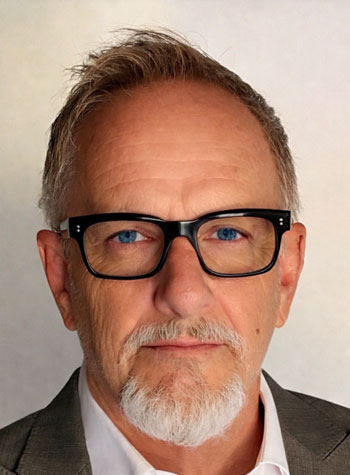
Craig Tindale
Investor and Author
Substack | The Return of Matter: Western Democracies' Material Impairment
Important Disclosure
This podcast is provided for information purposes only from sources believed to be reliable. However, Sprott does not warrant its completeness or accuracy. Any opinions and estimates constitute our judgment as of the date of this material and are subject to change without notice. Past performance is not indicative of future results. This communication is not intended as an offer or solicitation for the purchase or sale of any financial instrument.
Relative to other sectors, precious metals and natural resources investments have higher headline risk and are more sensitive to changes in economic data, political or regulatory events, and underlying commodity price fluctuations. Risks related to extraction, storage and liquidity should also be considered.
Gold and precious metals are referred to with terms of art like store of value, safe haven and safe asset. These terms should not be construed to guarantee any form of investment safety. While “safe” assets like gold, Treasuries, money market funds and cash generally do not carry a high risk of loss relative to other asset classes, any asset may lose value, which may involve the complete loss of invested principal. Furthermore, no asset class provides investment and/or wealth “protection”.
Any opinions and recommendations herein do not take into account individual client circumstances, objectives, or needs and are not intended as recommendations of particular securities, financial instruments, or strategies. You must make your own independent decisions regarding any securities, financial instruments or strategies mentioned or related to the information herein.
While Sprott believes the use of any forward-looking language (e.g, expect, anticipate, continue, estimate, may, will, project, should, believe, plans, intends, and similar expressions) to be reasonable in the context above, the language should not be construed to guarantee future results, performance, or investment outcomes.
This communication may not be redistributed or retransmitted, in whole or in part, or in any form or manner, without the express written consent of Sprott. Any unauthorized use or disclosure is prohibited. Receipt and review of this information constitute your agreement not to redistribute or retransmit the contents and information contained in this communication without first obtaining express permission from an authorized officer of Sprott.
©Copyright 2025 Sprott All rights reserved