
Sprott Radio Podcast
The Case for Silver
Peter Krauth, author of the best-selling book The Great Silver Bull, joins host Ed Coyne for a timely discussion on silver’s recent gains. With ongoing structural supply deficits and growing industrial demand, silver looks to be a compelling story in 2026.
Podcast Transcript
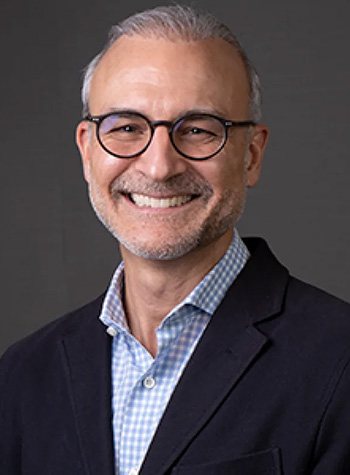
Ed Coyne: Hello, and welcome to Sprott Radio. I'm your host, Ed Coyne, Senior Managing Partner at Sprott. I'm pleased to welcome Peter Krauth, author of the best-selling book The Great Silver Bull and editor of the only silver-focused investment newsletters, The Silver Stock Investor and The Silver Advisor. Peter, thank you for joining me today on Sprott Radio.
Peter Krauth: It's a pleasure to be here with you. I'm looking forward to our conversation.
Ed Coyne: Yes, same. As a new guest of Sprott Radio, it would be helpful for our listeners to hear a bit about you and then shift gears to discuss why you decided to focus on silver. Let's start with you first. Could you tell us a bit more about yourself and your background?
Peter Krauth: I have been interested in and invested in, especially resources, going back about 20 years. First, on a personal level, I discovered the advantages and generational upside of investing in precious metals. That sparked my interest, and I continued to conduct my own research, eventually gaining the opportunity to work in research and write a resource newsletter. I did that for about 10 years with a group from the U.S.
Then, for a couple of years, I worked as a freelance writer for mining companies. Then, about five years ago, I connected with Gwen Preston, who had her own resource newsletter out of Vancouver. We hit it off, teamed up, and launched a silver-focused newsletter in January 2021, which was a little early, but it definitely gave me the chance to be there before things developed.
Ed Coyne: Speaking of the newsletter, I noticed you have two separate ones. I don't want to guess at the differences. Perhaps discuss the differences between The Silver Stock Investor and The Silver Advisor. How do you think about those two?
Peter Krauth: Sure. Silver Stock Investor is the one I initially launched back in January 2021. This is a subscriber-based newsletter. It has been from the beginning, and it really encompasses the entire silver space, covering everything from larger ETFs, including several Sprott ETFs, to large royalty companies, large producers and everything in between. You have your mid-sized producers, developers, junior producers, junior explorers, and pre-discovery companies. I really cover the entire silver space on the equity side.
The other newsletter is Silver Advisor, which I started back in January of this year. That is a sponsor-based newsletter. The companies that we cover in that letter are sponsored by them. It allows us to bring newsletter-quality coverage for free to our subscribers for that letter.
Ed Coyne: Cool.
Peter Krauth: Subscribers have free access. Really, the formula is that we will review all material press releases from silver mining equities. We will review, summarize, and provide comments on them the same day. This allows subscribers, if they wish, to react to our interpretation of the news before the markets close. That's essentially the business model.
Ed Coyne: Great. When you're looking at silver, do you draw a distinction between the physical market and then the miners themselves? If so, how should investors think about that?
Peter Krauth: Physical silver is the foundation. If someone asks me, "How should I get started?" I'll always tell them, "If you have no exposure to this sector, I suggest that you buy some physical silver, even if it's a matter of a few Canadian Maple Leafs or Silver Eagles, pick them up, handle them, feel what it's like to have that in your hands." It's a very dense metal. It's almost magical, frankly.
You hear about these things, but when you read about silver coins, gold coins, and so on, and then you actually have one in your hands, I don't think you can truly appreciate what it's like. Again, that's the foundation of the physical. It's the lowest risk in the silver sector. Yes, I do treat them separately, but both are part of a fully exposed silver portfolio. Silver is a relatively narrow space, a narrow sector, and is becoming even narrower with mergers and acquisitions.
I think that it makes sense to cover the entire space. As I say, anyone who hasn't gained exposure yet, I feel things like mining equity ETFs are a great way to get your feet wet. You can buy that, you're instantly diversified. Then, when you become more comfortable with that and conduct a bit more research, you can start to examine individual names. Silver is a more volatile metal. The equities tend to follow that as well, but you don't have to go to the high-end of the risk spectrum to have some exposure and have the potential for some outsized gains.
Ed Coyne: You said something that really caught my attention. Generational upside is what I think you said. I haven't really heard anyone say it that way before. Let's talk about that. You have a lot of great charts that we're going to unpack here today, but talk about some of that upside you're seeing, where we are today and where we may be headed.
Peter Krauth: I almost don't know where to start. There is so much to say. I'm not an expert in this area, particularly when it comes to technical analysis and charting, but I do some research and follow that. Silver has been called one of, if not the biggest, technical breakouts of all time among assets, at least in modern history. The reason for that is that it has taken 45 years for silver to better its 1980 price.
Until recently, when silver briefly surpassed the $50 level for a matter of days or weeks, it was the only metal that had not surpassed its 1980 high. The prices of all base metals, platinum group metals, gold and other metals are significantly higher than they were in 1980
If you adjust its price for inflation using the official inflation rate, looking back at the 2011 peak of just under $50, you'd have to be somewhere around $70 right now. Again, with official inflation numbers, if you look at the 1980 peak, you'd be somewhere closer to about $200. I also recently came across a fantastic chart illustrating the value of gold in relation to inflation. It is a lot closer to its 1980 high, adjusted for official inflation numbers, where, as I say, silver is probably still a quarter of that number today.
Ed Coyne: Is the world thinking about silver differently?
Peter Krauth: Yes, I do think that the world is thinking about silver differently. In early 2024, I was saying at that point in time that we were heading for some kind of a squeeze. The reason is that we had supply deficits. This year, we're forecast to have the fifth consecutive year of silver supply deficits. For your listeners, it's a very simple and easy concept. There are approximately 1 billion ounces of silver in supply each year. Approximately 850 million ounces are derived from mining, and around 150 million ounces, or 15%, are sourced from recycling. Yet, we're consuming somewhere around 1.2 billion ounces.
We're consuming on average about 20% more than we provide to the market, between mining and recycling. This silver has to come from somewhere. Early last year, it struck me, and I said, "I've got to figure out where the silver is coming from, because, in four years of ongoing deficits, why is the silver price not moving?" The conclusion I drew from my research was that the major consumers, particularly industrial consumers, have been able to tap into what I call secondary supplies or above-ground inventories of silver.
If you look back a decade or more, whenever silver production is not consumed, it is shunted into the futures markets, where it sits. That had been the case for several years. Then, about five or six years ago, we started to shift from surplus to deficit, and we've been in deficit ever since. My conclusion was that these big industrial consumers were able to tap into these secondary inventories.
They could simply go to this market, so to speak, and say, "I need 20 million ounces, I need 10 million ounces." They were able to buy it at prevailing market prices, which did not put pressure on miners or recyclers to bring additional metal to market. I noticed that this had been ongoing for about three years at that time. From about 2021, you could see these inventories had peaked and were gradually being drawn down.
I said, "This can only last for so long." My forecast, at the time, was 12 to 18 months. We've seen it play out that way. Silver bottomed in late February of 2024, around $22, and then took off. Then, we've really seen it run this year. That 12- to 18-month period is what we've observed over the last six months. Silver's really gone crazy. Certainly, these tariffs imposed by the U.S. administration have exacerbated the situation. You had a lot of metal flown out, by the way, when normally you'd ship it because it's so expensive.
It's heavy, and it's bulky, but to take advantage of arbitrage and to get some of this metal from London to New York, where there was this concern about there being potentially tariffs on metal being imported, a lot of metal left London earlier this year and found its way into New York. That left the London metals markets, where the majority of these silver ETFs are held, with very tight supplies. Then this has ramped up another notch in the last month or two, and these supplies were being drawn down even farther. Then we've seen all sorts of news reports about how really that market had gotten completely squeezed.
We had these technical terms, such as backwardation, which is what you have in the futures markets when the front contracts, in other words, the near-term deliveries or prices of silver in those contracts, are higher than farther-out deliveries, which is not the normal course of things. You had lease rates explode, exchange for physical premiums explode, and we keep hearing how the market remains tight. India has become a big consumer. Markets in China, Dubai, Egypt and Singapore are swamped with demand.
Everybody wants silver right now, and there just isn't enough supply. All of this has come together like a perfect storm, pushing silver well beyond its all-time high. It went to $54 not that long ago. I've been calling for some kind of correction for some time. I thought it would come sooner, but I'm frankly relieved. I think that the release valve needed to open. I believe it has now, and I view this as an opportunity. That's what I'm telling my subscribers. This presents a great opportunity to potentially deploy into some form of physical asset, particularly the mining stocks that are becoming increasingly attractive.
Ed Coyne: Yes. If the supply-demand dynamics remain the same, there's more to come.
Peter Krauth: Absolutely. Even the Silver Institute itself, which is the go-to source for some of these statistics, has stated that it expects a deficit again this year, marking five consecutive years. They're forecasting deficits for at least the next five years, with new record-high deficits expected to be set during this period. Ed, it's not getting better. The market's getting tighter.
In other words, we saw silver supply from mining peak in 2016 at 900 million ounces. It has fallen over the last decade, yet demand has increased by 20% or more. Recycling has been essentially flat over this time. If you look at the potential for new mined silver to come to market, it's essentially nowhere to be found. The transition from discovery to production spans a 10- to 15-year window. Discoveries have been few and far between.
Then there's this whole thing that makes silver very particular. That is, only about 25% of silver comes from primary silver mining. That means those mines primarily produce silver. 75% of silver comes from what we call byproducts, essentially. Approximately 75% of mined silver is a byproduct of mining other metals. We're talking about mining gold, copper, lead and zinc. It's essential for your listeners to understand that it doesn't operate on a typical economics 101 scenario.
When you have these miners who produce some silver, and it's a small part of the revenue stream, they're very happy to accept a higher silver price for the silver that they sell, but they're not especially motivated. They're not incentivized to even try to produce more silver because it accounts for such a small portion of the revenue stream. As you know, it's difficult to ramp up a mine. It requires time, capital, permits and various other resources. For that reason, we say silver is supply-inelastic. Even if its price rises and rises significantly, you typically do not see more or much more silver come to market to help meet that demand.
Ed Coyne: Let's talk about the demand a bit further. Then, I'd like to delve into your book a bit, as you made some excellent points that I'd like to address. However, I think the misconception of demand is that it's investors entering the market. Talk about some of the industrial demands that we're seeing in silver today that are virtually irreplaceable, at least in the modern world. We don't have anything coming online that could replace silver's role in the industrial side of the ledger. Talk about what some of the big industrial things are that are driving silver today.
Peter Krauth: If your listeners have to grasp the single biggest driver, it is the solar panel industry. It has become the 800-pound gorilla in the silver market, accounting for 20% of all the silver supplied each year. That's just phenomenal. One single application consumes 20% of all the silver. Now, naturally, the manufacturers of solar panels do what they call thrifting. They try to squeeze out and minimize the amount of silver that they need, which makes sense, especially if you can manage the same output. That has been going on for over a decade. Gradually, we are seeing it flatten now.
They've probably reached their limit in terms of thrifting, but technology is always changing. The more established the solar panel technology is, it is referred to as PERC (Passivated Emitter and Rear Cell). That has been very quickly replaced by a newer technology called TOPCon (Tunnel Oxide Passivated Contact). TOPCon uses up to 50% more silver per panel. You'd ask yourself, "Well, why would you use a solar panel that requires that much more silver?" Because it will be more expensive. The bottom line is that, although it consumes more silver, it's more efficient than the PERC-type solar panels. By being more efficient, you can justify the higher silver content and, therefore, justify consuming more silver to produce those panels.
It appears that the silver content for solar panels is poised to trend upwards now. We've seen that, as of 2024, all new solar panel production has already shifted to over 60% of this new technology called TOPCon. That's absolutely going to be the new wave of solar panel technology. It's ubiquitous in electronics because it is the best conductor of electricity, the best conductor of heat, and the best reflector.
You find it in very small quantities in electronics, in many ways. That can allow the price to rise without affecting the price of the item that you're selling too much. I wouldn't say insignificant, but in many cases, the value of the silver in a product, such as a smartphone or tablet, is very small. The price is either absorbed by the company or passed on to the consumer.
Ed Coyne: Even if silver were to double or more, it's not really going to change materially the cost of whatever it is getting put into, or if it does, it's going to get passed right onto the consumer.
Peter Krauth: Exactly. It may not be that notable. We're certainly getting accustomed to prices for everything increasing considerably. You wouldn't necessarily attribute it to the silver. You'd just say, "Well, like everything else, prices have gone up." Some of the other applications are impressive. Silver's what we call a biocide; it kills bacteria, and the bacteria do not get used to the silver. It remains consistently effective against bacteria. You can find it in medical applications, such as bandages and creams. You can find it in things like cornea replacements, to help prevent infection. You can find it in water purification, nuclear fuel rods and oil refining applications.
Silver is the commodity, after oil, that exhibits the most variability and the widest range of applications worldwide. It's quite impressive. It's a bit of what I call a wonder metal. In many of those applications, it's difficult or impossible to replace. It's quite valuable that way.
Ed Coyne: There does seem to be this feeling of a reset happening in the market. We've gone from silver prices in the mid-$20s when you wrote the book to breaking through $50, and now we're settling down after the dust has settled before potentially making the next move forward. What will that look like, and what do you think will continue to drive that above and beyond just simply supply and demand?
Peter Krauth: I do want to address that part about supply and demand because industrial demand has become such an important part of demand, growing from 50% ten years ago to north of 60% today. Industrial demand is very steady and growing. Aside from a recession, I have some thoughts about how silver can somewhat resist the potential for lower demand during a recession to some extent.
That demand is not going away. It's only going to increase. I like to say that industrial demand provides a rising floor under the silver price, and that it's investment demand that ebbs and flows, coming and going. When it returns in a strong way, it helps create these huge bursts of demand. Part of that is what took place over the last month or two, and that's really what creates your potential spikes in the silver price.
You can have these spikes, and it can ebb and flow, but I believe that, as the gold price continues to rise very significantly, people will look for an alternative. When they see gold at $4,000 and then at $5,000 and higher, they will look for an alternative. They're going to feel like they may have missed the boat on the whole precious metal space, and silver is a natural alternative. Of course, it's much cheaper on a per-unit basis or per-ounce basis, so who knows? At $70, $80, $100, or $150, silver might still appear very inexpensive compared to gold and could help push it considerably higher.
Ed Coyne: It has this double whammy of the supply demand as it relates to industrial applications and the consumption level going up, but also is potentially a replacement for or an addition to someone who's looking to allocate to other assets besides stocks and bonds, like gold. Silver could win in two different ways; it's a simple way to think of it.
Peter Krauth: Exactly. It's got both of those factors. It's the only metal that truly exhibits this dual nature. It's necessary for industry, and it's also a natural inflation hedge, although more volatile than gold; it has been a form of money for 5,000 years. It's been money longer than gold has, and it's considered by some to be responsible for an overall higher value of transactions historically, because it was used extensively in day-to-day transactions. Silver was part of our money almost continuously for those 5,000 years until the 1960s, when it was removed from our coinage. It has a very long history as money.
Something interesting to keep in mind, Ed, is that recently, in the U.S., silver was added to not the critical minerals list, but a list of metals and minerals that are to be considered for inclusion in the critical minerals list. That's very interesting. If it does get added, who knows? Look out, there might be a strategic reserve; perhaps other countries will also create strategic reserves of silver. The U.S., by itself, imports 43% of all of the silver that it consumes. I think that explains why we see the administration making numerous moves to start buying into public companies that produce, or perhaps in some cases, explore for strategic metals.
We're starting to see them become more proactive in terms of streamlining, permitting, and all the steps required to bring mines into production. That's not even necessarily just in the U.S.; it can also be with countries or companies that operate in countries they consider friendly, and so they try to get involved and help facilitate the movement of these metals to market much more quickly.
Ed Coyne: Before we sign off, I have two final questions I'd like to ask. Is there any topic or point you would've hoped to have made today that I didn't give you the opportunity to make? Then, how can we find you and gain access to your newsletters? Let's start with questions. Is there anything you'd like to highlight that I didn't mention?
Peter Krauth: Sure. Maybe the size of this silver market. The physical silver market is approximately one-tenth the size of the gold market. Another thing to consider is that when money starts to flow in this sector, it becomes extremely hot, extremely fast. That just speaks to the potential. If you consider the gold mining industry a sub-sector, it's worth approximately $950 billion in publicly traded companies. If you look at the silver mining sector, it's worth only about $50 billion, which is nearly 5% of the gold mining sector.
That was one point I wanted to make because it's such a small sector. When money starts to flow into it, it can suddenly explode, and we've seen that happen just in the last couple of months. Regarding your second question, the best way to follow my work is to visit silverstockinvestor.com. You can find information about my newsletter there and subscribe.
If you go to thegoldadvisor.com, and you look for the different newsletters that we have, that's where you can find my other newsletter called Silver Advisor. You can subscribe there for that. Other than that, I'm active on X, formerly Twitter. You can also find me on LinkedIn. At the risk of sounding promotional, I truly believe that the book is an excellent way to gain a solid understanding of silver and its investment opportunities. It provides a comprehensive overview, from start to finish, of the opportunity. I continue to believe that this is truly a generational opportunity. These are ways you can find out more and follow my work.
Ed Coyne: Peter, it’s been great to meet you, first and foremost, but also to have you on Sprott Radio. Really, some great insightful stuff. Thanks for taking some time today.
Peter Krauth: Ed, it's been my pleasure, and I'd love to do this with you again.
Ed Coyne: Great. Thank you. Once again, my name's Ed Coyne, and thank you for listening to Sprott Radio.


Important Disclosure
This podcast is provided for information purposes only from sources believed to be reliable. However, Sprott does not warrant its completeness or accuracy. Any opinions and estimates constitute our judgment as of the date of this material and are subject to change without notice. Past performance is not indicative of future results. This communication is not intended as an offer or solicitation for the purchase or sale of any financial instrument.
Relative to other sectors, precious metals and natural resources investments have higher headline risk and are more sensitive to changes in economic data, political or regulatory events, and underlying commodity price fluctuations. Risks related to extraction, storage and liquidity should also be considered.
Gold and precious metals are referred to with terms of art like store of value, safe haven and safe asset. These terms should not be construed to guarantee any form of investment safety. While “safe” assets like gold, Treasuries, money market funds and cash generally do not carry a high risk of loss relative to other asset classes, any asset may lose value, which may involve the complete loss of invested principal. Furthermore, no asset class provides investment and/or wealth “protection”.
Any opinions and recommendations herein do not take into account individual client circumstances, objectives, or needs and are not intended as recommendations of particular securities, financial instruments, or strategies. You must make your own independent decisions regarding any securities, financial instruments or strategies mentioned or related to the information herein.
While Sprott believes the use of any forward-looking language (e.g, expect, anticipate, continue, estimate, may, will, project, should, believe, plans, intends, and similar expressions) to be reasonable in the context above, the language should not be construed to guarantee future results, performance, or investment outcomes.
This communication may not be redistributed or retransmitted, in whole or in part, or in any form or manner, without the express written consent of Sprott. Any unauthorized use or disclosure is prohibited. Receipt and review of this information constitute your agreement not to redistribute or retransmit the contents and information contained in this communication without first obtaining express permission from an authorized officer of Sprott.
©Copyright 2025 Sprott All rights reserved