
Sprott Radio Podcast
Opportunities in Gold, Silver and Copper Miners
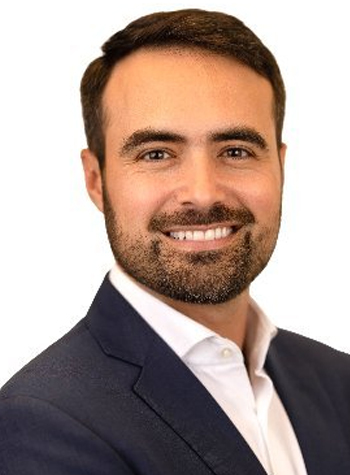
Ed Coyne welcomes Tavi Costa of Azuria Capital to discuss mining valuations, constrained supply and the demand trends shaping gold, silver and copper. While Wall Street remains incurious about the sector, Tavi highlights why he sees room for the mining cycle to develop.
Podcast Transcript
Ed Coyne: Hello, and welcome to Sprott Radio. I'm your host, Ed Coyne, Senior Managing Partner at Sprott. I'm pleased to welcome a new guest to Sprott Radio today, Tavi Costa, founder and CEO of Azuria Capital LLC. Tavi, thank you for joining us today on Sprott Radio.
Tavi Costa: Thanks for having me. Looking forward to this conversation.
Ed Coyne: Tavi, I thought today we would talk about not just precious metals, but more specifically the miners themselves, what's going on in that ecosystem and where there's opportunity. Before we do that, as a new guest on Sprott Radio, give us a bit of your background, what brought you to create the company you've created, and what's your day-to-day life following mining stocks in general?
Tavi Costa: My career has been everywhere. I started as an emerging markets analyst, following Chinese markets very closely, and that was a major focus of mine for a long time during the Lehman Brothers moment, with China and the potential devaluation of the Chinese yuan. After that, I started to dive into commodities. That was the beginning of my career, covering not just commodities but also investing, and I ended up involved in the acquisition of the world's fourth-largest silver mine.
That changed the course of my career as well, learning about how to acquire mines and assets privately. I went on to make multiple acquisitions of that kind and have now launched an investment firm focused on investing in three areas. One of them will be mining, the second will be Latin America and the third will be energy.
The idea is to take those three areas and look for opportunities that fall into those three categories. Right now, we're working on a pipeline deal we're closing, and we'll be launching the mining fund in the next couple of weeks. That's the goal in a nutshell.
Ed Coyne: Focusing on Latin America, where are we finding you today? Are you in Latin America, or what do you call home?
Tavi Costa: I'm in the U.S. I'm usually in Denver, Colorado, for most of the year, and partially in Brazil now as well. I spend a lot of time there. The strategic move is also to be closer to Latin America and present there, because it's important to me.
Ed Coyne: You're starting to sound a bit like a snowbird. We have a lot of people on the East Coast who go from New York to Florida, so Denver to Brazil is a little more interesting, which is good for you. Let's get into the miners, because I was reading some of your periodicals and watching a couple of interviews. One thing that kept coming up for me was your discussion of the valuations you're seeing in the miners today and how some people in the market are picking up on them. In general, the market's missing that right now. What's drawing your attention to the miners today? Why do you like them?
Tavi Costa: I think there are a lot of reasons, but what drew me to this space was the fact that it's a legacy industry that is unlikely to go away. In fact, it's probably at its most critical point in history, given structural demand and historically constrained supply. You put those two together, and then you see what's happening with metal prices, which I also have a secular view on in terms of where they could be trading over the next 5 to 10 years. You look at how much money these companies are making today; the only way to justify these high margins with very low multiples is to believe that the margins and metal prices will be unsustainable at these levels. I don't believe that's the case; it’s more like arbitrage, if you want to put it simply.
A lot of people like to put me in a position where I have an opinion for one or two years. I don't think this will play out in one or two years. It plays out over a decade. Of course, there will be ups and downs, but I see this as a major opportunity to be laser-focused on finding great assets to own throughout this cycle. That means finding great teams, attractive capital structures and opportunities to acquire assets outright when it makes sense. I'm all in on seeking opportunities in this industry.
I think there's also been more recent openness to the space, but not so much in the parts of the market I tend to like, mostly gold, silver, and copper. There's been some more openness to critical metals and other things. I think that the big focus for me, from a first-principles standpoint of looking at a business and saying, "Well, this is a good business," is that I find it hard to believe and to compare a rare earth investment with a copper, gold or silver investment. Nothing against those markets, but I do think the proposition is more compelling from a value standpoint.
To summarize, those are the views. When you dive into the considerations and assumptions behind valuations driven by Wall Street analysts, investors and others, you'll realize you're still looking at metal prices in backwardation to estimate the future revenues and cash flows you discount. I disagree. If you disagree with that, this is an arbitrage or not. If you think that's the case, then you think it's properly priced. That's certainly not my view.
Ed Coyne: The market seems to be more enthusiastic about the critical materials and rare earth spaces right now. Do you think that's a newer narrative, and maybe people are a little gun-shy because of the volatility they've experienced in the past with gold and silver, both on the physical and mining sides? Maybe there's some legacy scar tissue there? Why do you think Wall Street's still ignoring the space in general, even though it's done as well as it has?
Tavi Costa: It is fascinating to me. If you've been watching Wall Street and its narratives over time, you can see when a new one emerges. I like this new narrative of critical metals, but it's not critical enough. It doesn't make much sense to me. I always start with first principles. "Okay, from a supply and demand standpoint, does it make sense to buy this metal?" If I can answer that question first, then it leads me to, "All right, well, then how do I express this view with a business that produces that metal and that is mispriced relative to where I think metals will trade in the future?"
I think much of that analysis is missing in the critical metals space. Investors are simply just looking at the periodic table and saying, "Well, the U.S. government has said that this is critical, and therefore I'm going to invest in this," but just look at the model itself: does it look like a good business? There's another aspect of this. There's this other side of the market as well that is just looking for easy money from the government, grants and all those things.
I've been in Latin America for a long time, and I can tell you it's a slippery road we don't want to go down when it comes to government money. Governments change every four years; you don't know who will be managing this then. The administration could have a completely different view about where these things should go. I don't like this at all, and I think it's the wrong direction.
I would rather not have any government grants in my business. I want to stay independent if we can. In a way, it's like Bitcoin to gold. Bitcoin did its job with gold; it got a bunch of millennials thinking, "Wow, dilution of money, I need to be careful with inflation." That was a job that I don't know if gold has accomplished with the younger generation. Maybe that's the goal of this with the gold, silver, and copper markets. I think some of that is happening as well.
Ed Coyne: It's interesting you say that because it feels like silver has stepped out of gold's shadow a little bit. By definition, it is still a precious metal, but it is being treated as a critical material. Can we unpack silver a bit? Silver is a bit of a head-scratcher right now. It's getting consumed at an alarming rate. How do you think about that, given that it's a precious metal but it's being consumed as a critical material? What's your view on that?
Tavi Costa: I've been scratching my head about silver for the last five years or so, meaning, since I've really turned bullish on this, I've been looking for the best way to acquire a great asset. The more I think about these things, the more they remind me of Buffett's principles of investing in a moat. The more we see AI and all these things happening here, the more we're going to see business disruption unlike anything we've seen before. It's going to change drastically, in my opinion.
The intellectual property that once held sway will most likely be challenged in this new environment of artificial intelligence. Owning a great resource asset will be one of the strongest moats. I think that's yet to be priced into markets in a significant way. On the silver side, look at the overall demand for silver; the doubling of demand for solar panels is something we probably don't see in commodities very often, and not that quickly.
We’re probably at the beginning, not the end, given where we are in terms of electricity consumption. I suspect there are many changes ahead in the demand for metal. I'm excited to see what this turns out to be, because it's a market that remains very small relative to its significance. We know that the supply aspect is very constrained. I get excited about that because I think there will be great ways to invest.
Ed Coyne: If I read this correctly, silver's being consumed at an alarming rate. I think over the last half-decade plus, we've consumed more silver than has been produced. Thrifting and recycling can't close that gap. Over and above solar panels, are there any other kinds of applications for silver that are continuing to absorb all that supply and create that imbalance in the supply-demand dynamics?
Tavi Costa: I've been in discussions with people, particularly on the data center side, about the interconnectivity we may see in the need for metals and automation. It's going to increase beyond that, given the demand for silver, which I don't think is priced in accordingly just yet. There's one other factor that I pay very close attention to, and that is different than prior decades, like the early 2000s cycle, which was not driven by this.
If you remember, we are still mining the things we found back in the '80s and '90s. If we look at the discovery rate for silver, gold, copper, and zinc, it's basically zero. We're seeing almost no discoveries here. If those demand factors continue moving in the right direction and do not trend lower, it’s likely that prices will need to be adjusted quite significantly. The beauty of this, as well, is that from a mining standpoint, you're talking about technology company-type margins here with the silver space. It's a wonderful environment to be an investor. People are not appreciating that at all in public markets. In private markets, we're appreciating that in a great way, but in public markets, it still feels like there's a misconception about the space’s sustainability at these levels.
Ed Coyne: If you're a new investor in this space, would you say you've missed it, or would you say we're just getting started, or where are we in that cycle? Gold, silver, copper, just that whole basket? Where do you think we are in that cycle based on the work you're doing?
Tavi Costa: I think we're in the second or third inning. That's just because I'm not looking at it from a year-long perspective, but given how much metals have risen, one thing that has shocked me is the conservatism in management decisions across the mining industry. I would have expected way more capital spending and, for some of the other decisions we've seen in prior cycles, peak levels in M&A and exploration budgets.
The exploration budget for Canadian miners, for example, has been declining over the last five years. How in the world is that happening with metal prices where they are? If you think about it logically, higher metal prices should increase the likelihood that anyone will start exploring more and looking for more metals, particularly someone who knows what they're doing. Instead, we're seeing the opposite trend.
We're seeing companies, including some of the majors, eliminate their exploration teams, which is wild. Eventually, the cycle reaches a point where investors start to really demand growth. Growth comes only from exploration or acquisitions. That part of the cycle is yet to come, and that's going to be more of the middle part of the cycle, and that drives us toward the end, where you start seeing some stupid valuations and so forth.
We haven't seen many companies being bought out. Large companies are looking for small businesses with strong deposits. How many of those have happened? I know we've seen plenty of mid-tiers merging with each other or seniors merging with each other. Those are the easy acquisitions. I want to see more of the big guys trying to buy the small guys. We haven't seen much of that yet.
Ed Coyne: You mentioned that earlier, when we first started talking about depletion of reserves, there hadn't been a lot of new discoveries. We're not putting enough CapEx into exploration. There haven't been new discoveries, or certainly not discoveries in jurisdictions that you'd want to invest in. It sounds like the only real outcome is that, at some point, you see acquisitions start happening. More mature mines at the back end of their reserves are buying younger mines at the front end of theirs.
Tavi Costa: I think that's going to be the case, which creates two very important opportunities to invest in the companies that hold those high-quality assets, but also to invest in the companies that a lot of people are not thinking about, which are the companies that are going to be the buyers of these mines as well. At these prices, those guys make a lot of sense as buyers of these assets.
The ones that identify those ideas are likely to become the next majors of the cycle. I think a lot about that. I look at the mid-tiers, and I think about which one of those is going to be in a position where Barrick and Newmont are today. Not so much if the seniors will be there for the next 10 years. I think that's also an interesting question, but I'm not sure there's much money to be made there compared to figuring out what mid-tier would be a senior in the next 10 years.
What we have learned about this industry over history, looking at data and understanding what worked and what didn't work, is that a good team with a solid business that is generating great cash flows and knows how to use and allocate capital during the cycle can run circles around the others in a very significant way. I do believe that that's going to be the case.
Ed Coyne: What needs to happen to start getting the attention of Wall Street in general? What needs to happen for them to start paying more attention and allocating capital to this space?
Tavi Costa: I think everyone is looking at these businesses through the lens of 10, 20 years ago, as being capital bleeders. The only way to shift that is to stay on the path of generating strong cash flows and, from a macro standpoint, to have people realize that metals do belong at these levels. Right now, I don't think a single person on Wall Street, outside of the people in the mining industry, believes that silver prices belong at $60 or $50.
Ed Coyne: Right, agreed.
Tavi Costa: They all think that it's going to go back to $20. They all love talking about mean reversion. What they fail to understand is the supply aspect. It truly is different from what we've seen in many other periods of history. When the market starts to appreciate that prices are more sustainable at these levels, it doesn't need to be $70, $80, or $100; it just needs to be not $20, not $15, or something along those lines. I think the assets will be priced accordingly.
Ed Coyne: You had mentioned energy, in addition to focusing on mining in Latin America. Energy and copper seem to go hand in hand. You can't talk about electrification without copper. What's your general view there?
Tavi Costa: People tend to complicate investing, and I like to simplify as much as possible in my head. As part of the process, I would say that if investors need to focus on resource-related assets, the top three commodities are gold, silver and copper. You can add zinc or nickel to that, but I think those three are where institutional capital should be investing.
When it comes to copper, we know supply will be awful over the next three years. We know that the demand is growing for different reasons, but at an insane pace. Copper is right in the middle of all the revolutions we're seeing from on-shoring. The onshoring trend may be even more important than the AI trend. You've got to remember that these countries are not ready for that either. They're going to have to rebuild their infrastructure. We don't own enough copper if that's the case. I do believe that will be the case.
On-shoring will be key: manufacturing, bringing it back, relying less on other countries, building resource stockpiles, just like China does. Why can't the U.S. or Europe do the same? I think all that is taking place as we speak. That's all on the demand and supply sides. Visibility is there. There's nothing coming online that would drastically change the supply.
In fact, many of these mines in production are experiencing operational issues. Others are in jurisdictions that are not the most attractive places to operate. It's tough not to be bullish on copper. I think the fundamentals for most copper companies are that margins aren't as high as those of gold and silver, because we haven't seen copper take off to a new level as we've seen with gold and silver, but I think we're getting there. It's happening as we speak, and we're in a price discovery moment.
Ed Coyne: We have gold, silver and copper. Was there something you wanted to share with listeners when you showed up for this podcast today, or any ideas or projects you wanted to talk about? Anything you wanted to mention that I failed to ask about?
Tavi Costa: No, you did a great job. Good questions. We didn't talk much about Latin America in the context of the dollar's decline and the Plaza Accord, and how it's a region that may benefit massively from what's happening in resource markets. I think that's going to be a very important capital allocation for investors across all asset classes, including equities and fixed income. I'm focused on finding great investments in that region. I think you can take the Buffett style and find the best companies. You can take the private equity style and look for companies to acquire. I'm trying to do all of the above.
I like the mining companies that sit at the intersection of those two. I believe we're seeing this contagious effect of capitalism, with a previously hidden, now more overt intervention by the U.S., and a level of safety around nationalism and other things that we have not seen in a long time. It’s an unlikely scenario to see a company nationalized in that region these days, given what happened in Venezuela and other countries. I think this is not in the price of those assets. I suspect we'll see some great investments in that part of the world.
Ed Coyne: Tavi, I really appreciate you taking the time to join us on Sprott Radio today.
Tavi Costa: Thank you very much, Ed. I appreciate the invite.
Ed Coyne: Thank you, and thank you all for listening. Once again, I'm your host, Ed Coyne, and you're listening to Sprott Radio.


Important Disclosures
This podcast is provided for information purposes only from sources believed to be reliable. However, Sprott does not warrant its completeness or accuracy. Any opinions and estimates constitute our judgment as of the date of this material and are subject to change without notice. Past performance is not indicative of future results. This communication is not intended as an offer or solicitation for the purchase or sale of any financial instrument.
Relative to other sectors, precious metals and natural resources investments have higher headline risk and are more sensitive to changes in economic data, political or regulatory events, and underlying commodity price fluctuations. Risks related to extraction, storage and liquidity should also be considered.
Gold and precious metals are referred to with terms of art like store of value, safe haven and safe asset. These terms should not be construed to guarantee any form of investment safety. While “safe” assets like gold, Treasuries, money market funds and cash generally do not carry a high risk of loss relative to other asset classes, any asset may lose value, which may involve the complete loss of invested principal. Furthermore, no asset class provides investment and/or wealth “protection”.
Any opinions and recommendations herein do not take into account individual client circumstances, objectives, or needs and are not intended as recommendations of particular securities, financial instruments, or strategies. You must make your own independent decisions regarding any securities, financial instruments or strategies mentioned or related to the information herein.
While Sprott believes the use of any forward-looking language (e.g., expect, anticipate, continue, estimate, may, will, project, should, believe, plans, intends, and similar expressions) to be reasonable in the context above, the language should not be construed to guarantee future results, performance, or investment outcomes.
This communication may not be redistributed or retransmitted, in whole or in part, or in any form or manner, without the express written consent of Sprott. Any unauthorized use or disclosure is prohibited. Receipt and review of this information constitute your agreement not to redistribute or retransmit the contents and information contained in this communication without first obtaining express permission from an authorized officer of Sprott.
©Copyright 2026 Sprott All rights reserved