
March 28, 2026 | (18 mins 41 secs)
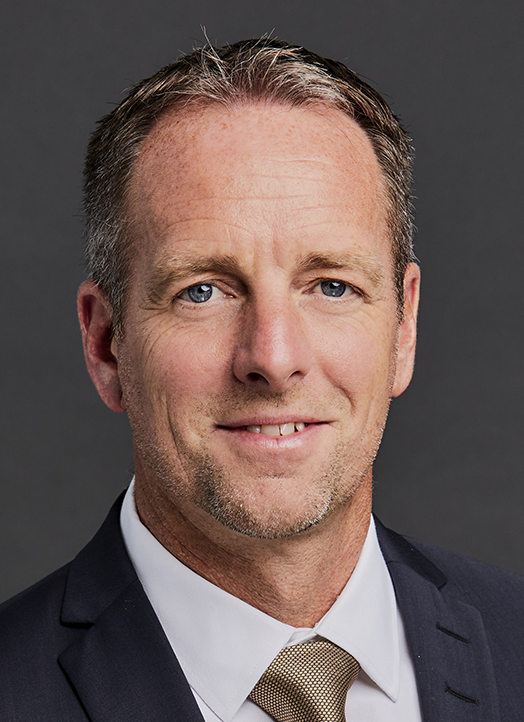
Powerful forces are shaping what could come next for uranium markets. Per Jander of WMC joins Jimmy Connor of Bloor Street Capital to offer his front-line view of shifting uranium supply dynamics, resilient pricing and why “boring” may actually signal strength in today’s volatile markets. Jander explores where uranium may be headed and shares why he remains bullish.
Video Transcript
James Connor: Per, thank you very much for joining us today. Before we begin with an overview of what's happening within the uranium market, why don't you give us a brief overview of your firm, WMC?
Per Jander: Hey, Jimmy. Great to see you again and nice to be on. It's been a little while. WMC is a Dutch commodity merchant that is in the process of relocating its headquarters to Switzerland. We're mostly active in the nuclear fuel market, but now we also have a fairly substantial team in the battery metal space, including lithium, nickel, cobalt, manganese, copper and rare earths.
The team is growing quite fast, both the nuclear team and the rest of the team. But things are going very well. It's exciting. There are many exciting markets in the energy transition space. We're full steam ahead. It's a great time.
James Connor: How many people work at the firm now?
Per Jander: We're about 40 and counting. We have finance, legal, and communications teams. Now we're a proper company, so we also have corporate functions as well.
James Connor: You trade uranium exclusively?
Per Jander: My role is uranium only, with some work in conversion and enrichment that we also offer to utilities. But my particular job is almost 100% with Sprott.
James Connor: You're exactly the person I want to speak to because we're going to talk about all things uranium today. You're on the front lines, and I want to get your views on the uranium market year to date. It's been relatively quiet. It topped out in January at $106 a pound. Now it's trading around $85 a pound. How would you describe the action year to date in the spot market?
Per Jander: From a personal standpoint, it was anything but quiet early in the year. I think January and February were some of the busiest I've seen, and that's all obviously thanks to John and his team at Sprott, who raised a lot of money from investors, and we bought over 5 million pounds.
It started at quite a ferocious pace. After that, when we stopped buying, it's been a lot quieter, and the spot market has changed tone quite a bit. Obviously, the biggest buyers disappear, and then you still have some sellers.
Naturally, you're going to see it drifting down. I wouldn't say there has been any panic selling from anyone, but when equity markets have been the way they have been, clearly, there are going to be some investors who throw their hands up and want to get out.
Then there's going to be some spillover in the uranium market as well, because they can hold physical positions in uranium. We have seen a bit of that, but overall, I think it's all held up really well.
Spot is down at $85 now from the high of $106. But I look at the term price, which in my view is the most important indicator in the current times. As long as that's holding up, I see us trading in a band around that, and certainly it can break out of it depending on what the investors do. But overall, considering every other market is more or less on fire at this point, uranium is holding up quite nicely.
James Connor: Why were you able to raise so many pounds during January and February? You said 5 million pounds. Where did the supply come from?
Per Jander: We saw an initial run from around $90 to the triple digits quite quickly because a lot of capital was flowing in. Then, when that happens, you find yourself in a situation where the market is backwardated, so the spot price is higher than the forward price.
Then, if they have a carry trade in place, they would basically just unwind it. They sell in the spot market and, at the same time, make sure they're covered in their position a little further out, well in advance of delivery to their end customer. But considering you get a higher price up front, and then you can buy it back cheaper or at least flat out in time, then you're clearly making money on that.
That's where the majority of the pounds we bought at the beginning of the year came from.
James Connor: Interesting. In terms of producers, you saw very little supply out of producers?
Per Jander: So far, maybe we have one or two transactions with a producer. It's been 100,000 or so that one of these juniors has a little bit to sell, but no major volumes at all.
James Connor: What about now? Now that the spot price is at $85, and the term is $90, are these carry traders coming back to life at these levels, or are they lower down?
Per Jander: I think they will. To get a new carry trade in place, I think it would have to be lower down, because you still have financing costs that aren't that cheap. If the term price is at $90, by the time you deliver it a few years out, it will be $95.
But if you buy it at $85 today, and at the same time, I don't know what your finance rate is going to be, 6, 7, 8%, depending on the creditworthiness of the counterparty. It's hard to tell, but I would say it's still a little too high in the spot for carry trades to come in.
But we saw active buyers over the last couple of days. It was certainly down towards $83, or even $82, for the Cameco location. But now it bounced back up to $84 or something again. So you're starting to see that there's some floor around there anyway.
James Connor: Below $85 is where all the buying comes alive.
Per Jander: I mean, some of it anyway. It's between $80 and $85, I would say that's where some buyers would step in.
James Connor: Is there much for sale between $85 and $90?
Per Jander: I haven't tried. You can probably find 100,000 or 200,000 pounds at current levels, depending on how much you want to go after and your time frame. It's hard to tell. But if you wanted to buy a million pounds, I'm sure it'd be at least the high 80s.
James Connor: If you went out as an $85 buyer for a million right now, you would not be able to acquire that much?
Per Jander: No, I wouldn't say so.
James Connor: Per, what about what's happening in the Middle East? How is that impacting the markets? Are these activities in the Middle East impacting the spot market or the term market? If so, how can you tell?
Per Jander: I mean, nothing so far. Granted, it hasn't been going on for that long, at least not with the uranium lens on, which is where things are pretty glacial. But sure, there's maybe some spot selling from investors in general who are just going risk-off overall. It seems some supply might have been coming in.
Then, if they want to offload it, they have to wait for a buyer. If they're an opportunistic buyer, they're going to sit a couple of bucks lower, and eventually it sells. But I think that's the only thing we've seen in the spot market. Certainly nothing in the term market.
I had a couple of conversations with people over the last couple of weeks as events in the Middle East unfolded. I think the overall consensus is that it's probably a positive for uranium because it is a stable source. You're not as exposed to supply chain challenges because you can keep a reload on site. First of all, the Middle East is not a center for any of this. You don't have any production centers or any uranium in the Middle East, so it's not affected by that.
Hopefully, this conflict doesn't drag on for long, but if it does, it shouldn't affect the physical uranium. The Russian-Ukrainian conflict has a much bigger impact on uranium conversion and enrichment. That's a different story. Beyond creating very shaky equity markets, the conflict in the Middle East does not directly affect uranium.
James Connor: Are there any utilities involved in the spot market right now, like lower down?
Per Jander: Some purchases were going on over the last couple of weeks. I heard rumors that some utilities are buying in small volumes because overall volumes haven't been huge. But definitely a couple of utilities that have been sitting on the sidelines, and they're nimble enough.
When they see that something comes up for sale at the location they wanted, at the price they're happy with, they've been opportunistic and picked it up. I think they got a great deal on some material.
James Connor: Let's talk about the term market now. When you and I last spoke in September at the WNA (World Nuclear Association), only 45 million pounds had been contracted. By December, that number had increased to 116 million pounds, according to UXC. Were you surprised that so much had traded between September and December?
Per Jander: If I hadn't looked at anything and just seen 45 million pounds in September, and then stuck my head in the ground and popped back up in January, and someone had told me 120 million pounds, I would have been a little surprised. Because transactions are pretty chunky, it depends on whether and when they get reported.
But because it was so slow to begin with, it felt like there was clearly a lot of negotiation going on in the background, and you don't know whether they will be reported in 2025 or 2026. In that case, maybe it hasn't been reported yet.
But I think where a big glut of material was, and the theory of this is that it came in basically November and December. So there was a big volume to report in November and December, and at least one hypothesis is that you had this material extraction tax in Kazakhstan take effect on January 1. So they wanted to secure a lot of sales to avoid a big tax hit.
There was a lot of contracting concluded in November and December to avoid the higher tax rate. Again, I haven't confirmed that, so I also don't want to speak on behalf of Kazatomprom. Please ask them if they have anything to say. But I think there was a fair bit of contracting coming out of Kazakhstan anyway.
I think that at least could be a pretty substantial reason for the big increase. But overall, it's 116 million pounds. It's not replacement rates. In 2025, more uranium was burned than was contracted. That can't keep going forever. If you look at where we're sitting this year, it's been a very slow start, and I think it's mainly because people have been distracted by the Middle East.
Most years are a little slow because it takes a few months to get a contract signed, and then you have to report it. But yes, these contracting levels can't go on forever. At some point, there needs to be more contracting.
Exactly when that happens, it's almost impossible to tell. But we have obviously seen that the windows that utilities are contracting for are now moving into the 2030s.
James Connor: Here we are at the end of Q1. How many pounds have been contracted?
Per Jander: I think just over 10 million pounds was the last I saw from UXC. There can be a lot of discussion, but it hasn't been signed, stamped or reported.
James Connor: Earlier this year, we saw Cameco and Kazatomprom enter into long-term agreements with India. Any insights or any comments on those?
Per Jander: No, I haven't seen anything. Clearly, those haven't been reported yet. I would assume that there is some just contracting going on now. Maybe it won't be reported at all, but I would expect it to be. They were quite substantial. Otherwise, you wouldn't need the Kazakhs at an extraordinary board meeting.
It has to be a pretty sizable chunk. I think it's great to see that India is buying. Everybody focuses on China all the time, and then Europe is going to build some new ones, and the U.S. is quite slow. We got a couple of SMRs (small nuclear reactors) going on here. For some reason, India seems to be overlooked.
They're developing their own heavy water reactor technology that, in theory, can use thorium, and I think that's the end goal for them. But at this point, uranium is still not expensive enough to warrant spending billions and billions to develop a completely resilient thorium fuel cycle.
I think the Indians are doing exactly the right thing. They're building, in addition to some of their own-designed reactors, Western light-water reactors that use uranium, and they're contracting for them. When the rest of the utilities are fairly quiet, this is probably a great time for them to get some pretty decent deals.
James Connor: Maybe you can give us some color on what's being shopped out there right now in the term market, in terms of RFPs, the size of the deals.
Per Jander: There’s not a lot of them active right now; certainly not enormous ones. That's not what you see in the RFP because the India deals will qualify as enormous. But most of the time when something is in an RFP, it's going to be between two, three, maybe up to five, six million pounds.
What tends to happen is that Korea Hydro & Nuclear Power Co. (KHNP) in Korea comes out now and then, and they can be a little bit larger, up to 8 or 9 million pounds. It always tends to drag out because they have pretty strict restrictions on what they can do.
They have pre-approved levels, and then suppliers can bid into it, but they need to adhere to those levels. When the market is moving, by the time the window for submitting an offer is closing, the market has moved away from the Koreans, so they get no compliant bids.
Then everything starts over again. That happened a couple of years ago, and it started last fall. I don't know whether they obtained permission to conduct off-market discussions with the people who submitted the non-compliant offers.
But I think that's the direction they're moving in. But we haven't seen any big volumes out of there. That tends to indicate, at least, that the contract has not yet been signed.
James Connor: Per, what about floors and ceilings? Can you speak to that at all? What are you hearing?
Per Jander: Unfortunately, the only ones who report anything are Cameco, and I wish more entities would. But from what I last heard, I think its ceilings are now up towards $150, and the floors are going to be $70, maybe creeping up towards $80.
It's clear that it's been moving up, and it's been going in one direction, too. Grant Isaac is speaking at a conference here shortly, so I'll have to dial in and see what he's saying, since he's usually the best source on that.
James Connor: What conference is that?
Per Jander: I think Goldman Sachs is having a virtual one fairly soon. Then we have a fuel conference in Monaco in a few weeks. It's going to be great to have the nuclear fuel industry come to my backyard. I look forward to welcoming them here.
James Connor: I might have to fly over there and attend.
Per Jander: Yes, it's going to be great.
James Connor: Per, as we wrap up, are there any other insights you would like to share with our audience regarding what's happening in the spot market or the term market?
Per Jander: No, the uranium market is boring right now. But considering everything else that's going on in the world, boring to me is not a bad thing. If the term price is holding at $90, it's the highest it's been since the 2007-2008 peak.
To sit there despite everything that goes on in the world, I think that's on very light volumes as well, is a fairly healthy sign. Sure, the spot market is going to bounce around a little bit around that level.
But the fact that it's holding firm, the term price is holding firm, and it's gone nothing but up for the last 15 years. Then the term prices or the spot prices dancing around that, I see that as a healthy sign. I am not worried.
I am worried about what's going on in the Middle East, but not about the uranium market. It's more patience than anything. If people can hold their heads cool, which is not easy when everything is bouncing up and down, or mostly down, as things are now. But for uranium itself, certainly the term and the spot price, it's holding quite firm, and to me, that's a good thing.
James Connor: So you're still positive and bullish on the price action?
Per Jander: I am still bullish, yes. I believe that as the year moves forward, the prices will be higher than they are today.
James Connor: Per, this has been a great discussion, and I want to thank you very much for taking the time with us today and for sharing your thoughts.
Per Jander: Thank you as well, Jimmy. Anytime. I look forward to the next discussion as well.

Investment Risks and Important Disclosure
Spot Market is where uranium is bought and sold for immediate delivery. Prices can change quickly based on supply and demand. It's like buying something off the shelf today. Term Market involves long-term contracts, often spanning several years. Buyers, like utilities, lock in prices and delivery schedules in advance to ensure future supply. Spot is short-term and reactive; term is long-term and planned.
Relative to other sectors, precious metals and natural resources investments have higher headline risk and are more sensitive to changes in economic data, political or regulatory events, and underlying commodity price fluctuations. Risks related to extraction, storage and liquidity should also be considered.
Past performance is no guarantee of future results. You cannot invest directly in an index. Investments, commentary and opinions are unique and may not be reflective of any other Sprott entity or affiliate. Forward-looking language should not be construed as predictive. While third-party sources are believed to be reliable, Sprott makes no guarantee as to their accuracy or timeliness. This information does not constitute an offer or solicitation and may not be relied upon or considered to be the rendering of tax, legal, accounting or professional advice.