

December 2, 2025 | 35 mins 52 secs
Sprott Portfolio Managers John Hathaway and Justin Tolman break down the powerful forces driving this year's gold and precious metals rally. They provide insights on market catalysts, mining equity valuations and explore why today’s environment mirrors some of the most profitable cycles in decades. Learn more about how Sprott's deep technical expertise and on-the-ground diligence enhance its investment approach in the metals and mining space.
Video Transcript
Chris von Strasser: Welcome, everybody. By way of background, Sprott's a publicly traded specialty asset manager, dual listed on the New York and Toronto exchanges, with over 40 years of corporate history. We specialize in precious metals and critical materials, managing over $49 billion across three core areas, exchange listed products, actively managed strategies and private strategies. From physical bullion trusts to gold equity funds and private investing in the mining sector, Sprott offers comprehensive exposure to the metals and mining complex.
I'm Chris von Strasser, head of Institutional Sales, and I'm excited to be joined today by two of Sprott's most experienced voices in the gold investment space.
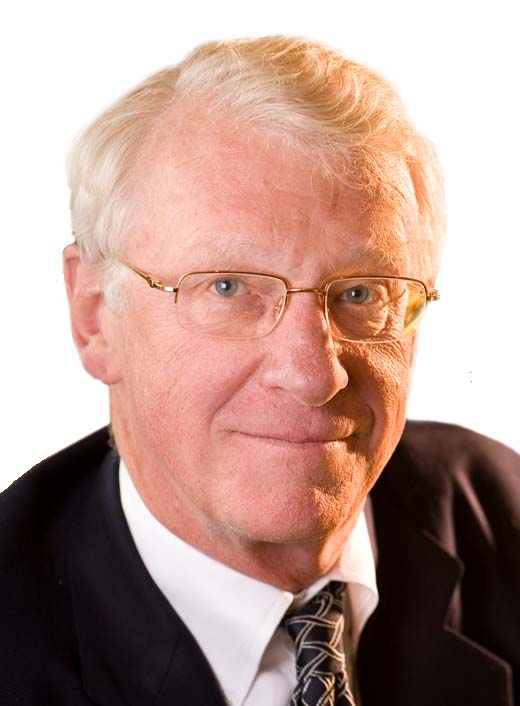
John Hathaway is a seasoned portfolio manager with over 55 years in the asset management sector, 25 of which have been dedicated to gold and gold mining equities. He serves as Senior Portfolio Manager of the flagship Sprott Gold Equity Fund, as well as several other gold-equity-focused strategies, including the Sprott Concentrated M&A Strategy. John is widely respected for his thoughtful macroeconomic insights and has played a pivotal role in shaping Sprott's gold investment philosophy.
We also welcome today, Justin Tolman, who brings a unique blend of geological expertise and portfolio management to his role at Sprott. As a Senior Portfolio Manager and Economic Geologist, Justin is deeply involved in both our gold equity and critical materials strategies. He plays a key role in evaluating mining assets and managing our resource-focused portfolios. Both John and Justin are integral members of Sprott's internal active management team, which meets daily to review portfolio companies. It assesses new opportunities and collaborates on strategic and product development initiatives for Sprott.
We have a bunch of questions here that have been submitted in various categories. It's no secret that gold and gold miners are having a blockbuster year. Gold is up 55% and miners are up 125% through September. This outperformance extends across the trailing three-, five- and ten-year periods as well. And yet surprisingly, this impressive run has occurred with minimal participation from institutional investors.
John, I guess this one is for you. In your recent quarterly letter, you referenced the word “acrophobia,” or the fear of heights, and noted in your commentary that one of the most common questions right now is: Did I miss the move? How do you respond to that concern, especially in light of gold's recent performance?
John Hathaway: I would say yes, most investors have missed the move because participation has been very small from institutional and retail investors. We see that in our flows. I guess the question is, where do we go from here?
As you mentioned, gold and related stocks have had a terrific year. Is it too late? I would say that we're now in a period of digestion of those explosive moves. However, the fundamental drivers remain in place. These, to remind folks, include the U.S. dollar debasement trade and the weakening U.S. fiscal outlook, with very little hope for a near-term fix on either. We still see a preference for a weaker U.S. dollar in the current administration. It's another way of saying that Trump is good for gold. You have geopolitical considerations that undermine the U.S. dollar's reserve status as the principal international currency and reserve asset.
Those things aren't going away, and we view them as being very important for the next two- to three-year outlook. I'd also like to point out that you have thought leaders, for example, Goldman Sachs, Morgan Stanley, Mike Wilson at Morgan Stanley, and Dan Struyven at the head of commodities at Goldman Sachs, who have, over these last six months, recommended replacing bonds with a large component of gold in a risk-diversified portfolio. I believe the percentages were 20% for Morgan Stanley and 10% for Goldman Sachs.
Little understood, however, is the relative liquidity of physical gold compared to capital market flows. And without getting too granular on this, I would say that given how illiquid physical metal is, any broadening ownership in concert with the examples I've used, Goldman and Morgan Stanley, are recommending, it's not hard to see gold trading at twice the price where we are today, $4,000 an ounce, give or take, in the next two to three years.
Chris von Strasser: John, thanks for that. The next question is related, so Justin, perhaps you can weigh in. The next question is: Are there catalysts in the gold market that are not yet fully reflected in the price?
Justin Tolman: And is the trade crowded? Are there catalysts? You know, John touched on some of these, but first and foremost, all the things John mentioned haven't gone away. It's not as if those catalysts have been fully exploited or explored. We've still got a multipolar world. We still have inflation driven by global government spending, de-dollarization and debasement. All the factors that have brought us to our current situation remain in play. I'm not sure we need to explore more catalysts, but John raised some interesting points regarding people wondering, 'Did they miss the move?'
We see the flows, but is it a crowded trade? Until the third quarter of this year, the largest and most liquid gold mining ETFs have been shedding shares. They've been actively redeemed over the last couple of years to the tune of, depending on which one you pick, roughly a quarter or a third of their shares outstanding. It's not as if people have been piling into gold. It's almost been a stealth rally up until the last couple of quarters this year. Not only do we think the catalysts aren't priced in, but we're still waiting to see if large institutions and the broader public will move this from a talking point to something much more investable. To that point, the equity prices of gold equities have risen in tandem with the gold price. And although the multiples are improving, they haven't gotten carried away. We're still 50% below where key metrics, such as Enterprise Value (EV) to Earnings Before Interest, Taxes, Depreciation, and Amortization (EBITDA) or total returns versus Earnings Per Share (EPS), were at their peak a decade ago.
Chris von Strasser: Interestingly, you mentioned that, because the next question addresses the cycle a decade ago, and it basically asks, “One of our investors asks, how does this compare to the last cycle, which was 2000-2011?” Are there similarities? Are there any critical differences? And what inning are we in right now? John, why don't you start?
John Hathaway: Okay. I was active during the first decade of this gold bull market. And I would say we're in the middle innings compared to the period from 2000 to 2011. And what hasn't been priced in is something akin to another Global Financial Crisis (GFC). Who knows when that could be? However, to me, this is why diversification in a portfolio is important.
You can consider the following red flags, which I will mention briefly here: the unprecedented valuation of equities, extremely thin credit spreads in debt markets, widespread valuation abuses and illiquidity in private equity, and the crypto meltdown. Those are just a few things that I could mention.
If there were a repeat of the GFC in some form, causing a drawdown in financial assets in terms of valuation, I think it's quite clear that we would see another, particularly under this administration, a resort to all the tools that were used in 2008. And that included yield curve control, Fed balance sheet expansion, quantitative easing,1 and suppressed (or zero) interest rates. Just remember that in 2008, some of the strongest stocks as the market turned for the next three years were gold equities.
I think that's still ahead of us. And another reason why we believe it's far from too late to put money to work here.
Justin Tolman: Let me weigh in here, Chris. When you talk about what innings we're in here, comparing it to the last cycle. From 2000 to 2011, I worked as a gold miner and explorer throughout that decade. And when I look back as an operator, right now feels to me a lot like 2005. That was the point at which we'd seen incremental price improvements, but we experienced a bloom that year. And suddenly all the marginal ore-pods2 that weren't making it into long-term planning suddenly became economically relevant. And that's going to benefit most certain existing mines that have the right ore bodies, latent processing capacity, etc.
But what I wanted to talk about was the second half of that cycle, and what's different this time, when we're all enjoying good margins at the moment. The key difference lies in how the miners utilize the expanded cash flow and manage their businesses. And I think one of the differences is that gold mining company management has improved significantly since that last period. The mentality back then, partly driven by shareholders, was growth for the sake of growth. It was about investing and acquiring as many ounces as possible, which ultimately set the stage for the end of that cycle and led to some value destruction.
We talk to a lot of company management, a lot of the big caps and the mid-caps, and overwhelmingly, the focus now is on running a solid quality business that would compete outside the space for capital, renewed focus on per share values, capital discipline, and things like that, which gives me great hope for the future.
Chris von Strasser: Thanks for that, Justin. We have two or three questions that I'm going to consolidate into one: How does one invest at the early stage of a bull market versus the mid-stage we're in right now? How are you adapting today in terms of stock selection and analysis?
Justin Tolman: The way this has moved so far is kind of de rigueur for these types of things. If you've seen a few of the cycles, gold has moved first, and it's early. And we saw that in 2024, when it was outperforming many of the more passive indexes. Then comes the equity outperformance we've seen this year. We've seen impressive share price movements.
Many of the big-cap senior producers have been able to post great returns. That's where these cycles typically begin. They've got the most liquidity. They provide beta.3 As the market evolves, you begin to see a shift towards quality and cash flow. You know, the beta trade eventually will start to get crowded. Investors will begin to gain knowledge and get more sophisticated. They're going to look for better businesses. They're going to look for shareholder returns.
You will start to see merger and acquisition (M&A) dynamics come into play around this time. And companies that are looking for what's hopefully accretive growth. That's how we've positioned our products and particularly the Concentrated M&A Strategy. You see us moving from what were historically more defensive stock positions to quality developers who are fully funded, fully permitted, able to benefit from being on that runway and re-rate into production. I think that's a good summary.
John Hathaway: The only thing I would add is I think one of the reasons that the stocks have started to outperform the metal by quite a wide margin is because cash generation is so substantial—the issuance of debt or new equity to fund either current or future operations is unnecessary. If anything, we're seeing many companies return capital to shareholders in the form of increasing dividends and share buybacks, which we’ve been very vocal about. We're in a sweet spot where cost inflation, I don't want to say it's negligible, but it's still minimal both for current operations and maybe less the case for capex,4 while the price of gold has been going up at a faster rate.
The delta in terms of profitability, in terms of margins, has been expanding. I believe we're in a period where we have margin expansion and a very low risk of excessive issuance of either equity or debt to fund operations or expansion. I think that makes this a very interesting time to invest in mining equities, especially compared to the metal.
Chris von Strasser: Thanks, John. That makes sense. Moving on, we have two very specific questions that are tied to what we've been talking about, but they're specifically focused on mine equity valuations. Are they reasonable, both at the senior level and at the junior level, at the large-cap level, at the mid-cap level?
John Hathaway: I would say they're more than reasonable. I just reviewed one of the sell-side tables for the gold spot price.5 Senior producers are trading at an enterprise value-to-EBITDA multiple of 6.4 times for 2026 and generating free cash flow yields of 7.2%. That's large-cap. If you look at mid-cap, it has a 4.8 times EBITDA multiple and a 12% free cash flow yield. The intermediate companies are in Sprott’s wheelhouse. Again, we are in a period where the stock market is overvalued, and valuations in the mining space are more than reasonable.
Chris von Strasser: Justin, anything to add to that?
Justin Tolman: I will re-emphasize what John said, which I thought was great. What we've seen is that the recent equity returns in the miners, when considering valuations, represent fundamental improvements. These are fundamental recent returns, whereas most of the growth and a significant portion of the top end of the S&P 500 have been driven by improving multiples.
Chris von Strasser: Makes sense. We now have some questions focused on M&A. A higher gold price results in increased M&A activity across the board. How does that apply to the funds you manage? Are there certain funds that take advantage of that more? Is that something you think about? Why don't you talk about M&A as it relates to your and Sprott's strategies?
John Hathaway: M&A activity is very high. One of the things we like and try to employ in our strategy is the divestiture of non-core assets by the majors. And then the acquisition of those assets by entrepreneurial, motivated management that can take these tired old assets, which have basically been neglected, and find ways to improve the production process, expand reserves through more exploration, which in many cases hasn't even been done.
That's one theme that we see, where M&A is very accretive for both parties. And again, shedding unproductive assets is beneficial for the seller. The buyers can improve what were thought to be tired old assets and generate good returns on capital.
Justin Tolman: I thought you captured the point well, John. Perhaps I'll discuss the other bookend that complements that M&A. In addition to giving new life to existing assets, one of the ways we excel here at Sprott is in finding new discoveries early and recognizing which of those early drill hits will have the necessary gravitas to become a new mine and navigate the hurdles to reach production.
Those two bookends fit the M&A concept, and for Sprott and the strategies that John and I manage, we have a bias towards quality and the idea that we want to own things that will be profitable, long-life mines across the entire cycle. We seek out quality management teams and quality assets that can realize their potential and breathe new life into an underutilized asset, or teams that can make a groundbreaking discovery that will have a material impact and be of such exceptional quality that other companies not only want to own it, but feel they must own it. When they examine their production profile, the gold business is a snake that eats its own tail.
Every day you produce an ounce of gold; you can't grow it back or manufacture another one. You've got to either discover it or acquire it. We strive to select the best assets that other companies are eager to acquire and are willing to pay a premium for.
Chris von Strasser: I assume M&A has been an important driver of returns, John, in your concentrated strategy.
John Hathaway: It has. I think we still see, as Justin explained it very well, that owning quality assets that other companies feel they must own is a pretty good formula for future M&A. Yes, it's been important to us.
Chris von Strasser: Next question. We're moving beyond gold to other precious metals. Where do silver and the broader precious metals complex fit in the current environment? Are there any emerging opportunities in these metals that we should be aware of?
Justin Tolman: Let me jump in here, Chris. You mentioned silver. Obviously, it's a cornerstone of our precious metals mandate. We like silver just like we like gold. It offers both monetary and industrial utility, but fundamentally, it has been in a supply deficit for the last six years.
In terms of emerging opportunities, we're also paying close attention right now to the platinum group metals,6 the red-headed stepchildren of the precious metals world. They've been overlooked. They've been underinvested in for years, but they've recently broken out. We've seen supply tightening. We've seen growing demand from both green and catalytic technologies. Gold and silver will always be our core, but we think this kind of selective, complementary exposure is very interesting. Those emerging structural trends are here to stay and will become an increasingly significant part of the conversation.
Chris von Strasser: John, do you have anything to add to that? Does it make sense?
John Hathaway: Yes. I think we may be entering a period where commodities, which have been largely neglected in capital markets for many years, are entering a new phase. Our primary focus is on metals that play a monetary role, and both gold and silver fit this description. Platinum and palladium to a lesser degree, but that's where we're focused. I think Justin put it very well.
The road ahead for gold is the slipstream that the other metals fall into. Silver is very illiquid. Gold is illiquid. Silver is even more so. The percentage upside in silver relative to gold, given the illiquidity of silver and the structural deficit that Justin referenced, remains very substantial. Again, not to forecast prices, but I think one would have to consider that there's huge leverage in the silver space, especially at PGMs, platinum group metals, and also with a lot of catch-up.
Chris von Strasser: Thanks, John. We have a few questions on allocation decisions between gold and gold equities. Gold meaning physical bullion, in our case, through our physical trusts, or gold equities in some form. Any ideas on where we are in that part of the cycle, or how that's played out over the last few years?
John Hathaway: Chris, I don't think that's a cyclical kind of question. It's more about gold bullion being a safe asset. It's a risk diversifier. That's been demonstrated over decades, if not centuries. Mining companies and their shares encompass a range of corporate risks. But at the right moments in time, which is where I think we are right now, they can provide substantial directional alpha7 to the moves in the gold bullion price. Again, we've seen that in the last year. I think we'll be seeing that for the next couple of years.
Again, I think we're primarily discussing the gold mining shares here. For those who have a conviction about dollar debasement, as this is the core thought process, the long-term loss of value of paper currency—and one wants to maximize return from that point of view—then mining shares should be more heavily weighted. However, in terms of safety and risk diversification, I would advise leaning more heavily towards gold bullion.
Chris von Strasser: Justin, there are some questions about you and your geological expertise, as well as how you apply it at Sprott. Where do you feel Sprott's edge is in this, and how do you contribute to that?
Justin Tolman: If we start at the top, you know, Sprott's built to do one thing exceptionally well, especially the part of the business that John and I work in, and that's invest in the best metals and miners. We have a stellar team that excels in top-down macro analysis, enabling us to understand our market position effectively. That's complemented by a very technical group that excels at bottom-up analysis of individual equities, seeking to get out and put boots on the ground at new projects or those at critical junctures. Trying to spot fatal flaws as early as possible, trying to spot new discoveries that will be mines, and trying to understand which are the strongest management teams.
To that end, we do a lot of engagement. We have a very heavy cadence of talking to companies and industry pundits, understanding where we are in the cycle. We've built up a lot of deep domain experience to basically take all of those different parts and blending, understanding what a good capital structure looks like, understanding what a great drill hole means in the right context, where are the best exploration areas, how do you manage risk in what's a very, very complex business that has geopolitical overlays and all sorts of things. And it's all about trying to find the best projects at the best price as early as possible and understanding when the right time is to recycle them.
More broadly, Sprott, as a business, does the same thing; however, we can be part of the solution in multiple ways for companies. We have a lending business that can be part of the capital stack, as well as a royalty and streaming business. And increasingly, the cachet means that we have issuers and their boards reaching out to us proactively, asking, what are we doing well? What could we do better? How can we, you know, better meet the needs of shareholders?
In terms of Sprott’s potential edge, this is what we live and breathe every day. This is our bread and butter. We get up in the morning to do this. That's perhaps what Sprott offers that some of the other larger, more diversified groups likely can't match.
Chris von Strasser: John, you have anything to add to that?
John Hathaway: No, I think that was very well said. Sprott creates a lot of constructive engagement. I wouldn't quite call us activists, but we have years of interaction with board members, CEOs and mine managers. Justin didn't mention it, but he has traveled extensively, both globally and domestically, to visit mine sites. Given his background, he has an excellent ability to dialogue with mine managers at a very granular level, discussing the details of processing, geology and other aspects of the mining process. I think that's very hard to replicate from a team perspective elsewhere in our space.
Chris von Strasser: John, can you provide a brief overview of the mandate for the Sprott Concentrated M&A Strategy?
John Hathaway: I'll say a few things. The strategy is concentrated. Our top ten holdings are easily 60% or more of the portfolio. But we also have an incubator section, which comprises approximately 5% to 10% of these earlier-stage companies. These companies may have less liquidity, but have the prospect of becoming much larger through discovery. Again, identifying them is part of our expertise.
It's not like a passive index. It is a deliberate approach to portfolio selection. We don't try to game it against the GDX, which is the most widely recognized index in the space. To reiterate what was said earlier, we hold a daily meeting with all team members. When we wake up in the morning, this is what we think about. The focus we bring to this is, I must believe, unusual in our peer group. I think that's our edge. That's what differentiates us from the rest of the pack.
Chris von Strasser: I think that covers most of it, gentlemen. We have a few specific questions that I think would be best handled in a follow-up call.
Please don't hesitate to contact us at any time if you have questions. We'd be happy to discuss this data with you in more detail. Justin, John, thank you very much. And thank you, everyone, for listening in.
Footnotes
| 1 | Quantitative easing (QE): a central bank buys government bonds or other securities to inject money into the economy, aiming to lower interest rates and encourage borrowing and spending. |
| 2 | Ore pods are concentrated zones or pockets of ore within a deposit that are expected to provide a steady source of material for an extended period (often years) based on current mine plans. |
| 3 | Beta is a measure of an investment’s volatility (or price movement) compared to the broader market. |
| 4 | Capex (capital expenditure) is the money a company spends to buy, upgrade, or maintain its business over the long term. |
| 5 | Gold spot price is the current market price for one ounce of gold bought or sold for immediate delivery. |
| 6 | Platinum group metals (PGMs) include platinum, palladium and rhodium. |
| 7 | Directional alpha is additional return or value an investor may earn when certain conditions are met. |

Investment Risks and Important Disclosure
References to Sprott’s "edge" reflect solely Sprott’s opinion about what potentially differentiates the firm within the precious metals and critical materials space, particularly in terms of investment approach and operational philosophy. Such references should not be construed to imply any inherent or comparative advantage.
Investors should seek financial advice regarding the suitability of any investment strategy based on the objectives of the investor, financial situation, investment horizon, and their particular needs.
Any particular allocation to an investment portfolio depends on several factors including an investor's risk tolerance, investment objectives, time horizon, income requirements and overall financial situation.
Relative to other sectors, precious metals and natural resources investments have higher headline risk and are more sensitive to changes in economic data, political or regulatory events, and underlying commodity price fluctuations. Risks related to extraction, storage and liquidity should also be considered.
Gold and precious metals are referred to with terms of art like "store of value," "safe haven" and "safe asset." These terms should not be construed to guarantee any form of investment safety. While “safe” assets like gold, Treasuries, money market funds and cash generally do not carry a high risk of loss relative to other asset classes, any asset may lose value, which may involve the complete loss of invested principal.
Past performance is no guarantee of future results. You cannot invest directly in an index. Investments, commentary and opinions are unique and may not be reflective of any other Sprott entity or affiliate. Forward-looking language should not be construed as predictive. While third-party sources are believed to be reliable, Sprott makes no guarantee as to their accuracy or timeliness. This information does not constitute an offer or solicitation and may not be relied upon or considered to be the rendering of tax, legal, accounting or professional advice.