
December 20, 2025 | (18mins 19 secs)
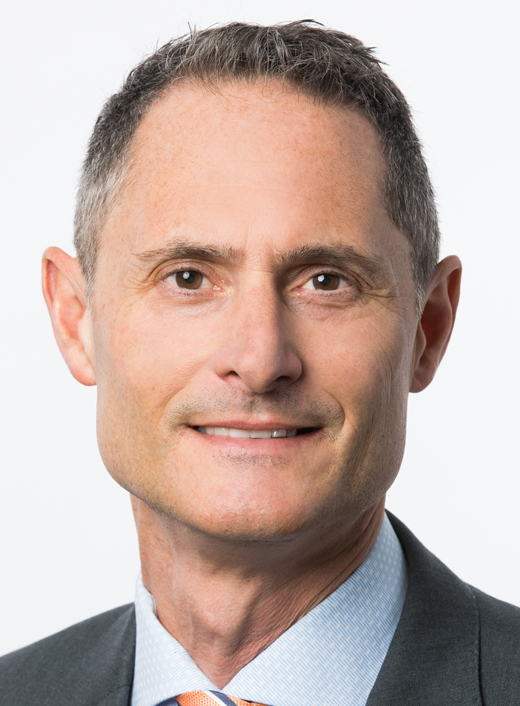
John Ciampaglia joins James Connor to discuss the remarkable performance of gold and silver in 2025, highlighting unprecedented price gains and record inflows into physical trusts. He explores the powerful forces driving these trends, including central bank buying, de-dollarization and investor concerns about inflation and currency debasement. John also examines shifting asset allocation models and the growing role of precious metals as core portfolio holdings in the face of global economic uncertainty.
Video Transcript
James Connor: John, I'm sure you would agree with me when I say 2025 was a remarkable year in the global economy and the financial markets. We began the year with significant volatility and uncertainty due to the tariffs. Due to this uncertainty, we observed significant shifts in various asset classes, particularly in gold and silver. I would like to discuss some of the products you offer to investors and what you've been seeing in terms of flows. Given that the Sprott Physical Gold Trust is the largest of these trust products, let's start there. What flows have you seen this year, and what is the AUM?
John Ciampaglia: It's interesting because last year, when we sat down and spoke, we were frustrated that the price of gold was up about 25% in 2024. I believe it was approximately $300 million in net flows that entered the Sprott Physical Gold Trust. We were really disappointed by that because investors weren't really paying attention. This year has been a significant turning point. We've obviously seen the price of gold increase by 50% or more, which is the second-best calendar-year performance since 1970. Only 1979 has eclipsed 2025. On the flow side, we've seen $1.5 billion in U.S. dollars come into the Sprott Physical Gold Trust, indicating a significantly improved alignment between performance and investor interests. The Trust has grown significantly, now standing at approximately $15 billion in size.
James Connor: As you mentioned, 2024 was a strong year, with a 25% increase. In 2025, it had increased by over 50%. What's driving this performance? What are the economic factors that are creating this interest?
John Ciampaglia: The gains that we've seen over the last two years are unprecedented. Gold is not designed to go up 25% and 50% per annum. Over the long term, it tends to go up 8% to 10%. What's driving it? Obviously, really powerful forces. Those forces range from shifting geopolitical risks to de-dollarization, which many central banks are undertaking as they seek to reduce their exposure to U.S. Treasuries. In many cases, they're recycling those dollars into physical assets, such as gold. We've seen several central banks increase their allocations to physical gold.
John Ciampaglia: The other powerful driver is that investors are returning to gold after ignoring the gains last year. We've seen very strong inflows globally, including from North American, Chinese and Indian investors. Gold ETFs have been significant winners, with tens of billions of dollars flowing into these products as investors seek to mitigate uncertainty and risks in their portfolios. Whether that is related to potential bubbles related to AI and equity markets and valuations, or geopolitical and trade tensions. Tariffs have created significant uncertainty across global economies and supply chains.
James Connor: You mentioned central banks have been large buyers in recent years. According to the World Gold Council, they have been acquiring anywhere from 25% to 30% of global production every year for the last three or four years. Why do you think they're doing that?
John Ciampaglia: As I mentioned to you a year ago, gold is reasserting its role as a monetary metal. Central banks around the world have historically held part of their reserves in physical gold. Unfortunately, countries like Canada are not on that list. They've long since sold all their physical gold, which is a real shame. But other central banks are deciding to hold more gold. It's not just China. I know everybody focuses on China, but it's several central banks, including those of Poland, Singapore and Turkey. They're holding more physical gold. They're reducing their exposure to other fiat currencies.
I believe this is part of a broader structural shift that's underway. It's not transitory. This is something that will unfold over several years as they all achieve their targets. They all have targets in mind regarding how much of their FX reserves they want to hold in physical gold. Some of them, as you mentioned, could be 20% to 30%. China is still pretty low in terms of its overall mix. We know that China has enormous amounts of U.S. Treasuries that they are actively selling and recycling into gold. That's a very powerful bid on the price of gold among a group that is not as price-sensitive as you would have with some investor groups. We believe it represents a profound structural change.
On the institutional and individual investor side, they're mimicking what central banks are doing by including gold in their portfolios as a hedge against currency risks, as well as trade risks. They're also substituting Treasuries for gold because Treasuries are no longer exhibiting the same safe-haven characteristics they have in the past, given the huge debt loads of many governments worldwide.
James Connor: You made a very interesting point. One of the things we've seen in the last five years, not just in the U.S., but across many countries in the West, is excessive money printing. The money supply is measured by M2. In January of 2020, the M2 was $15.4 trillion. Here we are five years later, and it's now $22 trillion. That's a 42% increase. What role do you think the money printing is playing in the move in gold?
John Ciampaglia: I think it's having a huge role. I think people are concerned about the amount of money being printed, the debt loads and the debt service requirements, and they're becoming increasingly worried about debasement. This is a term that Sprott has used for years. However, what we've noticed now is that the mainstream media is using this term, and investors are starting to ask, “What does this mean?”
Now, if you're an investor in Argentina, Turkey, or another country like that, debasement and hyperinflation are just part of everyday life. However, I believe Western investors are beginning to consider this, as the purchasing power of their currency has been eroded due to governments printing a significant amount of money. It's becoming increasingly difficult to roll over debt. You're seeing the U.S. Treasury having a very difficult time selling any long-dated bonds to anybody anymore. They're the buyer of last resort.
Another thing I think people are focused on is the independence of the Federal Reserve (Fed), which is now in question. The last factor is the implementation of a very hot fiscal policy, where governments are spending money rapidly on various initiatives. That obviously creates inflation, which impacts the real return on things like Treasuries. Your real returns are being eroded by all of this fiscal spending and very high levels of money printing.
James Connor: You touched on the Fed, and the Fed has been very dovish here in the last few months. They're cutting interest rates, and they're doing so at a time when the economy continues to grow at 3% or more, and we still cannot bring inflation down to their 2% target. This is also resulting in higher inflation, which in turn creates more demand for gold.
John Ciampaglia: I think the days of 2% inflation are gone. Obviously, that's been a long-standing target of many central banks. We've never believed that the inflation numbers reflect the true cost of living for most people. I think it's clear that the Trump administration would like a much easier monetary policy, which would be more inflationary, and that inflation will be allowed to run at higher levels than we've all been accustomed to. I think that's another reason why Treasuries are becoming less attractive to investors. Physical gold is a suitable substitute in many cases for Treasuries, which yield very little on a real return basis.
James Connor: We cannot discuss gold without talking about the U.S. dollar. It's down 10% year-over-year. It's measured by the DXY. What are your thoughts on the U.S. dollar? Where do you see it going?
John Ciampaglia: There are two sides to the story. You have an administration that consistently promotes a strong dollar and positions itself as a champion of a strong dollar. The reality is that the dollar has declined significantly this year. That has been a big boost to gold. We think that it's inevitable that currencies weaken when the world is fractured in terms of trade policy and relations. One of the easiest ways to respond to a trade war is to devalue your currency, making your exports more competitive. It's fair to say the U.S. is playing that game. Even though they're talking a big game about the dollar, I think they've let the dollar slide as trade relations have soured.
James Connor: Many well-known investors have been bullish on gold for quite some time. Ray Dalio comes to mind, also Jeffrey Gundlach from DoubleLine Capital. Recently, I saw an interview with Jamie Dimon of J.P. Morgan, in which he stated that, for the first time in his career, investing in gold is becoming rational. He also mentioned that he thinks gold could reach $5,000 to $10,000 in the current economic environment. What are your thoughts on that? You may also want to consider adding why investors should include gold in their investment portfolios.
John Ciampaglia: It's amazing to us that some of these big-name banks, J.P. Morgan, Morgan Stanley, Goldman Sachs, Bank of America, they all have price targets for gold that are higher than where we are today. These aren't small targets. Obviously, some banks predict gold will reach as high as $5,000 next year. To us, it's almost unheard of because most of these banks have consistently had price targets below the current spot price. It's a real sea change in terms of their point of view and what they're advising their big institutional and high-net-worth clients to do. I think that's really interesting.
We also believe that most investors are woefully underexposed to gold. When we survey different investor groups, we find that most of them have no exposure to gold at all. I think for good reason. For many years, everything had been working just fine in the world, in the global economy, and in trade relations. Now people are thinking very differently about equity risks. We've even had some of the major banks suggest new asset allocation models that replace part of the Treasury or fixed income allocation and increase the allocation to 20% in physical gold. We haven't seen that in decades. It's a different message that the marketplace is receiving.
At Sprott, we've been investing in gold for decades. We've advocated having gold as the ballast in your portfolio. It lets you invest in other asset classes. It typically acts as a safe haven investment. In tumultuous times, it works very well, and that's the value of gold. We're starting to have more conversations with people for the first time around gold in their portfolio. Obviously, our flows reflect that. We've had considerable success with Sprott Physical Gold Trust this year. But we still think it's very early, and it is not a crowded space. Although gold has increased by 50% or more this year, we have not yet seen everyone rushing to buy gold. We still believe that we are in the early innings, and it's a very supportive backdrop that we think is more structural in nature.
James Connor: As you mentioned, gold had a very good year, up over 50%. Silver has had an even better year. In the past, I have to admit, I've been somewhat skeptical about silver and investing in it. I think that's because we saw so many false starts over the years. It had a hard time getting through the $50 level, which was the high we saw back in 2010 and 2011, and it finally did it in 2025. With this move that we've seen, what are the flows like into the Sprott Physical Silver Trust?
John Ciampaglia: We completely agree with your perspective on the frustration of silver for several years. It took a long time to finally get the old high behind us, which I'm very pleased has happened. We've obviously built momentum on top of that in the last few months. We've raised approximately $1 billion in the Sprott Physical Silver Trust, which is a good sign that investors are paying attention.
We have the second-largest physical silver fund in the world, and we've been a big buyer of silver. Silver has been very interesting this year. It's up almost 100% now for the year. We've experienced a significant shift after lagging behind the gold price for a prolonged period. We're starting to see some significant institutional inflows into silver globally. We've also seen very active buying of silver in places like India, where they are beginning to substitute silver because gold has become very expensive for them. Silver has got, I think, some very interesting dynamics. It feels like it's just getting out of the starting blocks after being stuck at very low prices for an extended period.
James Connor: The move in silver seems to have accelerated here in recent months, especially after it went through $50 and then $60. But why is that?
John Ciampaglia: I think the market's finally taken notice that there's a deficit in silver. We've had this deficit accumulating for several years. What you're starting to see is a new wave of buyers emerging for large amounts of silver, including both institutional and retail investors. They're starting to buy silver because of its value relative to gold. At one point earlier in the year, the exchange ratio between gold and silver reached 100 to 1, which was an extremely high ratio. We're now well below that, as the price of silver has increased and closed that gap.
Silver is scarce. We don't recover all the silver used in industrial processes; there isn't a large above-ground stockpile. You're starting to see shortages of silver emerge in the London market. You're starting to see very low levels of silver in places like China. We know that a significant amount of silver is consumed in the production of solar panels and not recovered. As the world builds more solar farms, that silver goes to silver heaven.
James Connor: John, you and your team are always on the road meeting with investors. What are you hearing from institutional investors? You mentioned earlier that you still thought there was not a whole lot of interest in this space. Is that true? When you travel across the U.S. and Europe?
John Ciampaglia: We're starting to see a lot more interest in precious metals. In the last six months or so, they've really been awakened, and they're asking themselves how they are positioned. Most of them have concluded that they either have no exposure or too little exposure, depending on the benchmark being tracked. I think that's very healthy because it's still pretty early in terms of the money coming into the sector.
We still see some of the ETFs in net outflow. Generalist investors are poking around more and asking themselves how best to get positioned in either the physical or the mining stocks. I think that's healthy. We saw a similar situation three to four years ago with uranium, where people had very little exposure. The market was just waking up, and it feels as though we're having similar conversations with investors right now about gold and silver.
James Connor: It sounds like 2026 is going to be a great year for precious metals.
John Ciampaglia: I certainly hope so. 2025 was an absolute banner year, but it still feels like it's in the early stages.
James Connor: One thing that Sprott does well is they do an excellent job educating investors on the benefits of investing in not only precious metals, but base metals, and so many more. If people want to access some of this research, where can they find it?
John Ciampaglia: We take great pride in all the outreach we do and the education we provide through our monthly reports, podcasts and webcasts. We're really active. Visit sprott.com and navigate to our Insights section. There's a wealth of content about various metal markets. Education is really important for us. We appreciate all your efforts in helping us with that endeavor.
James Connor: It's all free. There's no paywall.
John Ciampaglia: No. Come to the website and soak it all up.
James Connor: John, thank you for sharing your thoughts on gold and silver today—all the best in 2026.
John Ciampaglia: Thanks for having me.


Investment Risks and Important Disclosure
Sprott Physical Gold Trust (PHYS) and Sprott Physical Silver Trust (PSLV) (collectively, the “Trusts”) are closed-end funds established under the laws of the Province of Ontario in Canada. The Trusts are available to U.S. investors by way of listing on the NYSE Arca pursuant to the U.S. Securities Exchange Act of 1934. The Trusts are not registered as investment companies under the U.S. Investment Company Act of 1940.
The Trusts are generally exposed to the multiple risks that have been identified and described in each fund’s prospectus. Please refer to the PHYS prospectus by visiting https://sprott.com/media/1bhoasnr/phys-prospectus-en.pdf and the PSLV prospectus by visiting https://sprott.com/media/kl4csvyl/pslv-prospectus-en.pdf for a description of these risks.
Relative to other sectors, precious metals and natural resources investments have higher headline risk and are more sensitive to changes in economic data, political or regulatory events, and underlying commodity price fluctuations. Risks related to extraction, storage and liquidity should also be considered.
Gold and precious metals are referred to with terms of art like store of value, safe haven and safe asset. These terms should not be construed to guarantee any form of investment safety. While “safe” assets like gold, Treasuries, money market funds and cash generally do not carry a high risk of loss relative to other asset classes, any asset may lose value, which may involve the complete loss of invested principal.
Past performance is no guarantee of future results. You cannot invest directly in an index. Investments, commentary, and opinions are unique and may not be reflective of any other Sprott entity or affiliate. Forward-looking language should not be construed as predictive. While third-party sources are believed to be reliable, Sprott makes no guarantee as to their accuracy or timeliness. This information does not constitute an offer or solicitation and may not be relied upon or considered to be the rendering of tax, legal, accounting or professional advice. Diversification does not protect against loss.
Investors should seek financial advice regarding the suitability of any investment strategy based on the objectives of the investor, financial situation, investment horizon, and their particular needs.